



Last updated: June 4, 2026
Place
When Worlds Collide
Quick Facts
Amenities
2 listed
Audio Description, Beach/Water Access
When Worlds Collide
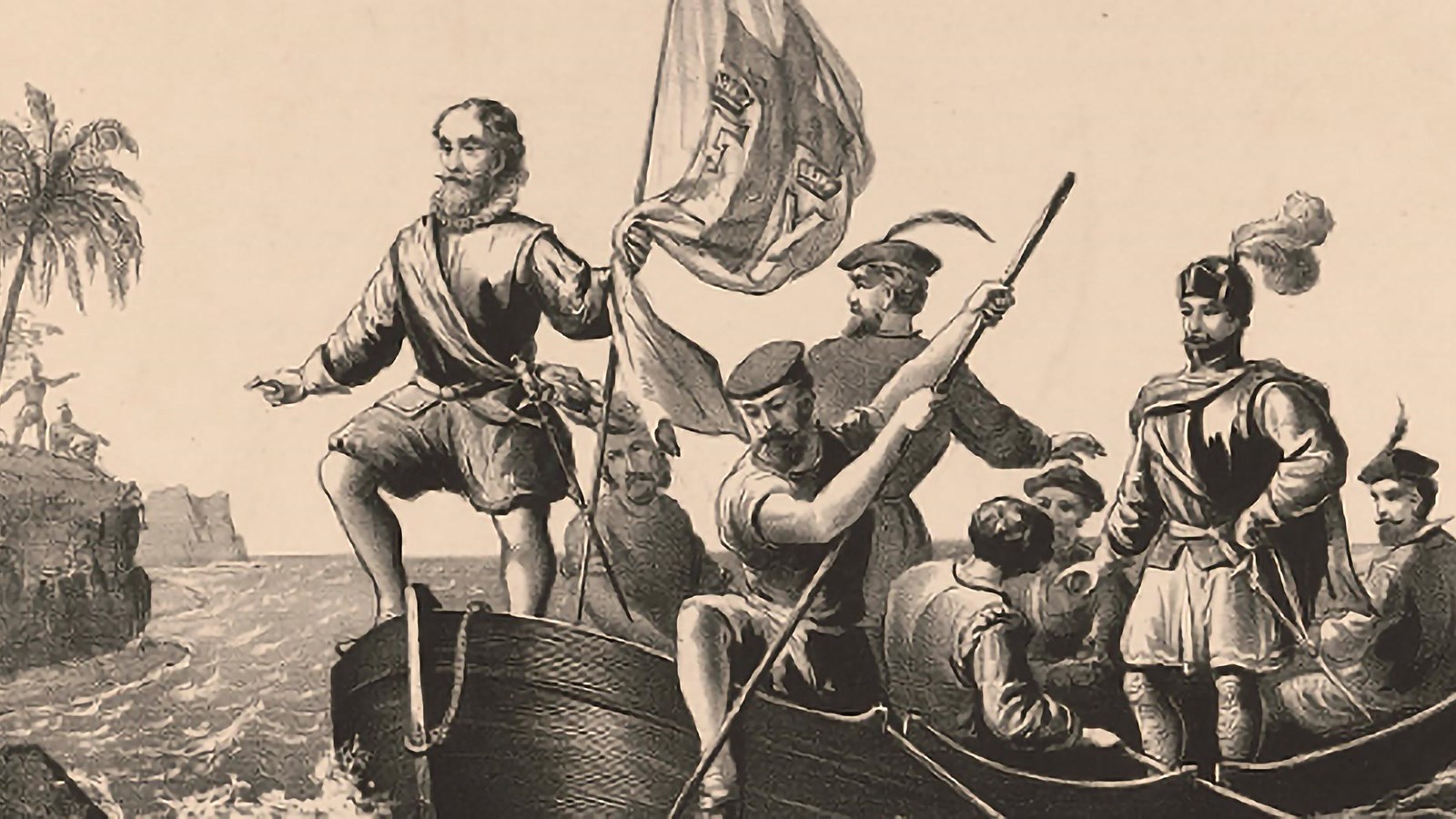
On November 14, 1493, Christopher Columbus arrived at Salt River Bay during his second voyage to the Caribbean. Unlike his first expedition, which focused on exploration, this voyage was much larger and had 17 ships with about 1,200 men. The Spanish came with several goals: to claim land for Spain, establish settlements, search for valuable resources, spread Christianity, and expand Spanish power in the Caribbean. Salt River Bay’s protected harbor and freshwater sources made it an attractive place to stop and explore.
The beach now known as Columbus Landing Site marks the location where members of Columbus’s expedition first came ashore. While exploring the area and searching for water, the Spanish encountered the native peoples already living at Salt River Bay. Soon after, a violent clash took place near the eastern entrance of the bay at a location Columbus later named Cabo de las Flechas, or “Cape of the Arrows.” This encounter is the first recorded conflict between Indigenous Caribbean peoples and Europeans. Several people were killed, and the event marked the beginning of a period of major change for the Caribbean.
Although the Spanish claimed St. Croix after Columbus’s arrival, they did not establish a lasting settlement at Salt River Bay. During the following decades, Spanish expeditions returned to the island, hoping to gain control of the region and its resources. Continued resistance from Indigenous communities, along with shifting Spanish priorities elsewhere in the Caribbean, made permanent settlement difficult. By the late 1500s, the Spanish had largely abandoned their efforts to settle St. Croix, ending the first chapter of European colonization at Salt River Bay.