



Last updated: June 8, 2026
Place
Regional Geology
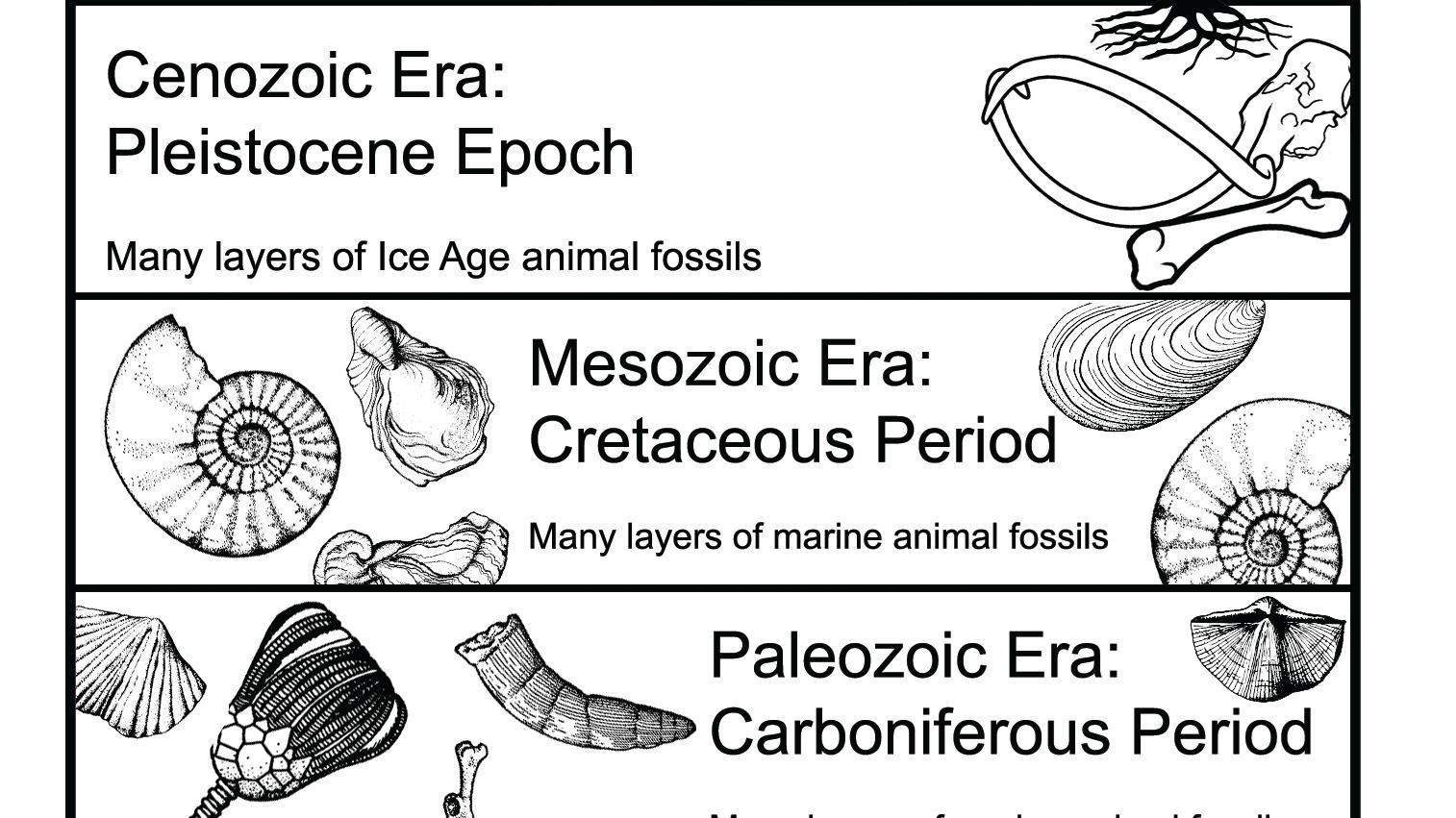
Created by Dava Butler, adapted from Texas Fossils: An Amateur Collector’s Handbook by Matthews
What would it look like if you could see everything buried under your feet? Geology, or the rock record, determines which fossils you would see.
Beneath the dig shelter, there are fossils from three major time periods. The deepest rocks are marine sediments from the Carboniferous Period, 300-350 million years old. These rocks contain fossil brachiopods, crinoids, and corals. Above these rocks are marine sediments from the Cretaceous Period, 90-120 million years old. Fossils include ammonites, oysters, fish, and marine reptiles.
The youngest sediments at the surface are from the Pleistocene Epoch. These deposits are part of the ancient Bosque and Brazos Rivers. As the rivers meandered through the area, they laid down new sediments. About 60,000 to 70,000 years ago, many Columbian mammoth fossils were covered by river and floodplain sediments at this site.
Beneath the dig shelter, there are fossils from three major time periods. The deepest rocks are marine sediments from the Carboniferous Period, 300-350 million years old. These rocks contain fossil brachiopods, crinoids, and corals. Above these rocks are marine sediments from the Cretaceous Period, 90-120 million years old. Fossils include ammonites, oysters, fish, and marine reptiles.
The youngest sediments at the surface are from the Pleistocene Epoch. These deposits are part of the ancient Bosque and Brazos Rivers. As the rivers meandered through the area, they laid down new sediments. About 60,000 to 70,000 years ago, many Columbian mammoth fossils were covered by river and floodplain sediments at this site.