



Last updated: June 8, 2026
Place
Megafauna and Microfauna
NPS
A mixture of tall grasslands and woodlands can support a wide variety of megafauna, like the Columbian mammoths and camels seen in the Dig Shelter. Other megafauna found here include saber tooth cat, deer, bison, horse, and alligator. Medium-sized animals found here include coyote, dwarf pronghorn, armadillos, turtles, tortoises, fish, and birds. Many of these animals are known only from isolated teeth or bones, unlike the full mammoth skeletons seen in the Dig Shelter.
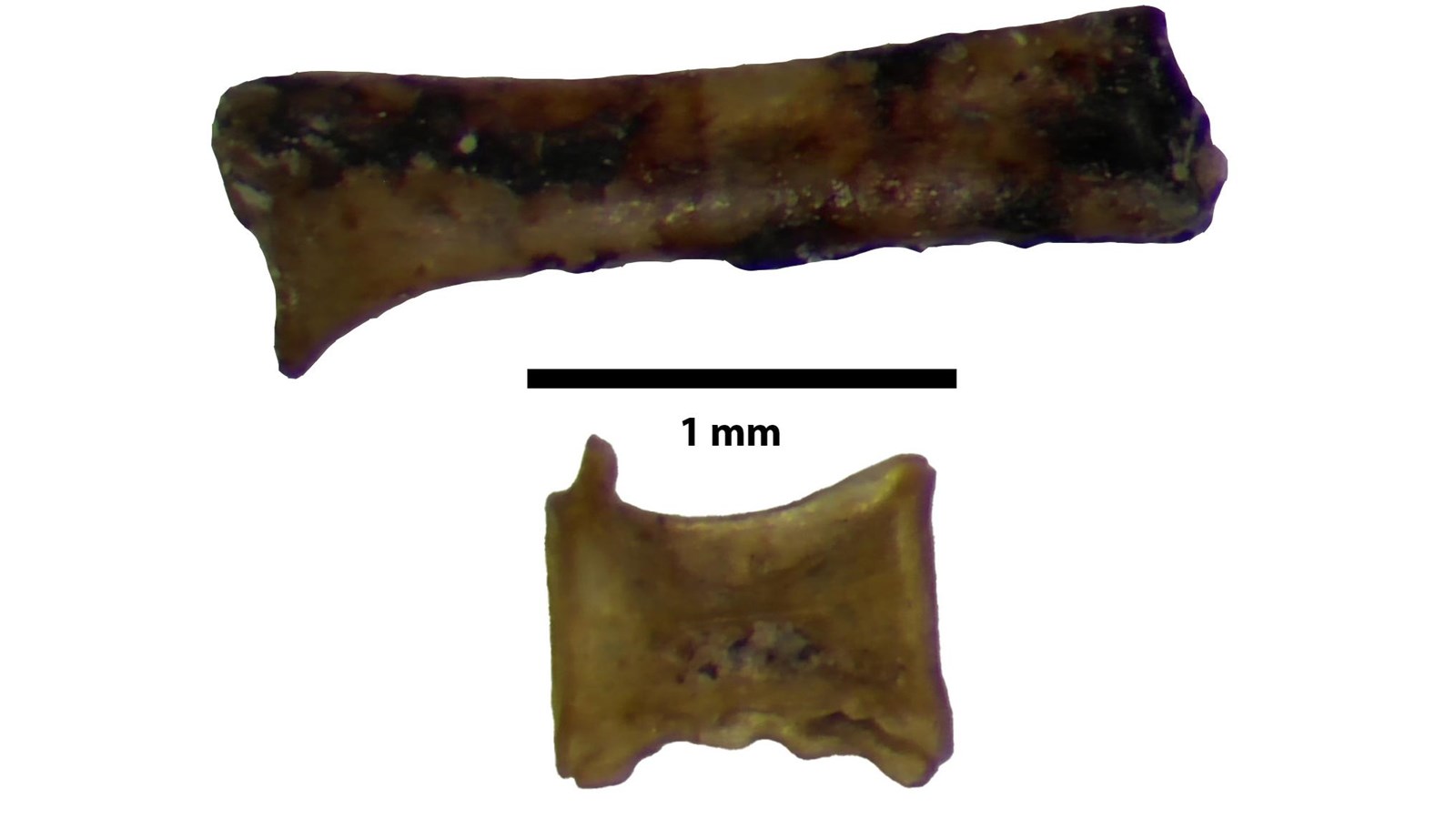
To find fossils, workers rely on trowels, bamboo scrapers, brooms, and other hand tools. The dirt is carefully removed from around the fossils and placed in a bucket. The buckets are moved to the screenwashing tent to start the hunt for microfossils, which are 0.04-0.12 inches (1 to 3 millimeters) long. Using small screens, the dirt is carefully washed, letting the water break up the sediment. The material left in the screen is dried and then examined. Researchers use a microscope to look through the material and find bones and teeth that can fit on the tip of a pencil or crayon. So far, we have discovered fish teeth, small mammal bones and teeth, and a lizard vertebra.
Large animals like mammoths, bison, and horses migrated, so they could live in many different environments. The small to medium-sized animals are very important as they tell us about the environment here. Researchers continue to screen wash and collect the tiny fossils to better understand what this area looked like 68,000 years ago.
To find fossils, workers rely on trowels, bamboo scrapers, brooms, and other hand tools. The dirt is carefully removed from around the fossils and placed in a bucket. The buckets are moved to the screenwashing tent to start the hunt for microfossils, which are 0.04-0.12 inches (1 to 3 millimeters) long. Using small screens, the dirt is carefully washed, letting the water break up the sediment. The material left in the screen is dried and then examined. Researchers use a microscope to look through the material and find bones and teeth that can fit on the tip of a pencil or crayon. So far, we have discovered fish teeth, small mammal bones and teeth, and a lizard vertebra.
Large animals like mammoths, bison, and horses migrated, so they could live in many different environments. The small to medium-sized animals are very important as they tell us about the environment here. Researchers continue to screen wash and collect the tiny fossils to better understand what this area looked like 68,000 years ago.