



Last updated: June 8, 2026
Place
History of Excavation
NPS
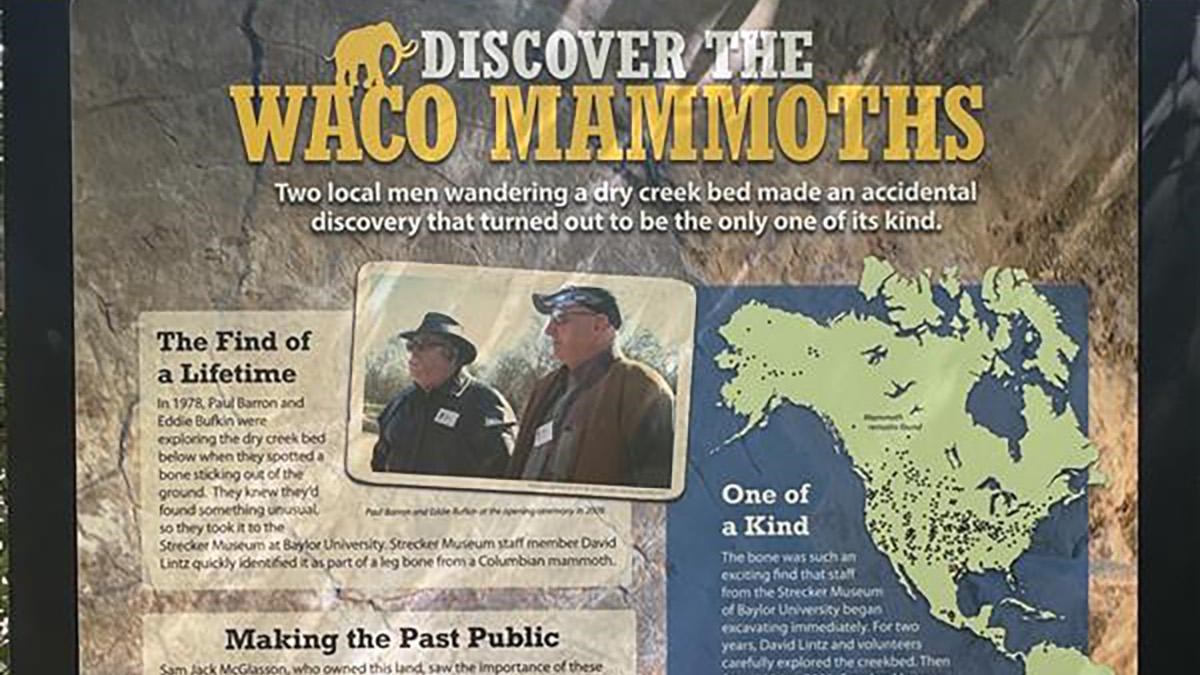
This site represents almost 50 years of scientific work. The original excavation uncovered a nursery herd of Columbian mammoths, all females and their young. Baylor University’s Mayborn Museum is the repository for all the fossils found between 1978 and the1990s. Repositories are places that are trusted to store important objects.
After removing all the fossils that had been found, workers used large equipment to clean up the site. While moving dirt, more bones were found close to where the Dig Shelter is now. This began a second round of the excavation, which continued until 2002. If we combine all the fossils found during both rounds of digging, workers uncovered parts of 24 mammoths!
These fossils are stored in plaster jackets and archival boxes at the Mayborn Museum, but they are still a source of new discoveries. Fragments from six additional mammoths were found hiding in plain sight within the collection. This increases our total mammoth count to more than 30!
Excavations and scientific research continue today. There are known fossils preserved under the walls of the north-northeast corner of the Dig Shelter. The building was designed with non-weight-bearing walls, so workers will be able to uncover those mammoths in the future.
After removing all the fossils that had been found, workers used large equipment to clean up the site. While moving dirt, more bones were found close to where the Dig Shelter is now. This began a second round of the excavation, which continued until 2002. If we combine all the fossils found during both rounds of digging, workers uncovered parts of 24 mammoths!
These fossils are stored in plaster jackets and archival boxes at the Mayborn Museum, but they are still a source of new discoveries. Fragments from six additional mammoths were found hiding in plain sight within the collection. This increases our total mammoth count to more than 30!
Excavations and scientific research continue today. There are known fossils preserved under the walls of the north-northeast corner of the Dig Shelter. The building was designed with non-weight-bearing walls, so workers will be able to uncover those mammoths in the future.