



Last updated: May 21, 2026
Place
Villa Antigua Border Heritage Museum
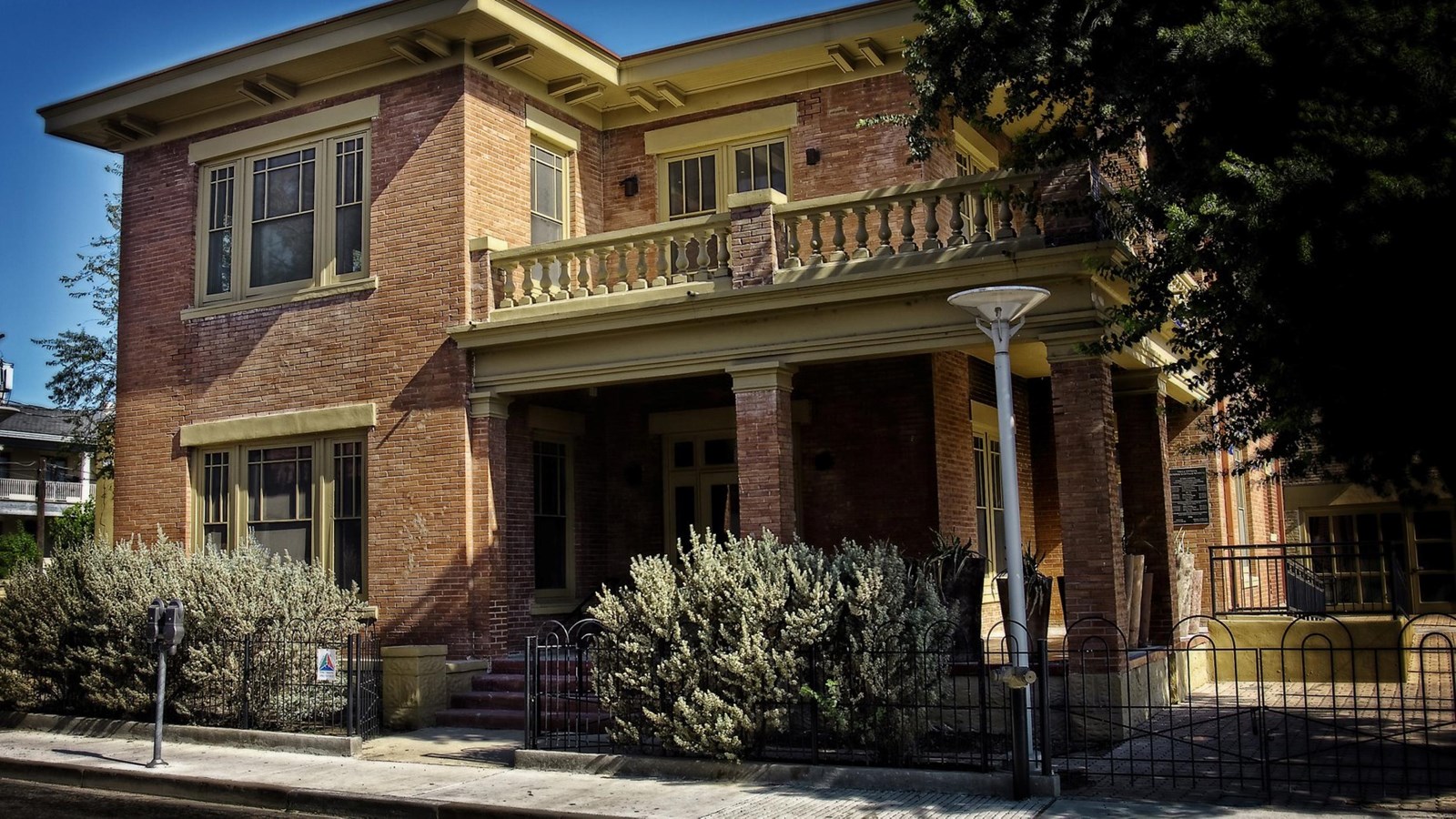
Photo/Border Heritage Museum
Quick Facts
Location:
810 Zaragoza St., Laredo, Texas, 78040 (just east of the Republic of the Rio Grande Museum)
Significance:
This museum showcases the region's history, culture, industry, and populations through a series of changing exhibits and educational seminars.
Designation:
Certified Site; Historic site on El Camino Real de los Tejas NHT.
MANAGED BY:
Amenities
1 listed
Historical/Interpretive Information/Exhibits
Located in Laredo, Texas, just north of the Rio Grande, the Villa Antigua Border Heritage Museum explores the history of Laredo and its connections to El Camino Real de los Tejas. The area has changed significantly over the years, evolving from a Spanish settlement to a town claimed by both Mexico and Texas, to the capital of a short-lived republic, to a city in the United States. Laredo’s story is intertwined with that of El Camino Real de los Tejas. Merchants, settlers, soldiers, and government officials all used the road to travel to and from the community.
Like other Spanish settlements in Texas, Laredo’s origins lay in the Spanish Crown’s desire to prevent the expansion of the French Empire into northern New Spain.[1] Tomás Sánchez de la Barrera y Garza founded Laredo in 1755, choosing the location because it was near several well-used river crossings.[2] Initially, the settlement struggled because the arid land above the riverbed was too high to be irrigated and therefore not suited for farming.[3] Residents began raising livestock to sell along El Camino Real, and in 1768, the town elected its first local officials.[4]
Initially, the residents of Laredo had peaceful relations with Coahuiltecan bands in the area, who traded with the settlement and helped it grow. Relations with the Comanche and Lipan Apache nations were initially friendly as well. As the ranchos prospered, however, they encroached on Comanche and Apache territory. Retaliatory raids increasingly threatened Laredo’s residents, prompting the establishment of a military garrison in 1775 to protect the town.[5]
In the first decades of the 1800s, the Spanish Crown’s control over its American empire began to weaken. Struggles for Mexican independence broke out across New Spain, and in the coming years Laredo often found itself in contested territory in the battle for control of the Rio Grande area. During the early years of rebellion against Spanish rule, the citizens of Laredo largely remained loyal to the crown, and the local garrison was dispatched to other locations along El Camino Real to put down unrest.[6] Eventually, all of New Spain, including Laredo, became part of an independent Mexico. In the 1830s, with the outbreak of the Texas Revolution, Laredo served as a staging area and depot for Mexican forces moving north.[7] The later establishment of the Republic of Texas increased the instability in the Laredo region. Both Texas and Mexico claimed the area, but neither was able to exert full control.
Frustrated by the constant movement of armies through the area and the threat of Comanche raids, prominent residents of Laredo and the surrounding area decided to make their own bid for independence. Local rebellions against the Mexican government began in 1838 and, in January 1840, a convention in Laredo declared the formation of the Republic of the Rio Grande, with borders that stretched from the Nueces River in the north to the provinces of Tamaulipas and Coahuila in the south.[8] The republic’s existence was brief. The Mexican Army defeated the republic’s forces, and the nascent government was unable to win any foreign support. On November 6, 1840, the leaders of the republic surrendered.[9]
Laredo remained a disputed borderland throughout the first half of the 1840s. In 1842, Texan soldiers with the Somervell expedition captured and looted the town.[10] The annexation of Texas by the United States and the ensuing Mexican-American War brought additional instability. When the Treaty of Guadalupe Hidalgo set the boundary between the United States and Mexico at the Rio Grande, Laredo became part of the United States, creating a dilemma for local residents who owned homes and ranchos on the Mexican side of the river. Some Laredo residents founded Nuevo Laredo, or New Laredo, on the south bank of the Rio Grande so they could keep their Mexican citizenship.[11]
During the Civil War, Laredo was a key part of Confederate smuggling operations. With a Union blockade closing off many southern ports, communities on the Mexican border like Laredo were vital to sustaining the Confederacy’s cotton trade. Cotton grown in Texas and throughout the Confederacy was sent along El Camino Real to Laredo, and then across the Rio Grande for sale in Mexico.[12]
Today, Laredo residents work to preserve and share their community’s history. Although it postdates the heyday of El Camino Real, the two-story red brick Gonzalez Montemayor house, built in 1926, is one of the area’s preservation success stories. After years of neglect and several fires, the Webb County Heritage Foundation and Webb County purchased the building in 2002 and then embarked on a $2.5 million restoration effort.[13] Rechristened the Villa Antigua Border Heritage Museum, the institution tells the story of Laredo’s history. Visitors can explore the exhibits on their own or as part of a guided tour. The museum is open Tuesday through Saturday.
Site Information
Location (810 Zaragoza St., Laredo, Texas 78040. Just east of the Republic of the Rio Grande Museum.)
The two-story brick home combines the region's traditional flat-roofed style with ornate details and impressive grounds.
More site information
El Camino Real de los Tejas National Historic Trail
[1] Carlos E. Cuellar, “Laredo, TX,” Texas State Historical Association, November 13, 2019, https://www.tshaonline.org/handbook/entries/laredo-tx (accessed on October 30, 2024).
[2] Cuellar, “Laredo, TX”.
[3] Cuellar, “Laredo, TX.”
[4] Cuellar, “Laredo, TX.”
[5] Cuellar, “Laredo, TX;” “Republic of the Rio Grande,” Webb County Heritage Foundation, https://www.republicoftheriogrande.org/ (accessed on October 30, 2024).
[6] Cuellar, “Laredo, TX.”
[7] Cuellar, “Laredo, TX.”
[8] David Vigness, “Republic of the Rio Grande,” Texas State Historical Association, October 1, 1995, https://www.tshaonline.org/handbook/entries/republic-of-the-rio-grande (accessed on October 30, 2024); “Republic of the Rio Grande,” Webb County Heritage Foundation.
[9] Vigness, “Republic of the Rio Grande.”
[10] Cuellar, “Laredo, TX.”
[11] Cuellar, “Laredo, TX.”
[12] Louisiana and Texas: El Camino Real de los Tejas National Historic Trail,” last updated June 10, 2024, National Park Service, https://www.nps.gov/articles/delostejas.htm (accessed on October 28, 2024).
[13] “Villa Antigua Border Heritage Museum,” Texas Time Travel: Texas Historical Commission, https://texastimetravel.com/directory/villa-antigua-border-heritage-museum/ (accessed on October 28, 2024); Erica Cordova, “Restoring LifeVilla Antigua: The New Heart & Soul of Downtown,” LMTOnline, April 23, 2005, https://www.lmtonline.com/lifestyles/article/Restoring-LifeVilla-Antigua-The-new-heart-soul-10394533.php