



Last updated: June 11, 2026
Place
Truckee River Tahoe-Pyramid Trail, Truckee Route
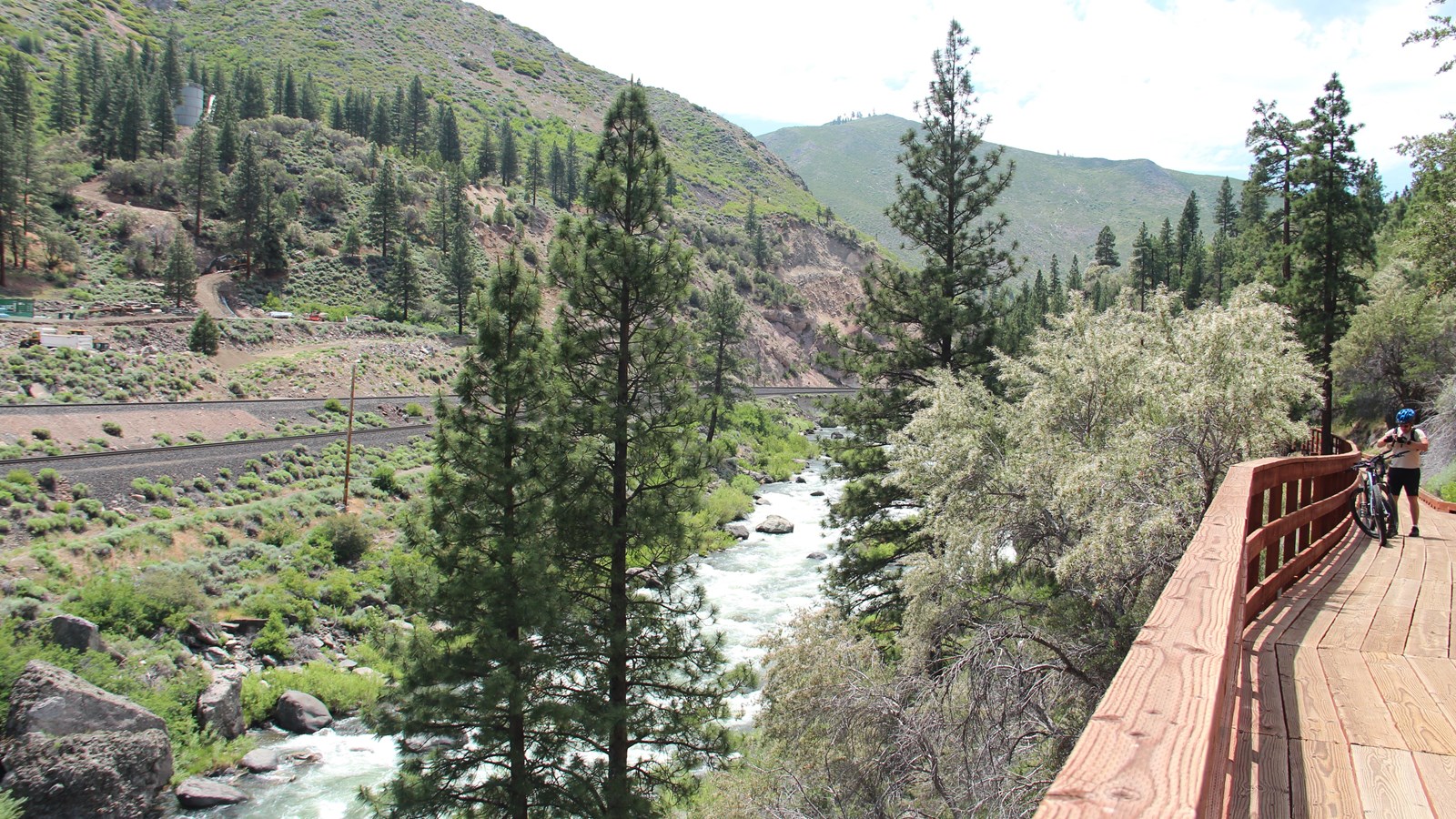
L. Kreutzer
Quick Facts
Location:
Upper Truckee River Canyon, paralleling I-80, segment between Exits 201 (Farad) and 199 (Floriston), northeast of Truckee, California.
Significance:
The 1844 Stephens-Townsend-Murphy Party, 10 California-bound families from Iowa, pioneered the first wagon route from the Humboldt River and through the Sierra Nevada. They drove their covered wagons up this section of the rugged Upper Truckee River Canyon.
Designation:
Tahoe National Forest; Historic site on the California NHT.
MANAGED BY:
Tahoe-Pyramid Trail, a 501(c)(3) nonprofit organization, stewards the trail.
Amenities
3 listed
Historical/Interpretive Information/Exhibits, Parking - Auto, Pets Allowed
The 1844 Stephens-Townsend-Murphy party out of Iowa was only the third wagon train to attempt the overland trek to California. The first two parties abandoned their wagons on the eastern flank of the Sierra Nevada and crossed the formidable range on foot and on horseback. But this band of 23 men, eight women, and 15 children were determined to push their valuable wagons through the Sierra and on to the Sacramento Valley. They had no idea how to do it until a helpful Northern Paiute chief directed them to follow a certain stream into the mountains. The grateful emigrants, mistakenly believing the chief’s name to be Truckee, called that stream after him.
The Truckee River was a nightmare to travel with wagons. It gushed out of the mountains at about 20 miles per hour, belly deep to a horse, leaping and foaming over slick, round boulders that lined its channel. Travelers had to cross constantly from bank to bank in the narrow upper Truckee River Canyon and sometimes the draft animals had to tow the wagons directly up the streambed. Saddle horses, mules, oxen, and people slipped on the boulders and plunged into icy, underwater holes. Riders took a dunking, wagons toppled, and lost belongings flew downstream on the rushing current. The Truckee River provided a way into the Sierra, but not an easy way.
Seventeen-year-old Moses Schallenberger, traveling with his sister and brother-in-law, later recounted the party’s travails as they climbed up the canyon:
“[The emigrants] were now compelled to walk beside [the oxen] in the water, or they could not be urged to take a step; and, in many instances, the teams had to be trebled in order to drag the wagons at all. On top of all those disheartening conditions came a fall of snow a foot deep, burying the grass from the reach of the cattle, and threatening them with starvation. The poor, foot-sore oxen, after toiling all day, would stand and bawl for food all night, in so piteous a manner that the emigrants would forget their own misery in their pity for their cattle.”
The party pushed on to Donner Lake (which would gain its name after the Donner Party tragedy there two years later), and with great effort, suffering, and adventure—especially for young Schallenberger—eventually worked their wagons through to safety.
The Tahoe-Pyramid Trail follows the Stephens-Townsend-Murphy original route through the Upper Truckee Canyon. A 2-mile hiking/biking section accessible from I-80 between exits 201 and 199 provides visitors a taste of what these emigrants experienced more than 150 years ago. Mountain man Caleb Greenwood blazed a better route avoiding the upper canyon in 1845, and this original segment up the river was seldom used thereafter. Wagons rarely attempted this route after 1844.
Site Information
Location (Upper Truckee River Canyon, paralleling I-80, segment between Exits 201: Farad and 199: Floriston, northeast of Truckee, California.)
Safety Considerations