



Last updated: September 22, 2026
Place
Three Rivers Water Trail
Quick Facts
Location:
Pittsburgh, PA
Significance:
Meriwether Lewis arrived in the area in 1803, where he oversaw the construction of the keelboat that would be used during his expedition with William Clark and members of the Corps of Discovery. Lewis departed the boat yard located approximately one mile up the Allegheny River on August 31, 1803, along with a party of 11 hands and his Newfoundland dog, Seaman.
MANAGED BY:
Amenities
11 listed
Beach/Water Access, Benches/Seating, Canoe/Kayak/Small Boat Launch, Historical/Interpretive Information/Exhibits, Parking - Auto, Parking - Boat Trailer, Restroom, Scenic View/Photo Spot, Trailhead, Trash/Litter Receptacles, Water - Drinking/Potable
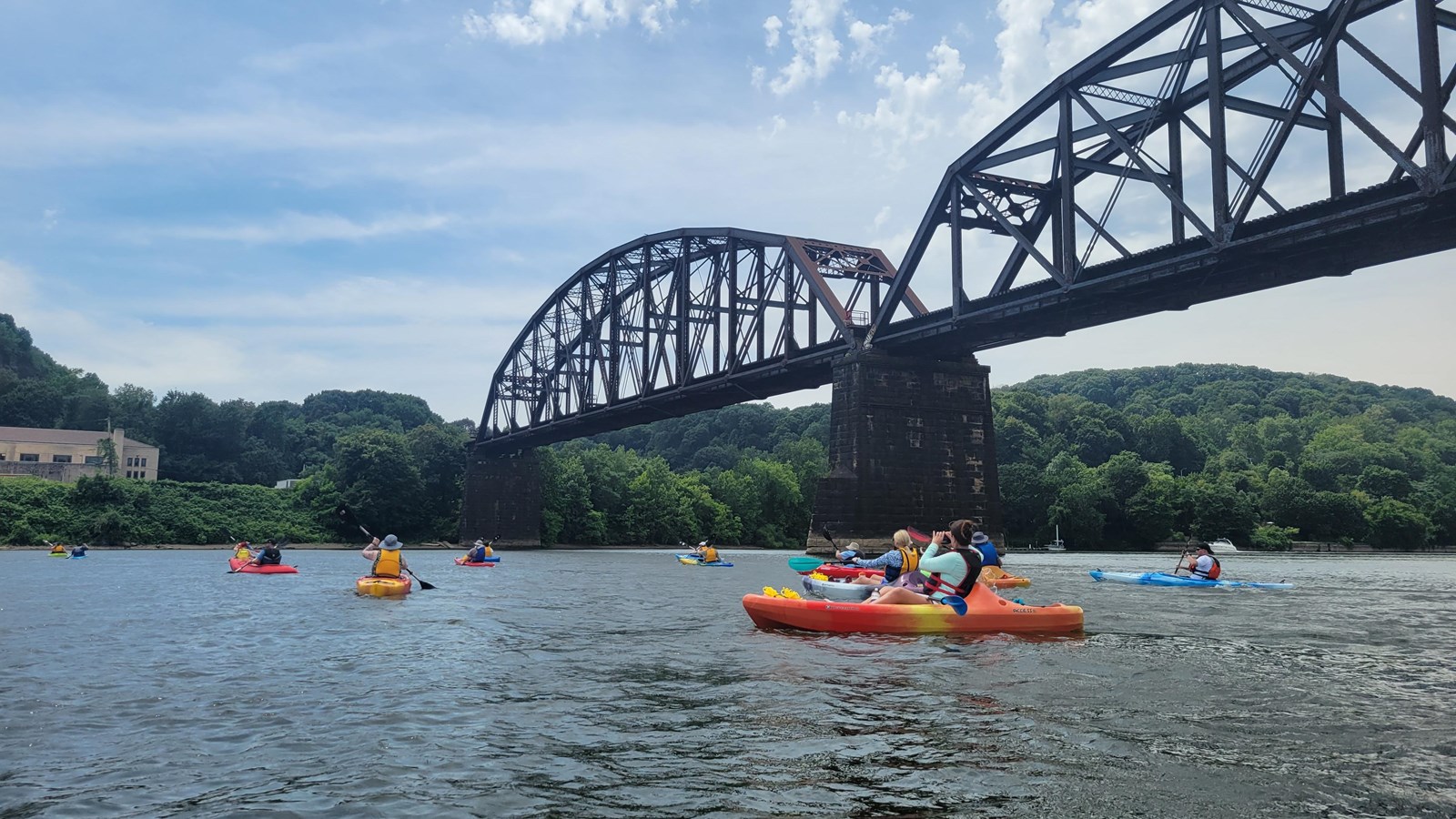
The 75-mile Three Rivers Water Trail allows visitors to experience the unique mix of nature and the industrial past in and around the Pittsburgh metropolitan area. The trail is promoted and maintained in part by Friends of the Riverfront (FOR) and may be enjoyed via more than 30 boat launches and river access points along the Allegheny, Ohio, Monongahela, and Youghiogheny Rivers in Pennsylvania. Forks of the Ohio and Brunot Island High Potential Historic Sites are found along this water trail.
Lewis and Clark NHT Visitor Centers and Museums
This map shows a range of features associated with the Lewis and Clark National Historic Trail, which commemorates the 1803-1806 Lewis and Clark Expedition. The trail spans a large portion of the North American continent, from the Ohio River in Pittsburgh, Pennsylvania, to the mouth of the Columbia River in Oregon and Washington. The trail is comprised of the historic route of the Lewis and Clark Expedition, an auto tour route, high potential historic sites (shown in black), visitor centers (shown in orange), and pivotal places (shown in green). These features can be selected on the map to reveal additional information. Also shown is a base map displaying state boundaries, cities, rivers, and highways. The map conveys how a significant area of the North American continent was traversed by the Lewis and Clark Expedition and indicates the many places where visitors can learn about their journey and experience the landscape through which they traveled.