



Last updated: June 4, 2026
Place
The Harbor of Many Flags
Quick Facts
Amenities
1 listed
Audio Description
The Harbor of Many Flags
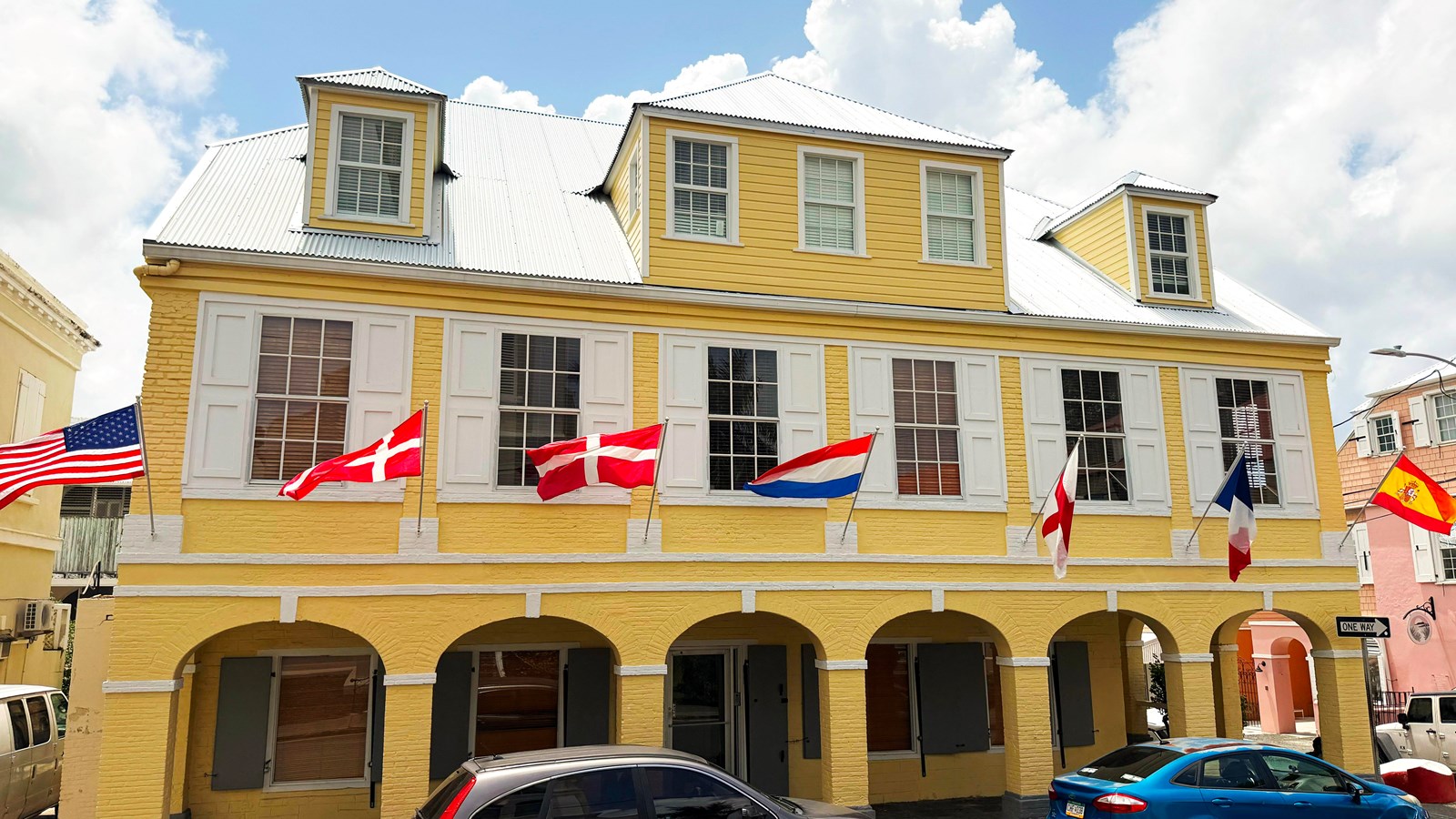
For nearly 400 years after Columbus’s arrival, Salt River Bay stood at the center of a struggle among European powers seeking land, resources, and influence in the Caribbean. Spanish, English, Dutch, French, Knights of Malta, and Danish settlers each claimed St. Croix at different times, raising their own flags over the island and leaving lasting marks on the landscape.
Their goals were not always the same. The Spanish sought to expand their empire and secure territory. Later English and Dutch settlers focused on farming and trade, producing crops such as tobacco, cotton, and indigo. The French and Knights of Malta expanded agricultural production and settlement, while the Danish developed large-scale sugar plantations that transformed St. Croix’s economy. These industries depended heavily on unpaid laborers from West Africa, impacting the lives of countless people who lived and worked on St. Croix.
As control of the island changed, Salt River Bay continued to transform. Settlers built forts, roads, docks, homes, warehouses, and farms around the harbor. In 1641, English colonists began constructing an earthen fort overlooking the harbor. The Dutch completed the fort the following year, creating what became known as Fort Flamand, later called Fort Salé. Roads, storage buildings, docks, homes, farms, and defensive structures gradually spread across the surrounding landscape. European settlements were often built on or near earlier Indigenous village sites, connecting centuries of human history within the bay.
Through centuries of conflict, changing governments, and economic transformation, Salt River Bay endured. People from many backgrounds lived, worked, traded, and built lives here, each leaving behind traces of their stories. The ruins, artifacts, and landscapes that remain today reflect not only the ambitions of competing empires, but also the resilience of the communities that shaped this harbor through generations of change.