



Last updated: September 30, 2026
Place
Cowpens Audio Tour Stop 4: The Cavalry (Dragoons) at Cowpens
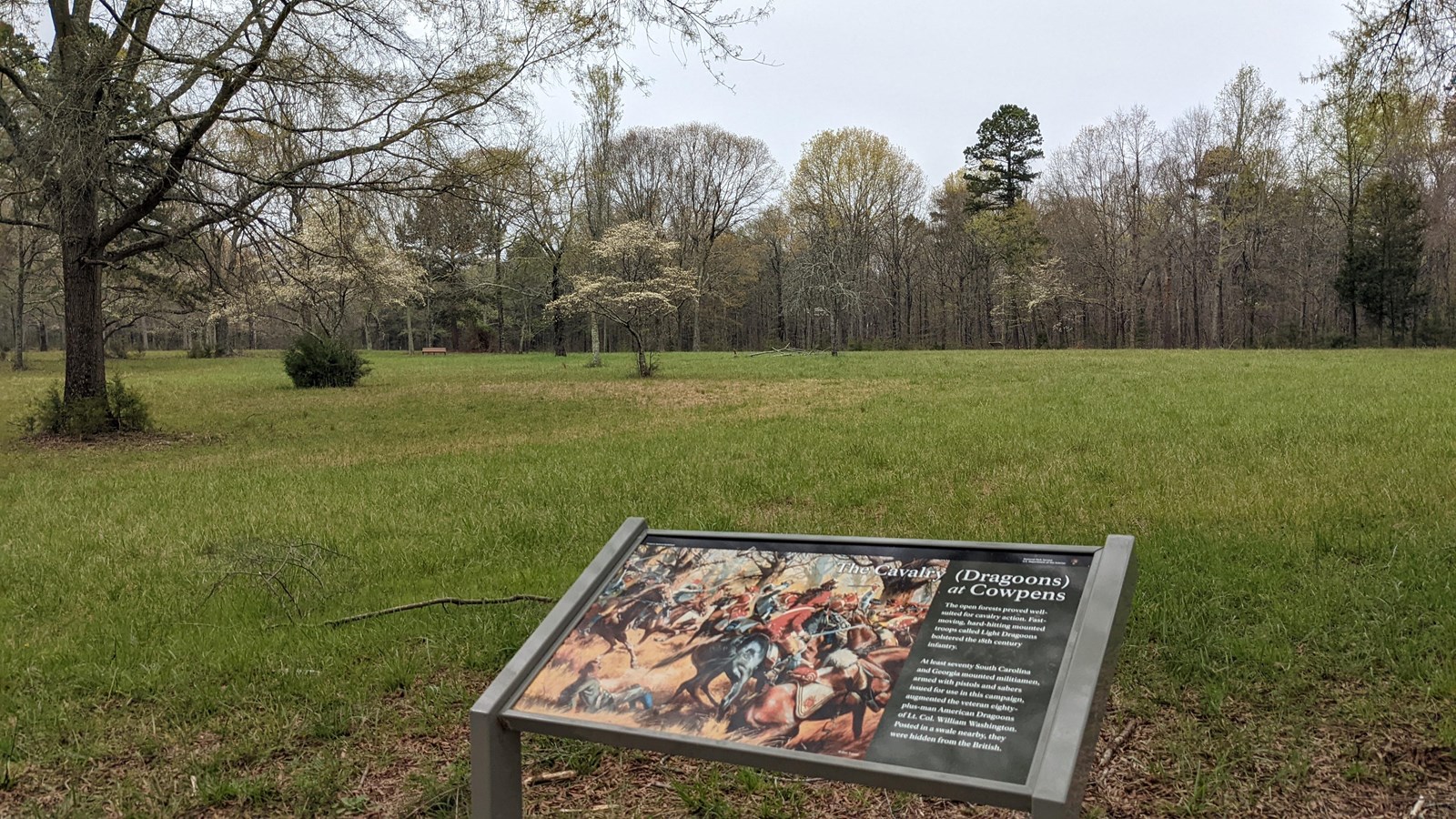
NPS Photo / Mike Puckett
Lieutenant Colonel William Washington’s 3rd Continental Light Dragoons played a crucial role in Daniel Morgan’s victory over Banastre Tarleton’s British force at Cowpens. Washington and his 82 veteran troopers were men from Virginia. They had tangled with Tarleton’s Legion several times in the struggle for dominance in South Carolina, usually coming out beaten and bloodied for their efforts.
In the days before the Battle of Cowpens, General Morgan called for volunteers from the militia companies encamped with his small army to add strength to his cavalry. Around 75-125 militia men from the Carolinas, Georgia, and Virginia joined the existing militia horse soldiers commanded by Lieutenant Colonel James McCall and Major Benjamin Jolly. The new troopers were issued sabers from the army’s supplies to prepare them for the coming fight. Washington issued orders that only sabers were to be used in the coming battle, and no firearms were to be used. Even with the additions to his cavalry force, Morgan was decidedly outnumbered by Tarleton’s 300 mounted troops.
When the Battle of Cowpens started on the frosty morning of January 17, 1781, Washington’s troopers were in a reserve position behind the main Patriot Army. The position was exposed, and the troopers were pelted with shots from the two British cannons firing on the American lines. Washington moved to a concealed position in the trees and waited for an opportunity to strike a blow.
Washington’s moment came when the withdrawing American militia was run down by the British 17th Light Dragoons on the left of the American lines. Washington’s 82 horsemen burst out of the trees, slammed into the redcoat cavalry, and pushed them off the battlefield. Washington’s perfectly timed and executed charge gave the American commanders the space and time to rally the militia and get them back into the fight.
At the peak of the battle, Tarleton’s troops were close to turning the Americans’ right flank and winning the battle. McCall and Jolly’s mounted state troops led the militia infantry’s advance around the British left flank. The American troopers encircled the 71st Highland Regiment and hit them from behind, causing them to surrender en masse. Washington’s reformed 3rd Dragoons rode around the British right flank encasing Tarleton’s men in a classic “double envelopment.”
In the days before the Battle of Cowpens, General Morgan called for volunteers from the militia companies encamped with his small army to add strength to his cavalry. Around 75-125 militia men from the Carolinas, Georgia, and Virginia joined the existing militia horse soldiers commanded by Lieutenant Colonel James McCall and Major Benjamin Jolly. The new troopers were issued sabers from the army’s supplies to prepare them for the coming fight. Washington issued orders that only sabers were to be used in the coming battle, and no firearms were to be used. Even with the additions to his cavalry force, Morgan was decidedly outnumbered by Tarleton’s 300 mounted troops.
When the Battle of Cowpens started on the frosty morning of January 17, 1781, Washington’s troopers were in a reserve position behind the main Patriot Army. The position was exposed, and the troopers were pelted with shots from the two British cannons firing on the American lines. Washington moved to a concealed position in the trees and waited for an opportunity to strike a blow.
Washington’s moment came when the withdrawing American militia was run down by the British 17th Light Dragoons on the left of the American lines. Washington’s 82 horsemen burst out of the trees, slammed into the redcoat cavalry, and pushed them off the battlefield. Washington’s perfectly timed and executed charge gave the American commanders the space and time to rally the militia and get them back into the fight.
At the peak of the battle, Tarleton’s troops were close to turning the Americans’ right flank and winning the battle. McCall and Jolly’s mounted state troops led the militia infantry’s advance around the British left flank. The American troopers encircled the 71st Highland Regiment and hit them from behind, causing them to surrender en masse. Washington’s reformed 3rd Dragoons rode around the British right flank encasing Tarleton’s men in a classic “double envelopment.”