



Last updated: September 16, 2026
Place
Steelville Community Park & Recreation Area
Courtesy Jennifer Whitson
Quick Facts
Location:
101 E. Highway 8, Steelville, Missouri 65565
Significance:
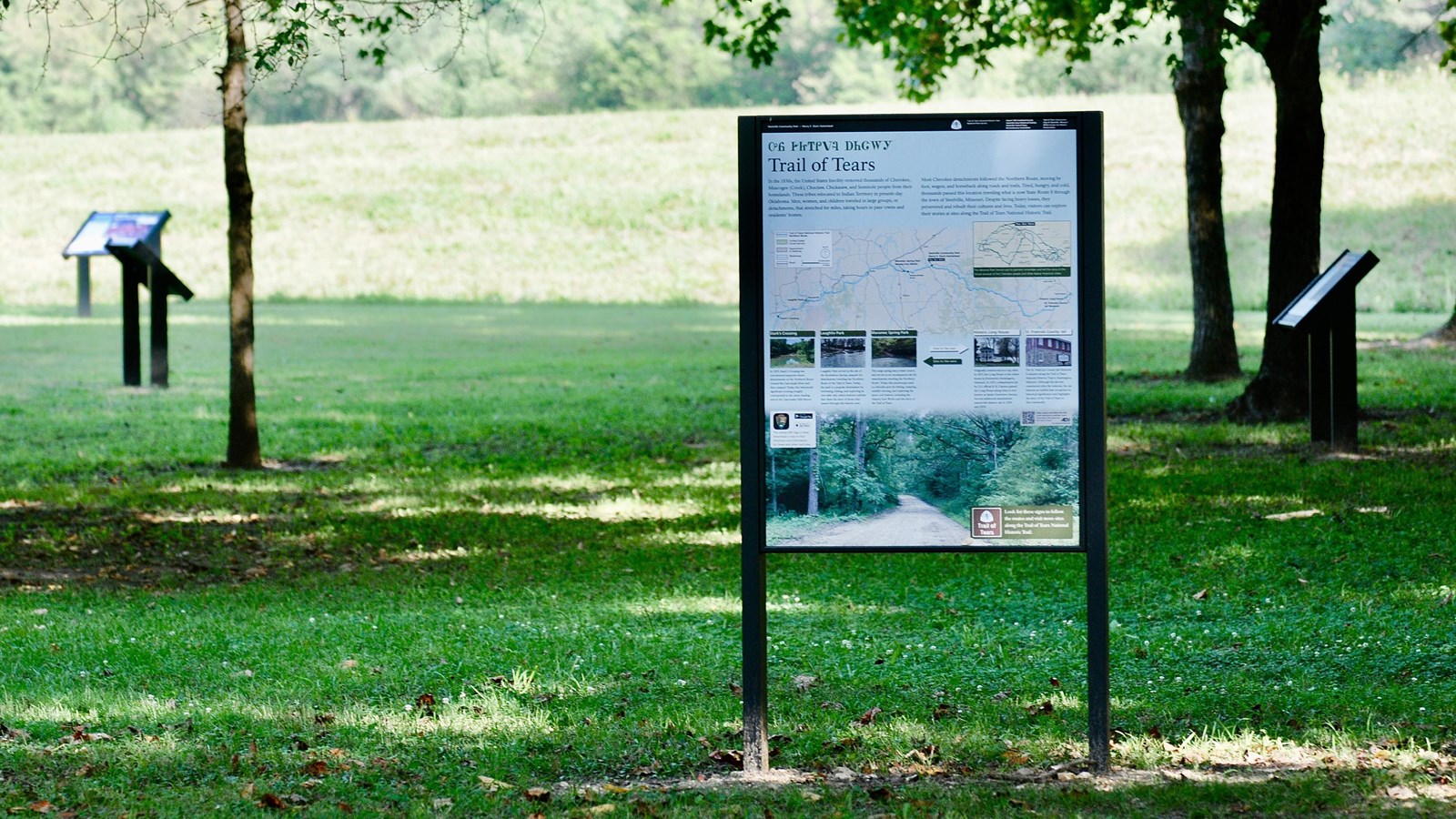
Most Cherokee detachments on the Trail of Tears followed the Northern Route, moving by foot, wagon, and horseback along roads and trails. Tired, hungry, and cold, thousands passed what is now State Route 8 through the town of Steelville, Missouri. Despite facing heavy losses, they persevered and rebuilt their cultures and lives. Today, visitors can explore their stories at sites along the Trail of Tears National Historic Trail.
Designation:
Certified Partner
MANAGED BY:
Amenities
6 listed
Historical/Interpretive Information/Exhibits, Parking - Auto, Picnic Table, Playground, Restroom, Swimming Pool
In the 1830s, the United States forcibly removed thousands of Cherokee, Muscogee (Creek), Choctaw, Chickasaw, and Seminole people from their homelands. These tribes relocated to Indian Territory in present-day Oklahoma. Men, women, and children traveled in large groups, or detachments, that stretched for miles, taking hours to pass towns and residents’ homes. Most Cherokee detachments followed the Northern Route, moving by foot, wagon, and horseback along roads and trails. Tired, hungry, and cold, thousands passed this location traveling what is now State Route 8 through the town of Steelville, Missouri. Despite facing heavy losses, they persevered and rebuilt their cultures and lives. Today, visitors can explore their stories at sites along the Trail of Tears National Historic Trail.
This land belonged to Henry E. Davis. On December 4, 1837 approximately 350 Cherokee gathered wood here before setting up to camp for the night. Davis sold them cornmeal for food, along with fodder and corn for their horses. The party—led by US Army Lieutenant B. B. Cannon—had been plagued by illness since crossing the Mississippi River. By the time they reached Davis' homestead, Cannon noted there was "scarcely room in the wagons for the sick."From 1838-1839, ten additional detachments largely followed Cannon's route to the West, which later became known as the Northern Route. Thousands of Cherokee in these detachments - alongside free and enslaved African Americans, hundreds of Muscogee (Creek) refugees, white individuals married to Cherokee, missionaries, and physicians - were forced to journey west, with some pausing here to rest and resupply.
Enslaved People. When the U.S. government forcibly removed the Cherokee Nation, an estimated 1,500-2,000 enslaved African Americans were also taken west. On December 4, a member of Cannon's detachment stayed behind "to bury a waggoner (black boy) who died this morning." The following day, Cannon left two more "waggoners (black boys)" at Mr. Davis' homestead because they were too sick to travel. Little is known about the enslaved people who migrated with the Cherokee, but it is possible that these teamsters were among them.
Muscogee Refugees. Muscogee refugees fled to the Cherokee Nation to avoid their tribe's removal and were given asylum by the Cherokee General Council in August 1837. They stayed there until the fall of 1838, when they were removed to the West with the Cherokee.
Missionaries. Reverand Daniel S Butrick was one of several missionaries who traveled west with the Cherokee. He passed through here in 1839 with the Richard Taylor detachment and remained with the Cherokee in present-day Oklahoma until his death in 1851.
Coming soon is a statue by Cherokee and Pawnee artist Daniel HorseChief, depicting a phoenix forming from flame and tears, with a mother, father, and child on one side and a freedman and missionary on the other. Included will be a medicinal pollinator garden with footprints representing those who walked the path long ago.
Site Information
Location (101 MO-Hwy 8, Steelville, Missouri, 65565)
Safety Considerations
More Site Information
Exhibit with Audio Description Available
Check back with us soon - site updates are ongoing!