



Last updated: July 30, 2022
Place
Sound of Silence Trail Stop 4
NPS Photo/Conrad Provan
Quick Facts
Amenities
1 listed
Scenic View/Photo Spot
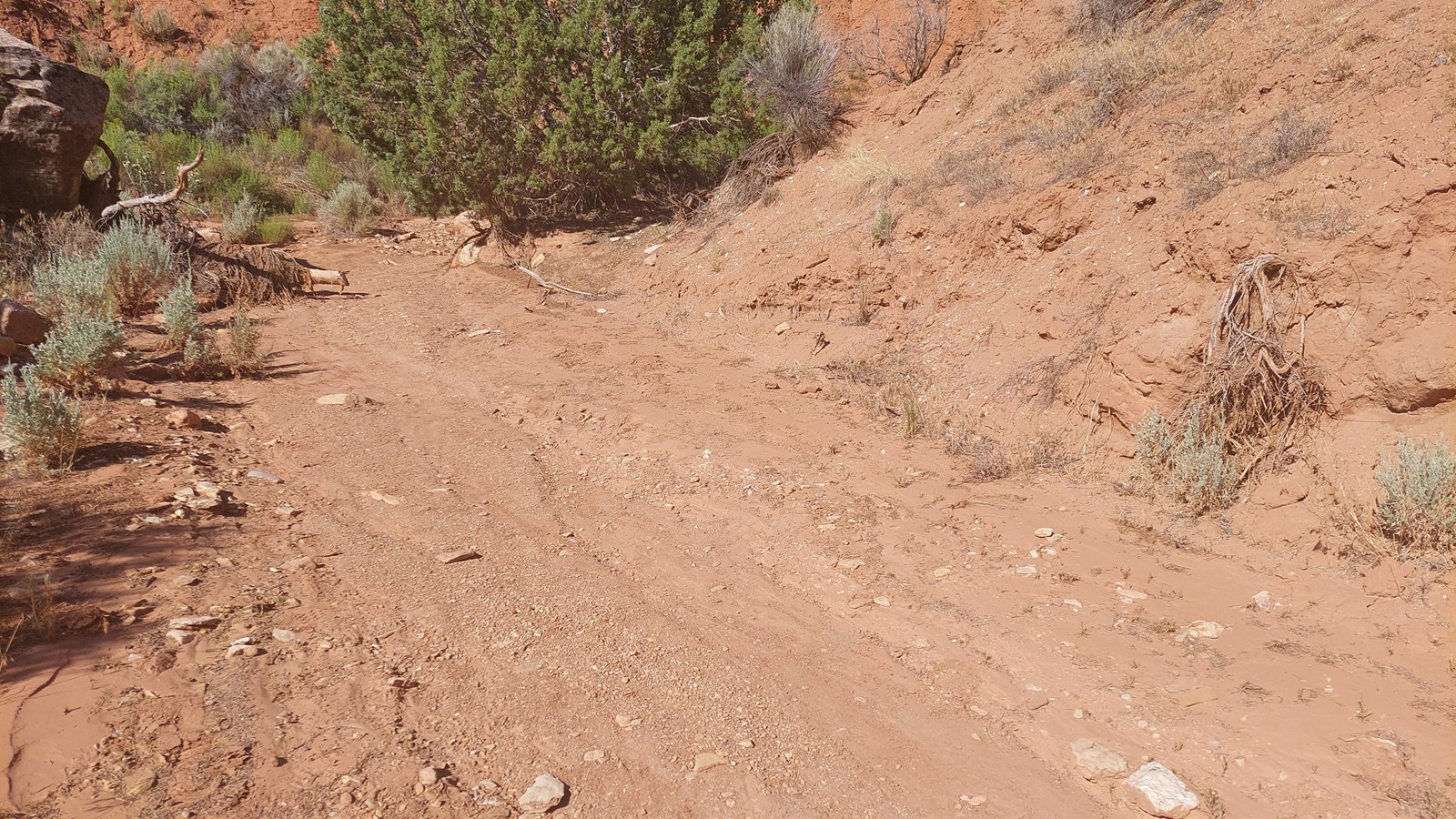
Take a close look at the earthen bank on your right for evidence of flowing water — sometimes swift and other times slow. Faster water can carry larger particles. Can you find a layer that was accompanied by the sound of rushing water? Slower water can only carry fine sediments. Try to find a layer that would have been deposited by a quiet trickle. The surrounding cliffs, slowly eroded by wind and water, add to the diverse, sorted sediment layers. Erosion continues with each new rainstorm moving more sediment downstream. Differences in the sediment layers help natural cavities develop. Holes may be enlarged and used by squirrels and birds, as nesting sites. Listen carefully and you may hear the scratchy call of a Rock Wren or the melodic song of a Canyon Wren. Look carefully and you may see a Golden-mantled Ground Squirrel peeking out of a hole, its high pitched alarm call warning others of your presence.