



Last updated: July 1, 2026
Place
Information Panel: Restraining the River
NPS / Laurel Brodsky
Quick Facts
Amenities
1 listed
Historical/Interpretive Information/Exhibits
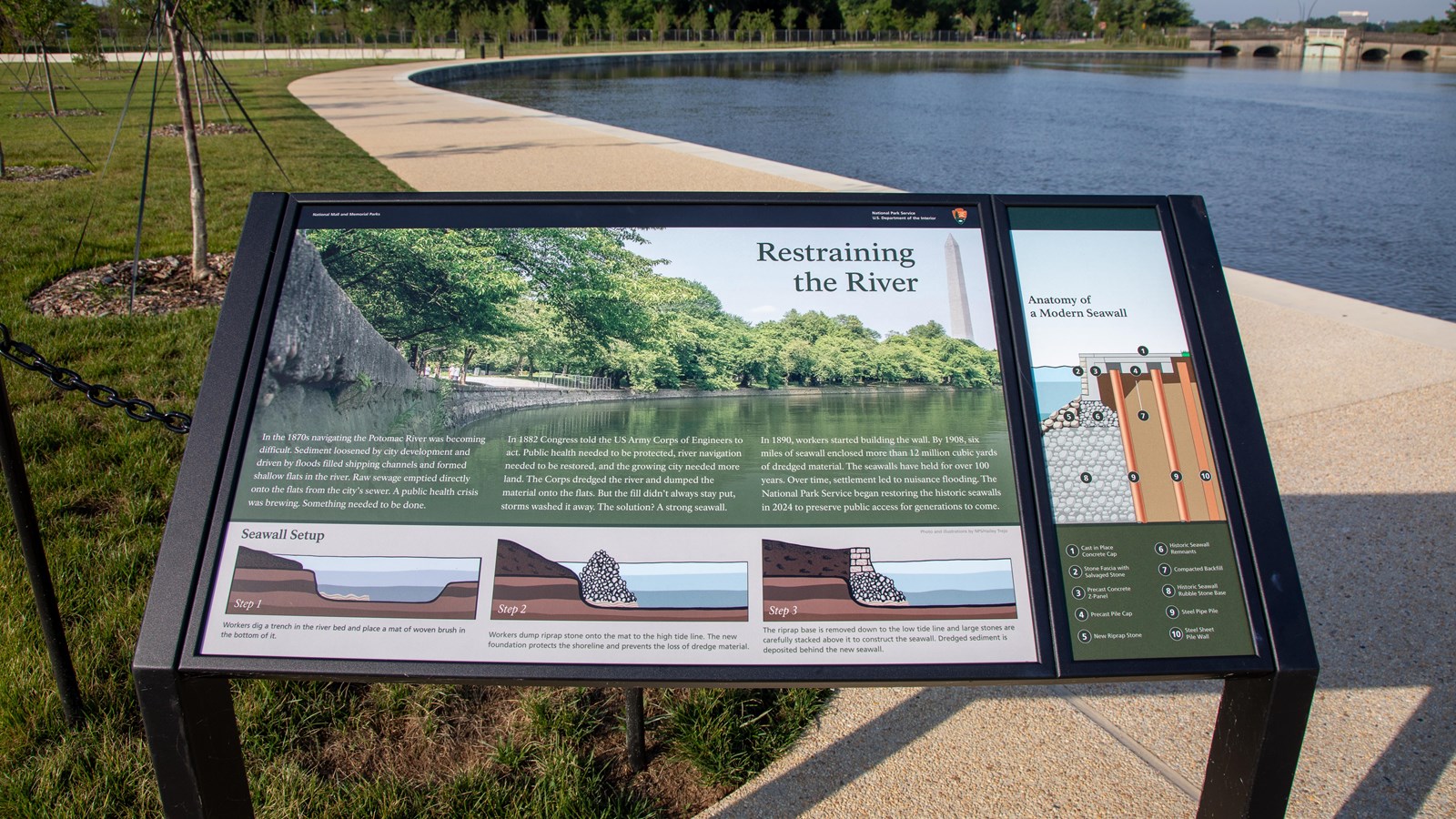
In the 1870s navigating the Potomac River was becoming difficult. Sediment loosened by city development and driven by floods filled shipping channels and formed shallow flats in the river. Raw sewage emptied directly onto the flats from the city's sewer. A public health crisis was brewing. Something needed to be done.
In 1882 Congress told the US Army Corps of Engineers to act. Public health needed to be protected, river navigation needed to be restored, and the growing city needed more land. The Corps dredged the river and dumped the material onto the flats. But the fill didn't always stay put, storms washed it away. The solution? A strong seawall.
In 1890, workers started building the wall. By 1908, six miles of seawall enclosed more than 12 million cubic yards of dredged material. The seawalls have held for over 100 years. Over time, settlement led to nuisance flooding. The National Park Service began restoring the historic seawalls in 2024 to preserve public access for generations to come.
Step 2: Workers dump riprap stone onto the mat to the high tide line. The new foundation protects the shoreline and prevents the loss of dredge material.
Step 3: The riprap base is removed down to the low tide line and large stones are carefully stacked above it to construct the seawall. Dredged sediment is deposited behind the new seawall.
2: Stone Fascia with Salvaged Stone
3: Precast Concrete Z-Panel
4: Precast Pile Cap
5: New Riprap Stone
6: Historic Seawall Remnants
7: Compacted Backfill
8: Historic Seawall Rubble Stone Base
9: Steel Pipe Pile
10: Steel Sheet Pile Wall
In 1882 Congress told the US Army Corps of Engineers to act. Public health needed to be protected, river navigation needed to be restored, and the growing city needed more land. The Corps dredged the river and dumped the material onto the flats. But the fill didn't always stay put, storms washed it away. The solution? A strong seawall.
In 1890, workers started building the wall. By 1908, six miles of seawall enclosed more than 12 million cubic yards of dredged material. The seawalls have held for over 100 years. Over time, settlement led to nuisance flooding. The National Park Service began restoring the historic seawalls in 2024 to preserve public access for generations to come.
Seawall Setup
Step 1: Workers dig a trench in the river bed and place a mat of woven brush in the bottom of it.Step 2: Workers dump riprap stone onto the mat to the high tide line. The new foundation protects the shoreline and prevents the loss of dredge material.
Step 3: The riprap base is removed down to the low tide line and large stones are carefully stacked above it to construct the seawall. Dredged sediment is deposited behind the new seawall.
Anatomy of a Modern Seawall (Diagram)
1: Cast in Place Concrete Cap2: Stone Fascia with Salvaged Stone
3: Precast Concrete Z-Panel
4: Precast Pile Cap
5: New Riprap Stone
6: Historic Seawall Remnants
7: Compacted Backfill
8: Historic Seawall Rubble Stone Base
9: Steel Pipe Pile
10: Steel Sheet Pile Wall