



Last updated: February 19, 2026
Place
Old Cape Girardeau
Quick Facts
Amenities
4 listed
Benches/Seating, Historical/Interpretive Information/Exhibits, Information, Information Kiosk/Bulletin Board
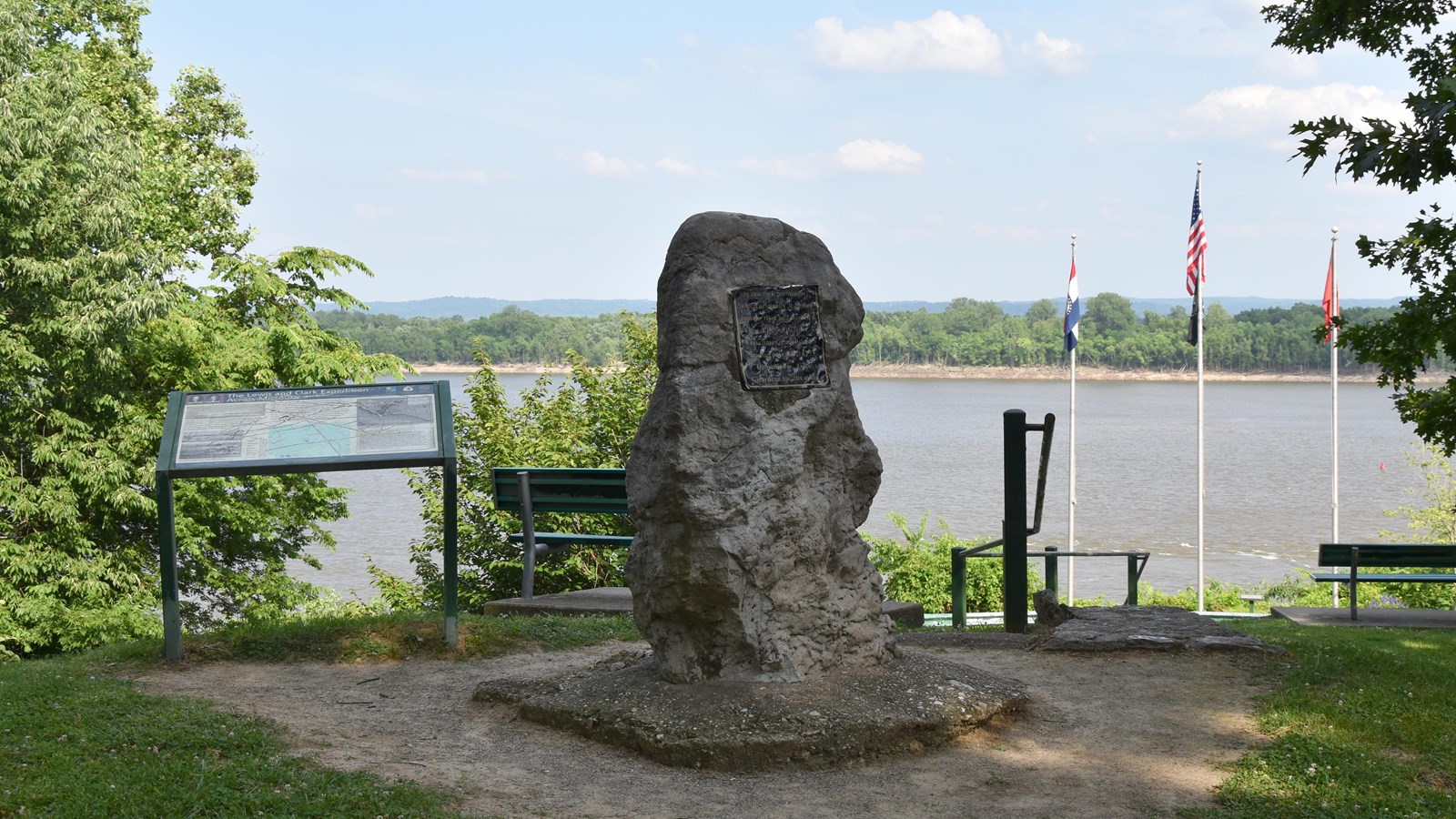
After arriving at Cape Girardeau on November 23, 1803, Clark and the expedition headed upriver to establish camp while Lewis remained in town to meet with commandant Louis Lorimier. Their camp was at the site of Old Cape Girardeau, a high limestone promontory above the river, where Jean Baptiste de Girardot established a trading post in 1733. When Lewis arrived at the camp that night, he found Clark feeling unwell. The following morning as the expedition was pushing off, Nathaniel Pryor appeared after being lost for the previous two days—”we passed the river and took him in he was much fatiequed with his wandering and somewhat indisposed.”
The namesake promontory of Cape Girardeau was comprised of limestone and extended out into the Mississippi River. Much of it was blasted away for the construction of railroad tracks along the river around 1900. Today, the site is maintained by the city as Cape Rock Park, and what remains of the promontory affords a scenic view of the surrounding area.
Lewis and Clark NHT Visitor Centers and Museums
This map shows a range of features associated with the Lewis and Clark National Historic Trail, which commemorates the 1803-1806 Lewis and Clark Expedition. The trail spans a large portion of the North American continent, from the Ohio River in Pittsburgh, Pennsylvania, to the mouth of the Columbia River in Oregon and Washington. The trail is comprised of the historic route of the Lewis and Clark Expedition, an auto tour route, high potential historic sites (shown in black), visitor centers (shown in orange), and pivotal places (shown in green). These features can be selected on the map to reveal additional information. Also shown is a base map displaying state boundaries, cities, rivers, and highways. The map conveys how a significant area of the North American continent was traversed by the Lewis and Clark Expedition and indicates the many places where visitors can learn about their journey and experience the landscape through which they traveled.