



Last updated: July 8, 2021
Place
Lillian Pitt Public Artwork Land Overlook at Land Bridge
"Land Bridge with Fort Vancouver" by dalechumbley is licensed under CC BY-NC-ND 2.0
Quick Facts
Location:
Vancouver, WA
MANAGED BY:
Amenities
5 listed
Cellular Signal, Historical/Interpretive Information/Exhibits, Scenic View/Photo Spot, Trash/Litter Receptacles, Wheelchair Accessible
Lewis and Clark NHT Visitor Centers and Museums
This map shows a range of features associated with the Lewis and Clark National Historic Trail, which commemorates the 1803-1806 Lewis and Clark Expedition. The trail spans a large portion of the North American continent, from the Ohio River in Pittsburgh, Pennsylvania, to the mouth of the Columbia River in Oregon and Washington. The trail is comprised of the historic route of the Lewis and Clark Expedition, an auto tour route, high potential historic sites (shown in black), visitor centers (shown in orange), and pivotal places (shown in green). These features can be selected on the map to reveal additional information. Also shown is a base map displaying state boundaries, cities, rivers, and highways. The map conveys how a significant area of the North American continent was traversed by the Lewis and Clark Expedition and indicates the many places where visitors can learn about their journey and experience the landscape through which they traveled.
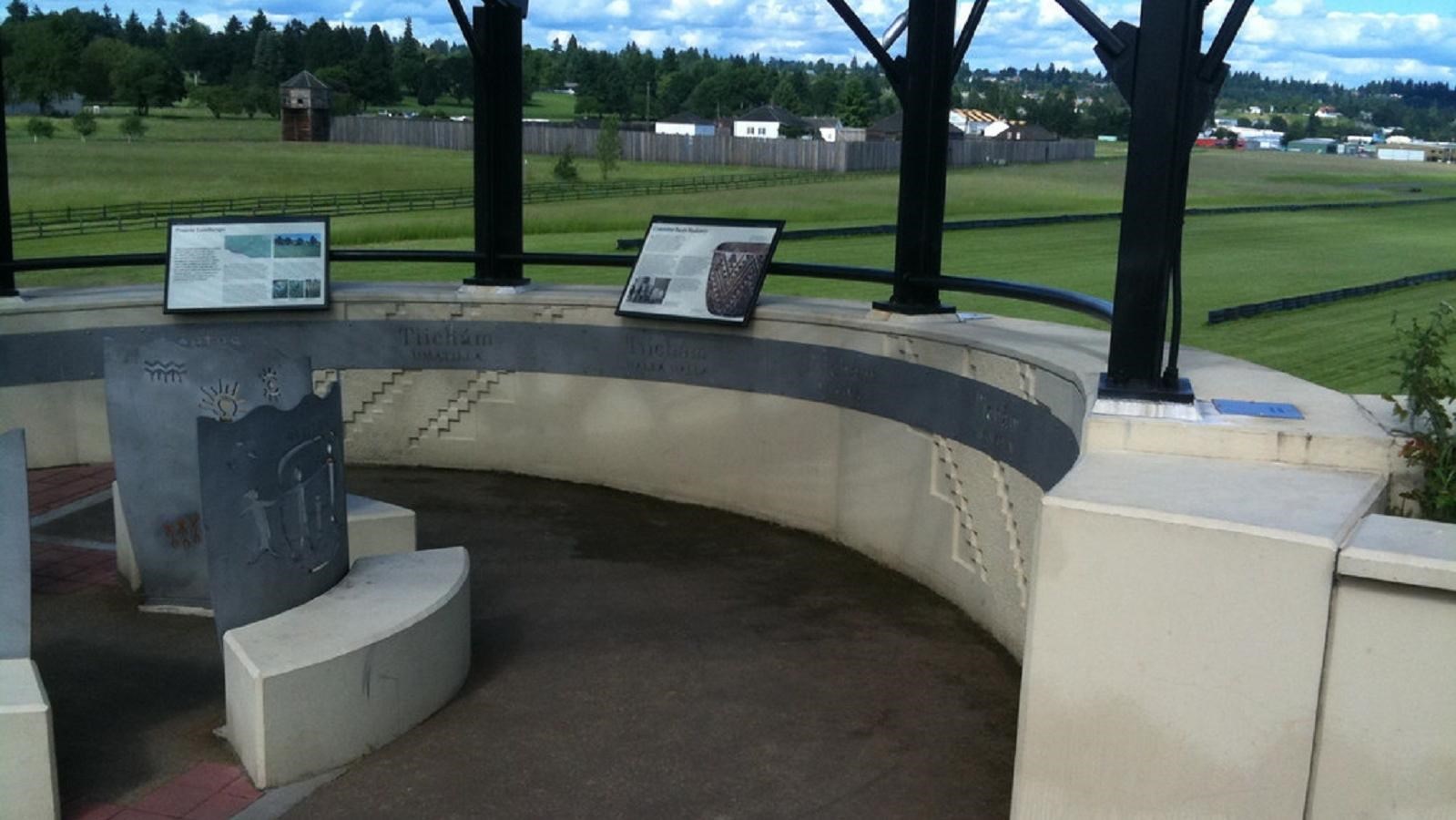
The Land Bridge on the Columbia River features three overlooks across spectacular vistas of land, river, and ocean. The site was built to honor the Chinookan people, who lived and traded along the Columbia River. Artwork at these overlooks honor the traditions of these people and tell the story of river, land and people along.
At the Land Overlook, “Spirit Baskets” by Lillian Pitt, feature figures inspired by Columbia River petroglyphs. The words for River, Land, and People appear in nine native languages on stainless steel panels “The images in this section are all cut out of the metal. We had to be really careful in how the metal was fabricated and finished so that little kids wouldn’t put their fingers in the holes and cut themselves. But we wanted the images to be cut out because the shadows that they throw are just as important as the images themselves. I think of them as ‘Shadow Spirits.’”
Lillian Pitt is a Pacific Northwest Native American artist. She was born and raised on the Warm Springs reservation in Oregon and her ancestors lived in and near the Columbia River Gorge for over 10,000 years. The focus of her work is on creating contemporary fine art pieces that delight today’s art lovers, and at the same time, honor the history and legends of her people.
For more information about Lillian Pitt’s work and a list of her other public art pieces to view in the area, please visit http://lillianpitt.com.