



Last updated: April 7, 2026
Place
La Villita Historic District
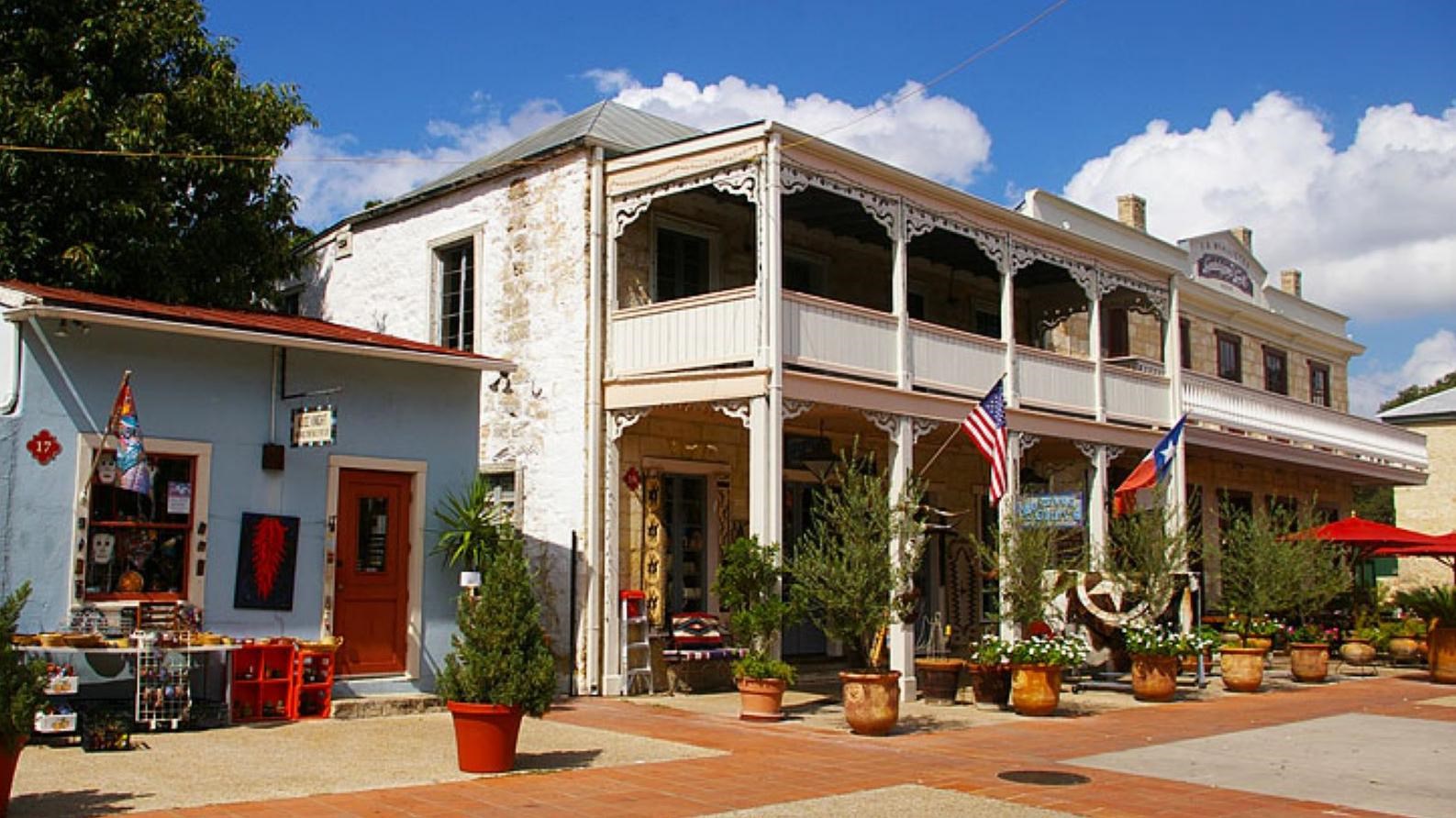
Photo/City of San Antonio Mission Trails Historic Sites
Quick Facts
Location:
bounded by the San Antonio River, South Alamo Street, East Nueva Street, and South Presa Street, San Antonio, Texas
Significance:
Part of a 27-building complex listed on the National Register of Historic Places, La Villita contains architectural and archaeological evidence of early civilian and military life in Spanish Texas; it also played an important role in the Texas Revolution.
Designation:
certified site, National Register of Historic Places
MANAGED BY:
City of San Antonio Parks and Recreation
Amenities
1 listed
Historical/Interpretive Information/Exhibits
Tucked into downtown San Antonio along El Camino Real de los Tejas, La Villita Historic District includes 27 buildings that show the evolution of San Antonio. The architecture of La Villita is as diverse as its history, with Native American, colonial Spanish, and Tejano influences; there are adobe buildings as well as buildings made of brick and of limestone.[1]
Before the arrival of Europeans, Coahuiltecan peoples occupied a village at the site of what would become La Villita on the east side of the San Antonio River.[2] As Spanish missionaries, soldiers, and government officials arrived in the area, they established and built Mission San Antonio de Valero, today better known as the Alamo. Presidio San Antonio de Béxar lay just across the river, and many soldiers’ families built homes on land near the Alamo, later known as La Villita. In 1773, the area opened to Spanish settlers. In addition to immigrants from Spain and migrants from other parts of New Spain, the residents in the early years of La Villita likely included a diverse array of Indigenous peoples from the surrounding area and peoples from other parts of the Spanish empire.[3]
In 1793, the Spanish Crown ordered the mission to secularize, effectively granting the lands surrounding the mission to resident Indigenous peoples, Spanish soldiers, and civilians. La Villita had its own mayor from 1795-1809 before being incorporated into San Antonio.[4] Wealthier residents began to move to the area after a flood in 1819 devastated much of San Antonio but spared La Villita.[5]
Due to its strategic location along El Camino Real de los Tejas, La Villita witnessed conflict during the Texas War of Independence. Archeological evidence suggests that La Villita was the site of breastworks used by the Mexican forces commanded by General Antonio López de Santa Anna during the siege of the Alamo.[6]
Following the conclusion of the Texas Revolution, San Antonio and, by extension, La Villita became a destination for European immigrants. In the 1840s, many German immigrants arrived in San Antonio, and some settled in La Villita.[7] They were followed by immigrants from France and Switzerland.[8] Each group of new arrivals brought their own traditions, culinary practices, and trades to the area.
The decline of El Camino Real did not seriously impact San Antonio or La Villita, which thrived in the latter half of the 1800s. Railroads enabled the easier transportation of goods and introduced new economic possibilities. La Villita was a culturally and economically diverse neighborhood during this time, with craftsmen living near doctors and lawyers. The population of both La Villita and San Antonio grew as more people arrived seeking economic opportunity. [9]
In the early 1900s, La Villita fell into disrepair when many residents lost their jobs. Industry moved out of downtown San Antonio and wealthy residents began to move away from the crowded downtown area. During the Great Depression, city leaders began to consider the area’s future and San Antonio Mayor Maury Maverick authored the La Villita Ordinance that paved the way for the neighborhood’s restoration. Several New Deal-era programs provided funds and workers for restoration projects. The neighborhood became a hub for creating and teaching traditional arts and crafts.[10]
Today, visitors to La Villita Historic District can walk the streets of this historic neighborhood, observe different architectural styles, and visit shops and art galleries. Special events like the Night in Old San Antonio celebration offer additional opportunities to engage with this part of San Antonio and reflect on its history.[11]
Site Information
Location (bounded by the San Antonio River, South Alamo Street, East Nueva Street, and South Presa Street, San Antonio, Texas)
Available Facilities/Exhibits
Today La Villita is a thriving art community (a series of small shops). It is a historic district listed on the National Register of Historic Places.
El Camino Real de los Tejas National Historic Trail
[1] “La Villita Today,” La Villita San Antonio (https://www.lavillitasanantonio.com/: accessed 11 July 2024).
[2] Las Villita Historic District, National Register of Historic Places Nomination Form, (State of Texas, 1972), https://catalog.archives.gov/id/40971149, pdf p. 7.
[3] “La Villita,” Texas State Historical Association (last accessed 11 July 2024). https://www.tshaonline.org/handbook/entries/la-villita; NPS, “La Villita Historic District,” accessed October 24, 2024, https://www.nps.gov/places/la-villita-historic-district.htm
[4] Office of Historic Preservation, “La Villita,” City of San Antonio, accessed October 28, 2024, https://www.sanantonio.gov/historic/scoutsa/HistoricDistricts/LaVillita
[5] La Villita Historic District, National Register of Historic Places Nomination Form, page 7.
[6] Joseph H. Labadie, La Villita Earthworks: A Preliminary Report of Investigation of Mexican Siege Works at the Battle of the Alamo, (Center for Archaeological Research University of Texas at San Antonio, 1986), pg. 1. https://colfa.utsa.edu/_documents/car/asr-150/asr-159ab.pdf
[7] La Villita Historic District, National Register of Historic Places Nomination Form, page 7.
[8] City of San Antonio World Heritage Office, “La Villita Historic Arts Village,” Mission Trails Historic Sites, accessed October 24, 2024, https://www.sanantonio.gov/Mission-Trails/Mission-Trails-Historic-Sites/Historic-Districts-Neighborhoods/La-Villita-Historic-District/La-Villita-Historic-District-Expanded#172511806-la-villita-historic-arts-village; La Villita Historic District, National Register of Historic Places Nomination Form, p. 2, p. 7.
[9] La Villita Historic Arts Village, “History,” accessed October 24, 2024, https://www.lavillitasanantonio.com/History
[10] City of San Antonio World Heritage Office, “La Villita Historic Arts Village,” Mission Trails Historic Sites, accessed October 24, 2024, https://www.sanantonio.gov/Mission-Trails/Mission-Trails-Historic-Sites/Historic-Districts-Neighborhoods/La-Villita-Historic-District/La-Villita-Historic-District-Expanded#172511806-la-villita-historic-arts-village; “La Villita,” Texas State Historical Association (last accessed 11 July 2024). https://www.tshaonline.org/handbook/entries/la-villita
[11] “La Villita,” Texas State Historical Association (https://www.tshaonline.org/handbook/entries/la-villita: accessed 11 July 2024).