



Last updated: October 19, 2026
Place
High Peaks Tunnel
Amelia Horner
Quick Facts
Location:
High Peaks Area
Significance:
Scenic Preservation
Designation:
Trail Tunnel and Bridge
Amenities
1 listed
Scenic View/Photo Spot
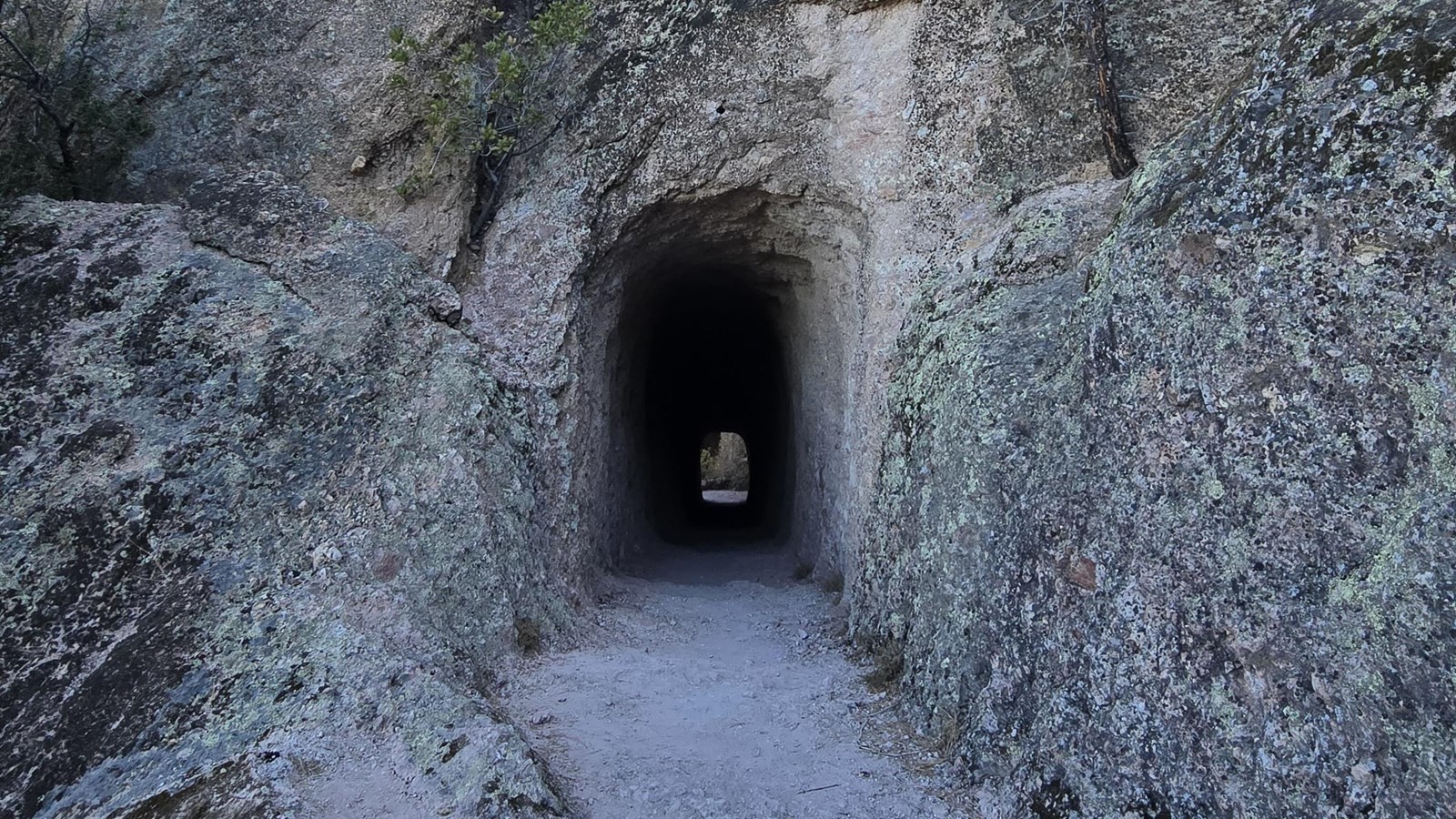
The tunnel along today's Tunnel Trail was constructed in 1932 as part of the development of the High Peaks Trail. Park engineers faced a formidable obstacle known as the Fingers, a cluster of steep volcanic spires with sheer rock faces that made it difficult to build a trail without significantly altering the landscape.
Rather than carving a visible route around the mountain, National Park Service engineers proposed a 120-foot tunnel through solid rock. Their goal was not simply to provide passage, but to preserve the scenic character of the High Peaks. By routing the trail through the mountain, they avoided cutting a prominent scar into the mountainside, reflecting the National Park Service's early rustic design philosophy, which sought to blend visitor facilities into the natural environment.
The tunnel and an adjoining concrete bridge spanning a nearby chasm were completed by the end of 1932. The route through the tunnel became the main alignment of the High Peaks Trail and was designed to accommodate both hikers and horseback riders. At the same time, an alternate footpath, now known as the Steep and Narrow, was constructed around the western side of the Fingers for hikers seeking a more adventurous route.
Today, the Tunnel Trail remains a remarkable example of early National Park Service engineering and planning. The passage through the rock allows visitors to experience the dramatic volcanic landscape while preserving the natural appearance of the surrounding cliffs and spires, just as its designers intended nearly a century ago.