



Last updated: January 29, 2026
Place
Healthy Rivers Healthy Critters Wayside
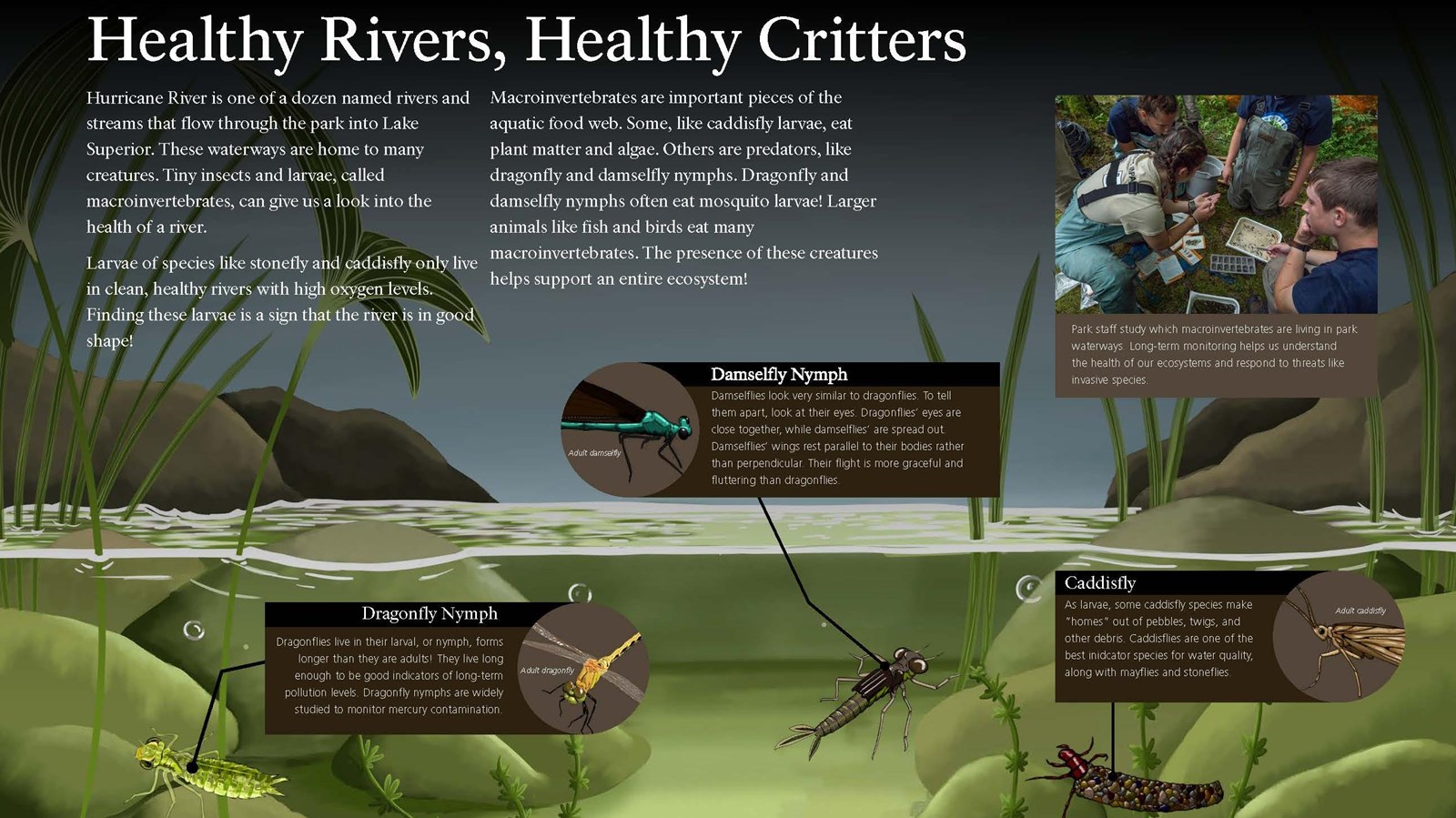
Healthy Rivers, Healthy Critters
Hurricane River is one of a dozen named rivers and streams that flow through the park into Lake Superior. These waterways are home to many creatures. Tiny insects and larvae, called macroinvertebrates, can give us a look into the health of a river.
Larvae of species like stonefly and caddisfly only live in clean, healthy rivers with high oxygen levels. Finding these larvae is a sign that the river is in good shape!
Macroinvertebrates are important pieces of the aquatic food web. Some, like caddisfly larvae, eat plant matter and algae. Others are predators, like dragonfly and damselfly nymphs. Dragonfly and damselfly nymphs often eat mosquito larvae! Larger animals like fish and birds eat many macroinvertebrates. The presence of these creatures helps support an entire ecosystem!
Damselfly Nymph
Damselflies look very similar to dragonflies. To tell them apart, look at their eyes. Dragonflies’ eyes are close together, while damselflies’ are spread out.
Damselflies’ wings rest parallel to their bodies rather than perpendicular. Their flight is more graceful and fluttering than dragonflies.
Dragonfly Nymph
Dragonflies live in their larval, or nymph, forms longer than they are adults! They live long enough to be good indicators of long-term pollution levels. Dragonfly nymphs are widely studied to monitor mercury contamination.
Caddisfly
As larvae, some caddisfly species make “homes” out of pebbles, twigs, and other debris. Caddisflies are one of the best indicator species for water quality, along with mayflies and stoneflies.
Park staff study which macroinvertebrates are living in park waterways. Long-term monitoring helps us understand the health of our ecosystems and respond to threats like invasive species.