



Last updated: January 29, 2026
Place
Hawks Nest Tunnel Disaster
NPS/Dave Bieri
Quick Facts
Significance:
The Hawk’s Nest Tunnel disaster was one of the worst industrial tragedies in the history of the United States
African American Heritage Driving Tour Stop 6: The Hawk's Nest Tunnel Disaster
If using the NPS app, to listen to the audio narrative, press the green button below or read the audio narrative text below.
Audio Narrative
Written by: Mark Bollinger
Narrated by: Joshua Flynn
Throughout the years, West Virginia has suffered many a tragedy that left hundreds of workers injured or dead. These tragedies are the result of disasters occurring in our coal mines, on our railroads and at industrial facilities like the Hawk’s Nest Tunnel incident. This disaster became one of the worst industrial tragedies in the history of the United States.1
In 1930, construction began on a three-mile tunnel through Gauley Mountain located between Ansted and Gauley Bridge, West Virginia. When finished, the Hawk’s Nest Tunnel would divert water from the New River to a hydroelectric plant downstream. The water would be used to produce electricity for Union Carbide’s metals plant at Alloy, West Virginia. In order to build the tunnel through solid rock, hundreds of unemployed men were recruited for construction jobs on the project. At least two-thirds of these workers were African Americans.
As the men drilled and blasted a 32-36 inch tunnel through the mountain, they drilled through rock that contained high levels of silica. The dry drilling techniques that was used released large amounts of silica dust into the air. This made working in the tunnel very dangerous. Black diggers emerged from the hole in the mountain covered with layers of white dust. The interior of the tunnel was a white cloud of silica, impairing vision and clogging the lungs of workers.2
Because the Hawk’s Nest Tunnel was licensed as a civil engineering project, even the most modest forms of safety were not applied.3 Workers labored in confined spaces with poor ventilation, a lack of dust control, and limited use of personal breathing protection. Within months, workers became sick from breathing silica dust. They showed signs of a lung disease called silicosis but were treated for a new disease called “tunnelitis”. Silicosis is a disease that infects the lungs leading to a shortness of breath and eventually death. Silicosis cannot be cured.
The length of employment in the tunnel rarely lasted more than a year. The dangerous work conditions and silica dust rendered many of the men unable to work. Excavation of the Hawk’s Nest Tunnel lead to the greatest death toll ever from silicosis in the United States. Of the approximately 5,000 men that worked on the project; an estimated 2,900 worked inside the tunnel. Of these men, silicosis claimed the lives of at least 764 workers. A majority of the dead were African Americans. In the years after the project was completed, many more would die due to their exposure to silica dust while working in the tunnel.
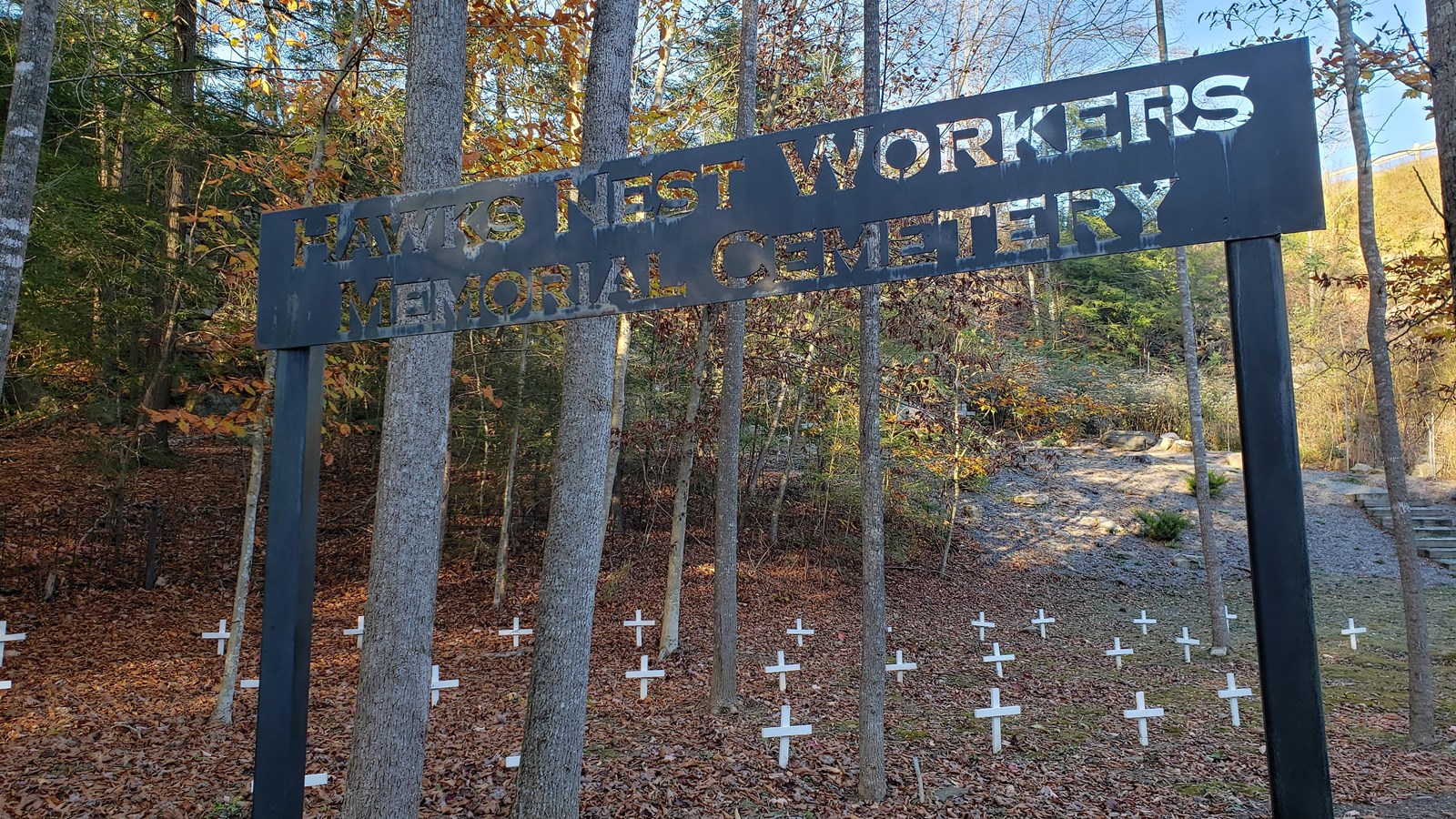
With the death of so many Black workers, the problem of where to bury them became an issue. There was no “colored” burial sites nearby.4 To solve the issue, a funeral parlor in Summersville, West Virginia located an open field on Martha White’s farm. This field became the burial grounds for many of the African Americans who died working on the tunnel project. Owen Symes remembers the cemetery like this:
“I used to rabbit hunt over there on the Martha White farm out in the fields before Rt. 19 came through here. I could see the graves. They were little soft mounds of dirt with grass over them. If you were not careful, you could step on one and it would cave in. They were in rows right up and down the fence line. They moved a lot of them when the highway came through. Dug up the graves and took what was left down by Hughes Bridge on the Gauley River to bury them again."
Today, the tunnel continues diverting water from the New River to produce hydro-electricity for the Alloy plant. Silicosis has been designated as an occupational disease with compensation for workers. However, tunnel workers at Hawk’s Nest were not protected by these laws.5 This memorial on Highway 19 was established to remember and honor the many victims of the Hawk’s Nest Tunnel tragedy.
1 Martin G. Cherniack, "Hawks Nest Tunnel Disaster." e-WV: The West Virginia Encyclopedia. 04 June 2015. Web.
2. Betty Dotson-Lewis, Hawk’s Nest Tunnel Tragedy, Sept 2009
3. Martin G. Cherniack, "Hawks Nest Tunnel Disaster." e-WV: The West Virginia Encyclopedia. 04 June 2015. Web.
4. Betty Dotson-Lewis, Hawk’s Nest Tunnel Tragedy, Sept 2009
5. Ibid
Additional Information
Throughout the years, West Virginia has suffered many a tragedy that left hundreds of workers injured or dead. The Hawk’s Nest Tunnel disaster became one of the worst industrial tragedies in the history of the United States.
In 1930, construction began on a three-mile tunnel through Gauley Mountain located between Ansted and Gauley Bridge, West Virginia. When finished, the Hawk’s Nest Tunnel would divert water from the New River to a hydroelectric plant downstream. In order to build the tunnel through solid rock, hundreds of unemployed men were recruited for construction jobs on the project. At least two-thirds of these workers were African Americans. As the men drilled and blasted the tunnel through the mountain, they drilled through rock that contained high levels of silica. The dry drilling techniques that was used released large amounts of silica dust into the air, which made working in the tunnel very dangerous. Workers emerged from the hole in the mountain covered with layers of white dust. The interior of the tunnel was a white cloud of silica, impairing vision and clogging the lungs of workers.
Excavation of the Hawk’s Nest Tunnel lead to the greatest death toll ever from silicosis in the United States. At least 764 tunnel workers died of silicosis. A majority of the dead were African Americans. In the years after the project was completed, many more would die due to their exposure to silica dust while working in the tunnel.
With the death of so many black workers, the problem of where to bury them became an issue. There were a limited number of burial sites for blacks nearby. To solve the issue, a funeral parlor in Summersville, West Virginia located an open field on Martha White’s farm. This field became the burial grounds for many of the African Americans who died working on the tunnel project.
For the full story go to: The Hawks Nest Tunnel Disaster
Other nearby places of interest:
Hawks Nest Workers Memorial and Grave Site
Driving Directions:
Hawks Nest State Park OverlookPhysical Address: 49 Hawks Nest Park Road, Ansted, WV 25812
GPS Coordinates: N38.12267, W81.12752
From Beckley and Fayetteville, WV: Take Highway 19 north to Highway 60. Follow the exit up the ramp and turn right onto Highway 60 west. Travel approximately 8.5 miles to the Hawks Nest Overlook parking lot. Tour Stop #6 and parking is on the left. Listen to the Audio script on the “Hawks Nest Tunnel Disaster then walk the loop trail to see the lake and tunnel entrance.
Directions to next Tour Stop:
Gauley Bridge DepotPhysical Address: 278 Railroad Street, Gauley Bridge, WV 25085
GPS Coordinates: N38.164618 W81.196832
From the Hawks Nest Overlook parking lot and turn left onto Highway 60 west. Travel approximately eight miles to the town of Gauley Bridge, WV. Cross the bridge over the Gauley River and turn right on Highway 16N/39E at the Welcome to Gauley Bridge sign. Drive under the old railroad bridge and immediately turn left and drive up the hill to the parking lot behind the Depot. Tour Stop #7 and parking is behind the Railroad Depot.
The requested video is no longer available.