



Last updated: March 4, 2026
Place
Harlem Heights
Mark Bollinger
Quick Facts
Location:
Oak Hill, WV
Significance:
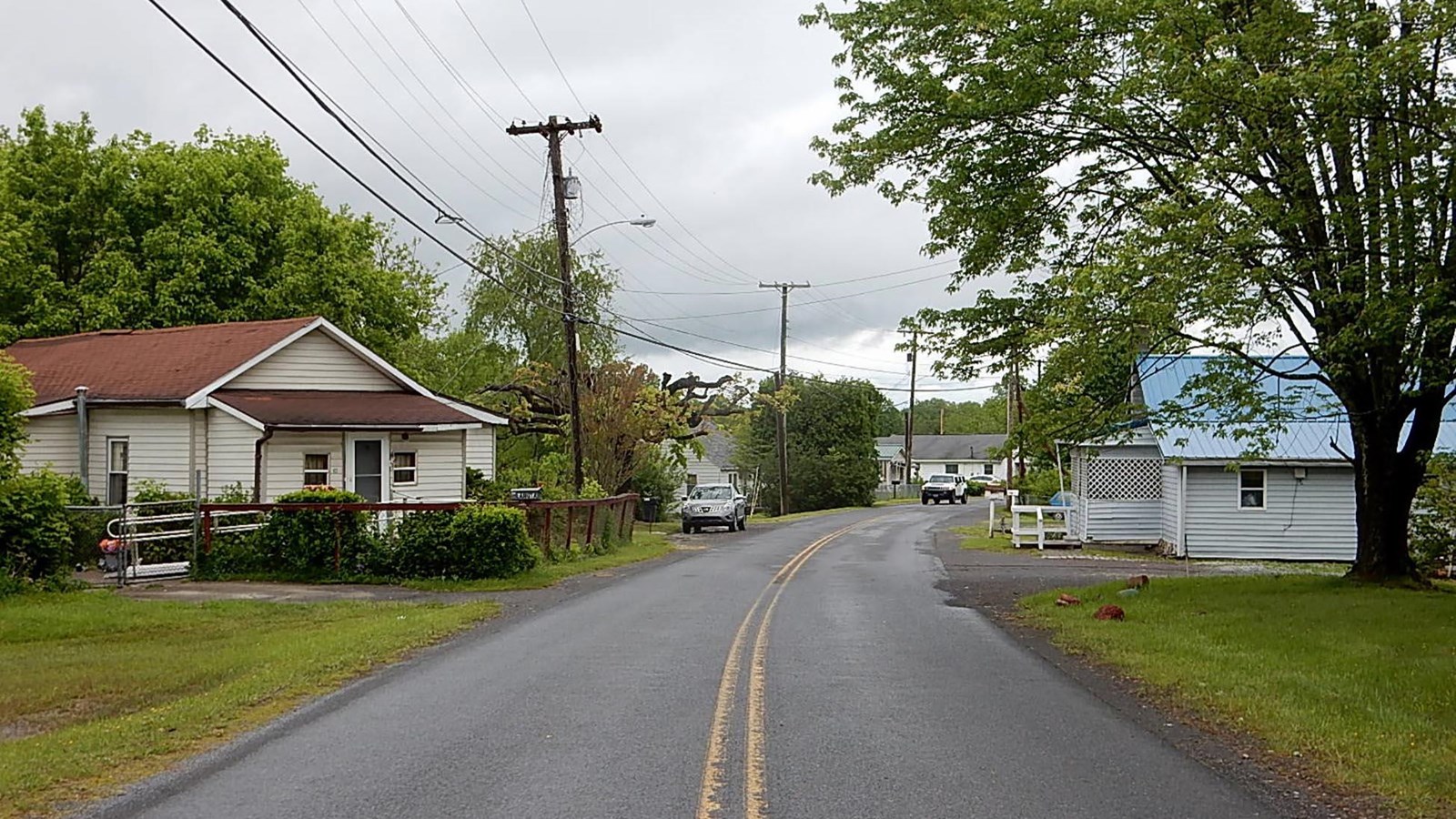
Harlem Heights is a historic African American community within the city of Oak Hill.
Amenities
3 listed
Historical/Interpretive Information/Exhibits, Parking - Auto, Playground
African American Heritage Driving Tour Stop 9: The Community of Harlem Heights
If using the NPS app, to listen to the audio narrative, press the green button below or read the audio narrative text below.
This tour stop is not advised for trailers, RVs, or motorhomes due to difficulty turning around.
Audio Narration
Written by: Dr. Brucella Jordan
Narrated by: Dr. Brucella Jordan and Adrienne Jenkins (quote)
Harlem Heights is an atypical African American community located within the City of Oak Hill, West Virginia. While most African American communities in the New River area were coal mining or industrially-based, the residents of Harlem Heights had a variety of occupations. In addition, the residents of coal mining towns usually lived in company houses, but most residents of Harlem Heights were homeowners.[1]
In the Harlem Heights area, the Homeseekers Land and Building Company charged “very little for lots.” This allowed African Americans to be able to purchase land and build a home. In what was basically an open field, African Americans began building homes and establishing a community. Jessie Barret notes that;
“[Harlem Heights] had five black families when I moved there in 1942. The remainder of the area was farm land. The section they called Harlem Heights had actually three streets. Lincoln Street, High Street, and Lewis [street]. [At that time] everything was inaccessible. We had the old fashioned outhouse for quite a while. We had about two wells with this huge long bucket you draw with. We had to carry our water [and] catch rain water for laundry. We had it rough for about a couple of years.”[2]
As the community began to develop; paved roads replaced dirt roads. Residents acquired indoor toilets and running water as well as other amenities and services. As the population grew, the community needed a school. In 1947, the Harlem Heights School was built and accommodated students in the first through eighth grade. High school students were bused seven miles to DuBois High School in Mount Hope, West Virginia. When schools were integrated in the 1960s, Harlem Heights students began attending the white elementary schools and Collins High School in Oak Hill. The school at Harlem Heights closed its doors in 1967.[3]
Harlem Heights residents held a variety of occupations. Several were entrepreneurs who owned and operated stores and businesses right in the community. Resident Terrance Tango Leggett remembers Ms. Classy’s store, later known as Shug’s Place, where residents could purchase necessities. Down the street was Mr. Bozo’s store, with a dance hall on the second level. Other residents worked as teachers, mining inspectors, seamstresses, and ministers. A few made their living as farmers. Sterling Hughes raised cattle and sold milk, cheese, butter, eggs and homemade hot dinner rolls from his farm. Some residents, especially women, held service- oriented jobs. Of course, there were a few coal miners, but they did not represent the majority of residents.[4]
The people of Harlem Heights took pride in their community by keeping it clean and attractive. They actively supported their churches, civic clubs, and fraternal organizations. Some residents worked as community activists to move their neighborhood forward. In the 1970s, Social worker Opal Leggett was responsible for starting and overseeing the Head Start program in Fayette County. Fayette County Legislators, Diane Smallwood and Reverend Frank Robinson as well as the honorable William Robinson were active as political organizers and community developers. [5] For his impact in the community and as a professional basketball player, a neighborhood park was built in honor of Federal mine inspector Russell E. Mathews.
Through all of these efforts, Harlem Heights grew to become a rather upscale African American community. Though relatively small, it grew large enough and politically active enough to have its own voting precinct. Today, the community has a Masonic lodge and three churches: The Community Baptist Church, The First Baptist Church, and The Glorious Church of God in Christ.[6]
[1] Ancella Bickley, To Black in Fayette, (Fayetteville: The Centennial Committee of the Second Baptist Church of Fayetteville, WV and the Fayette County Black Caucus, 1993), 52.
[2] Ibid, 52-53.
[3] Interview with Terrance Tango Leggett by John Bollinger NPS, 11/ 30/ 2015. Also, Bickley, To Be Black in Fayette, 52-58.
[4] Interview with Tango Leggett.
[5] Ibid.
[6] Bickley, To Black in Fayette, 58.
Additional Information
Harlem Heights, a historic African American community within the city of Oak Hill, was different than most communities in the New River region. Black residents worked in a variety of occupations as teachers, mining inspectors, seamstresses, and ministers. Although there were a few coal miners, they did not represent the majority. Unlike a coal town where homes were owned by the company, most of the residents of Harlem Heights were homeowners.
The people of Harlem Heights took pride in their community by keeping it clean and attractive. They actively supported their churches, civic clubs, and fraternal organizations. Through all of these efforts, it grew to become a rather upscale African American community, eventually gaining its own voting precinct. Today, the community has a Masonic Lodge and three churches.
For the full story go to The Community of Harlem Heights
Other nearby places of interest:
First Baptist Church of Harlem Heights
Russell E. Matthew Park
Hilltop Baptist Center
Driving Directions:
Physical Address: 10 Broadway Avenue, Oak Hill, WV 25901GPS Coordinates: N37.998485 -W81.131346
From Beckley, WV: Take Highway 19 north to Oak Hill, WV. Take the East Oak Hill exit and turn right at the top of exit ramp onto Main Street/Highway 16 north. Travel 1.5 miles to Russell E. Matthew’s Park and playground on the right. Turn right at the park onto Broadway Avenue. The Tour Stop #9 and parking is at the playground
From Fayetteville, WV: Take Highway 19 south to Oak Hill, WV to the Lochgelly Road exit. At the top of the exit, turn right onto Lochgelly Road. The road will turn into Highway 16 (Main Street). Travel .5 tenths of a mile to the Russell E. Matthew Park on the left. Turn left onto Broadway Avenue. The Tour Stop #9 and parking is at the playground.
Directions to next Tour Stop:
Thurmond
Physical Address: Hwy 25/2, Thurmond, WV 25936
GPS Coordinates: N37.957095 -W81.078851
From Russell E. Matthew Park, turn right onto Highway 16 north. Travel .5 of a mile and turn left onto Highway 19 south. Travel on Highway 19 south to the Greentown Exit (exit is to the left). Turn left onto Highway 16 south and travel 2 miles to Glen Jean, WV. Turn left at the crossroads and follow the brown signs to Thurmond. Travel 7 miles and cross the bridge over the New River. Tour Stop #10 and parking is in front of the Railroad Depot
The requested video is no longer available.