



Last updated: October 1, 2026
Place
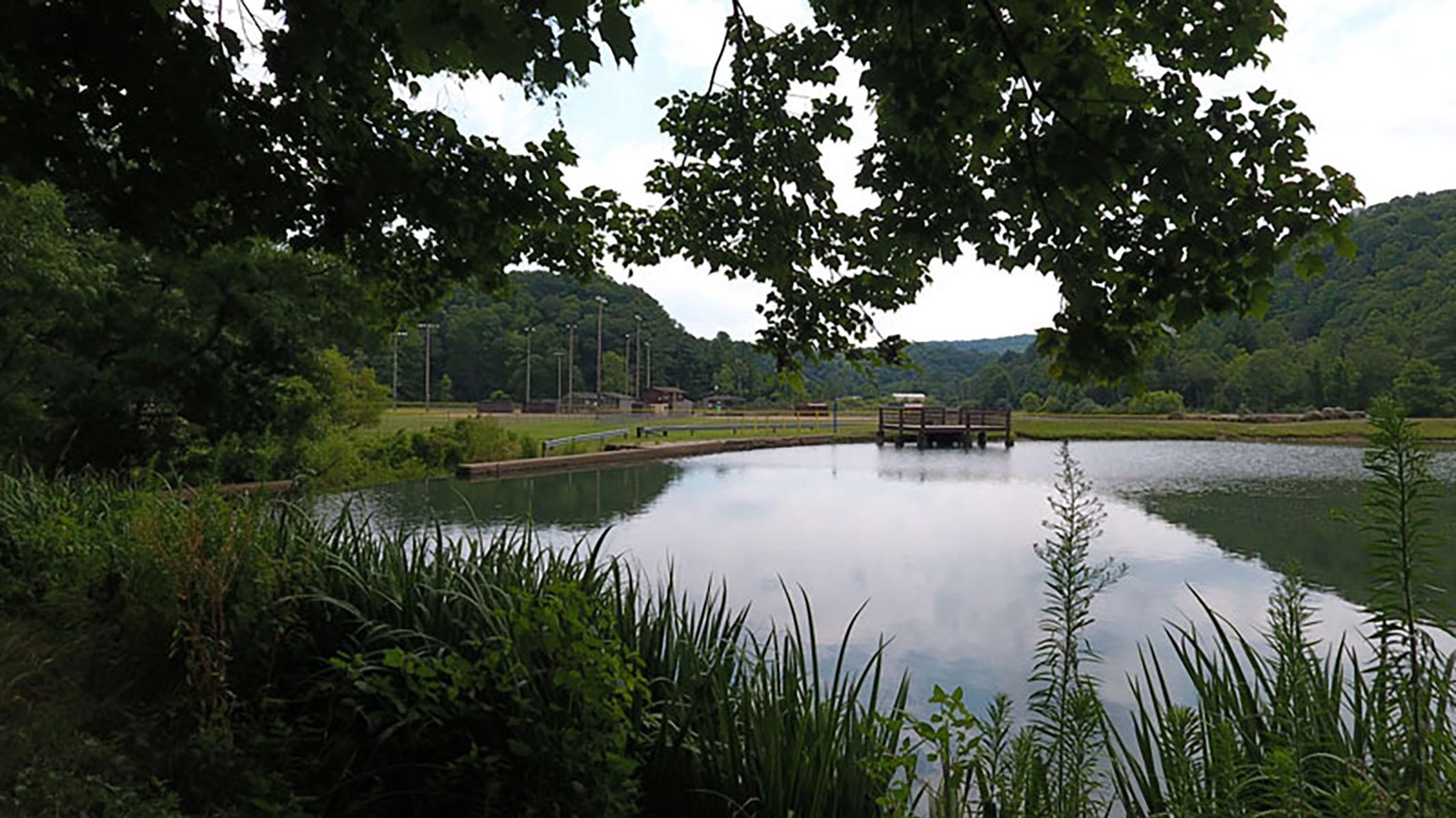
Fitzpatrick Park
NPS
Quick Facts
MANAGED BY:
Raleigh County Parks and Recreation Authority
Amenities
5 listed
Benches/Seating, Food/Drink - Snacks, Parking - Auto, Picnic Table, Restroom
African American Heritage Driving Tour Stop 14: Recreation in Black Communities
If using the NPS app, to listen to the audio narrative, press the green button below or read the audio narrative text below.Audio Narrative
Written by: Natalie Ivy
Narrated by: Kabrea James
Despite living under restrictive and discriminatory Jim Crow Laws, black West Virginians created meaningful communities that acted as a form of resistance under oppression. One of the ways they fostered these communities was through outdoor recreation and understanding the restorative importance of leisure time.
Black West Virginians utilized private spaces for much of their leisure time, gathering in homes and on porches to catch up, debate, make music, and more. However, not all recreation existed in these private spaces. In coal camps, one of the most visible forms of recreation was baseball. Coal camp baseball was popular among all races that worked in the mines, though they played in segregated leagues. Raleigh County was home to numerous African American baseball teams and hosted its own Negro baseball league in the 1930s.[1] Playing baseball provided a sense of community and pride for the coal company the players worked for, as well as a way to enjoy the outdoors.
When workers began to move away from company towns and the economic landscape of West Virginia diversified, so too did recreation and recreational spaces. In Raleigh County, African American citizens looked to create a public park that was insulated from discrimination. This park was to be free for community use and a means to open recreational opportunities that black citizens were largely barred from.
Black Americans weren’t permitted to use most parks and public facilities due to Jim Crow laws and regulations. Plessy v. Furgeson (1896) had determined that racial segregation was legal as long as there were “separate but equal” facilities for black citizens. However, in the majority of cases, there was only separation and not any equality. Many black communities never got access to parks or other public facilities as their white representatives avoided investing in black communal spaces. In Raleigh County, white citizens had access to Little Beaver Park, opened in the summer of 1945. This left Raleigh County’s black community without an equivalent recreation space. However, there was a strong black community who knew their rights, and community leaders began applying pressure to the County Court to fund the park they knew they were entitled to.
Fitzpatrick Park was the result of nearly ten years of petitioning, consulting with the county, the establishment of a “Negro Advisory Committee” for recreation, and one failed park site in Paint Creek, WV. In 1952, Fitzpatrick was officially opened to the public, and by 1953 offered picnic spots, fishing, boating, swimming in a man-made dam, and swing sets. The park quickly became an important communal gathering space. Community dances, picnics, reunions, ball games, and tennis matches were all held in the park regularly, with hundreds of people using the space each week. Fitzpatrick Park often partnered with community organizations to meet the needs of its public. These organizations were often run by women, who exercised their power in the community through civic organizations and service projects. The Beckley Women’s Improvement League purchased playground structures, and in turn, the park hosted events and maintained the equipment for families with small children to enjoy. To raise money for further park improvements, Fitzpatrick established the “Miss Fitzpatrick” popularity contest in 1953. This event, which became an annual staple of park programming until 1970, encouraged the public to purchase a vote, with proceeds going directly to the park.
A black park meant that black community members had a space free from the mental and physical burdens of segregation and discrimination. These places allowed black Americans to partake in “American” pastimes such as playing baseball, picnicking, swimming, fishing, music-making, and communal celebrations. This was not an instance of bending to Jim Crow laws, but rather an act of transcending the boundaries that Jim Crow placed on what black residents could and could not do.
Despite the great care that black civic institutions and community put into the park, a lack of funding and attention from county officials led to Fitzpatrick falling into disrepair. The park was closed in 1971. Today, the park serves as a softball complex, having been refurbished and reopened in the mid-80s as an integrated park. Preserving and sharing this history continues the hard-fought legacy of black West Virginians in recreational and public spaces. Driving Directions
Fitzpatrick Park
Physical Address: 896 Fitzpatrick Road, Beckley, WV 25801
GPS Coordinates: N37.14378 -W81.19540
From Beckley, WV: Travel on I-77 north or south to Exit 42. Follow the exit ramp onto Highway 16 south/97 west toward MacArthur and Sophia, WV. At the first stop light turn left onto Fitzpatrick Road. Travel .2 tenths of a mile and turn right to stay on Fitzpatrick Road. Continue 1.5 miles and stay straight at the Waste Water Treatment Plant to enter Fitzpatrick Park. Tour Stop #14 and parking is at the Park.
Directions to the next Tour Stop:
Stratton Elementary School
Physical Address: 1129 S. Fayette Street, Beckley, WV 25801
GPS Coordinates: N37.766545 -W81.173965
From Fitzpatrick Park, return on Fitzpatrick Road to Highway 16/97. At the stop light, turn right on Highway 16/97 (Robert C. Bryd Drive. Travel 1.2 miles to Neville Street in Beckley, WV. Turn right onto Neville Street and travel 5 blocks to South Fayette Street. Turn right onto South Fayette Street and travel 1.2 miles to Stratton Elementary School on the left. Tour Stop #15 and parking is on the right across from the school.