



Last updated: April 2, 2026
Place
Durst Taylor House
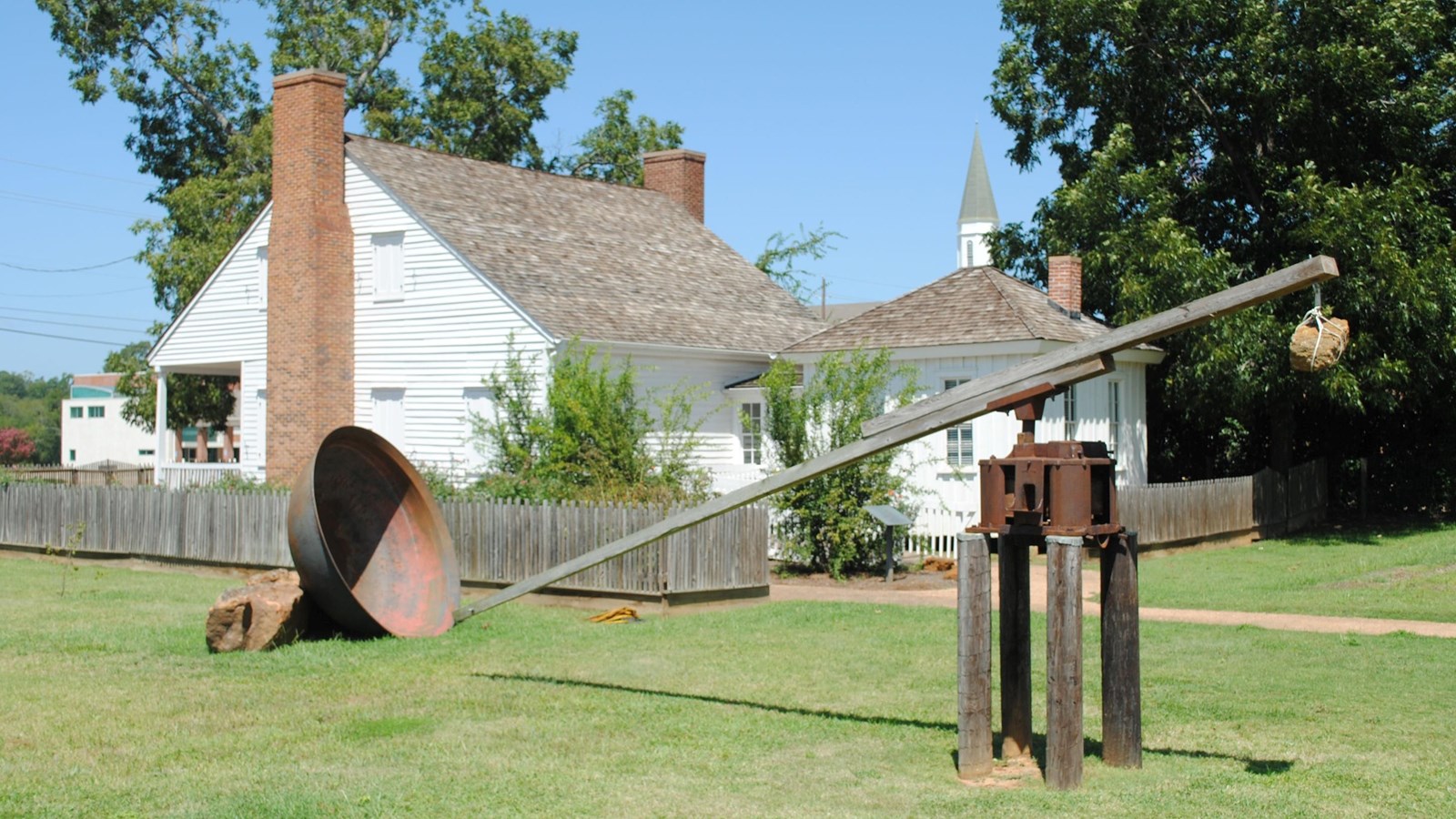
NPS Photo
Quick Facts
Location:
304 North Street (north of Hospital Street), Nacogdoches, Texas
Significance:
In the historic house and its surrounding gardens, visitors will find historically accurate plants and structures re-created to illustrate life in Texas during the 1840s.
Designation:
Certified site
MANAGED BY:
Amenities
2 listed
Historical/Interpretive Information/Exhibits, Restroom
Built in the 1830s, the Durst-Taylor House is the second-oldest surviving home in the town of Nacogdoches, Texas, on the eastern edge of El Camino Real de los Tejas. Owned and inhabited by nearly a dozen different owners from its construction until the 1980s, the home has long stood vigil over Nacogdoches.[1]
Andres de Acosta acquired the land that the house would be built on sometime before 1809. Acosta was part of the expedition led by Antonio Gil Ybarvo to find a home for the displaced people of Los Adaes, a Spanish mission in present-day Louisiana. Forcibly removed from their settlement in 1773 by Spanish authorities, these colonists eventually resettled in East Texas at Nacogdoches in 1779.[2] Acosta erected a casa de madera (house of wood) at the site, likely a palisado, a popular form of Spanish colonial architecture in which large posts of wood were aligned vertically and covered in an adobe plaster. Reference to Acosta’s casa de madera first appears in an 1809 colonial census; however, by the time Acosta sold this property to Anglo-American settler Joseph Durst in 1826, the deed of sale referenced a casa de fabricada, approximately meaning “built house.” This one-word difference in the historical record has made it difficult to ascertain exactly what structure Durst purchased.[3]
Durst likely built or at the least ordered the construction of the still-standing frame house on the property around 1835. This one-and-a-half-story building displays several hallmarks of frame-style construction—a central timber frame braced by diagonal wooden planks covered in a series of clapboards. Flanked by two brick chimneys, the central façade features a pair of asymmetrical doors and shuttered windows, which were quite rare in Texas before the 1850s. The home’s distinctive Louisiana roof, in which the shingled roof overhangs the front porch, is the greatest piece of potential evidence for Durst’s construction of the home, himself a former resident of Natchitoches, Louisiana. The house’s interior is in a classical hall-and-parlor style, a popular architectural mode in the southeastern United States where a central passage is bordered by two large rooms on either side.[4]
Durst sold the home in 1836, and over the next 34 years, eight different families lived in the home until its longest-tenured owners, the Taylors, purchased the property in 1870. The Taylor family owned the home for the next hundred years and were likely responsible for several revisions to the structure. A small addition to the back of the house was built sometime before 1906, the exposed rafters of the home were covered by a wooden ceiling, and the twin fireplaces were updated with Federal style and Greek Revival mantels. By the 1980s, the home had been unoccupied for several years and was purchased by the McKinney Foundation with the intent to preserve the historic property. Following a significant restoration, the home was donated to the city of Nacogdoches.[5]
The house is open to the public today. Visitors can take short tours of the property and engage with hands-on re-creations of a smokehouse, blacksmith shop, and chicken coop.[6] The barn is now a museum that includes exhibits on the families that lived here in the past. Admission to the house is free.
Site Information
Location (304 North Street (north of Hospital Street), Nacogdoches, Texas)
The pier-and-beam foundation, wood framing, and exterior and interior features make it a rare surviving example of Deep South Anglo-influenced frame dwelling from the late Mexican or early Republic period of Texas history.
More site information
El Camino Real de los Tejas National Historic Trail
[1] “Durst-Taylor Historic House and Gardens,” City of Nacogdoches, https://www.nactx.us/693/Durst-Taylor-Historic-House-and-Gardens
[2] National Park Service, National Register of Historic Places Registration Form: Durst-Taylor House, May 27, 2003, 8.
[3] Ibid., 14.
[4] Ibid., 5-6.
[5] Ibid., 13-14.
[6] “Durst-Taylor Historic House,” https://www.nactx.us/693/Durst-Taylor-Historic-House-and-Gardens