



Last updated: April 27, 2026
Place
Dolores-Applewhite Crossing
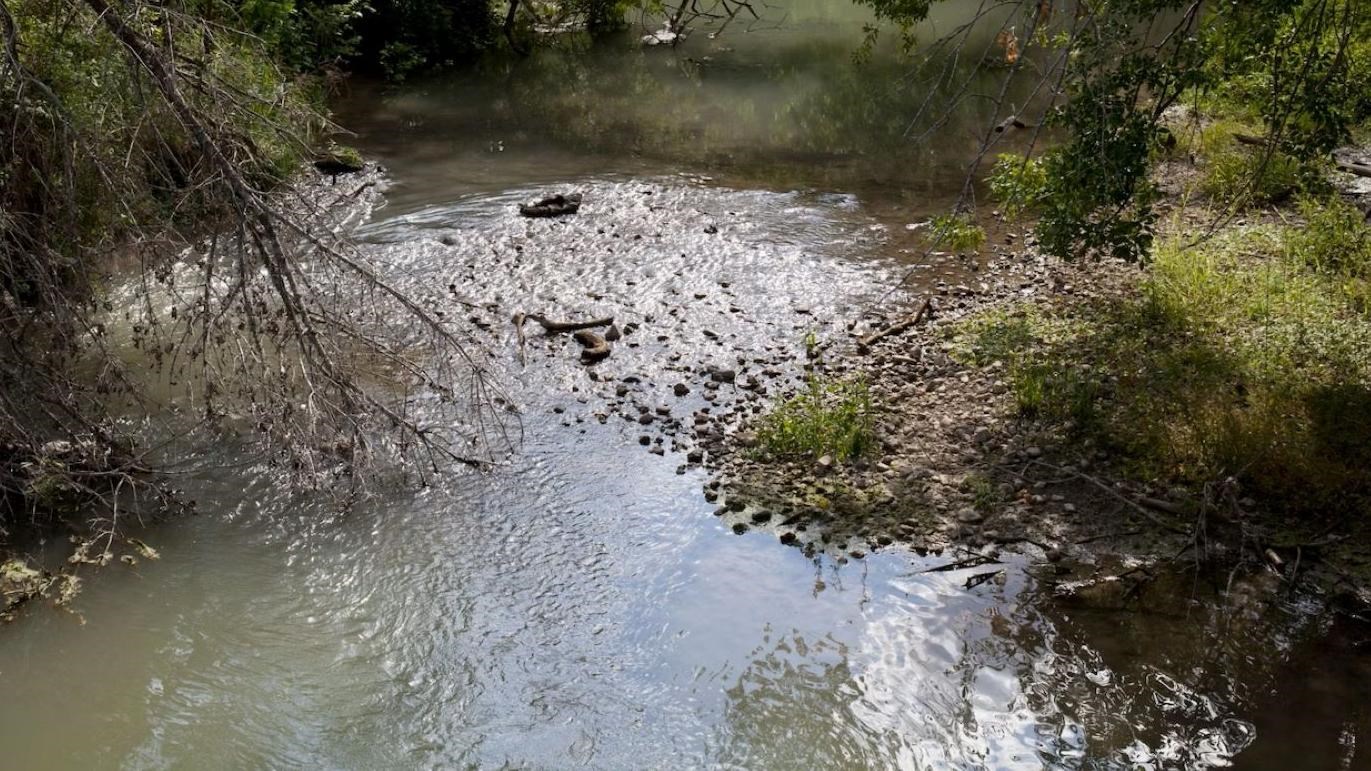
Photo/Bob Pavin/Texas Historical Commission
Quick Facts
Location:
In Medina River Natural Area near intersection of Jett and Applewhite roads; the crossing is along the Medina River, just west of the Applewhite Road bridge, San Antonio, Texas
Significance:
Dolores-Applewhite Crossing is one of many important stream crossings along El Camino Real de los Tejas, providing visitors with a close-up look at wagon ruts.
Designation:
Certified Site on El Camino Real de los Tejas NHT.
MANAGED BY:
Amenities
1 listed
Historical/Interpretive Information/Exhibits
Among the lush oak- and cypress-lined banks of the Medina River in South Central Texas lies the Dolores-Applewhite Crossing. Named for the convergence of nearby Old Applewhite Road and the Medina River, this historic crossing was a pivotal bottleneck and stopping point along El Camino Real de los Tejas. Rivers intersect El Camino Real at several points, making crossings like these critical in ensuring safe passage for travelers across these sometimes fast-moving and deep waters. While it is unclear how long the Dolores-Applewhite Crossing has been in use, records reference consistent use beginning in the 18th century. Centuries-old wheel ruts and wagon tracks from the scores of travelers and settlers that forded the river here can still be seen today.[1]
Before the arrival of Spanish settlers and soldiers, Native Americans may also have used the crossing. For many years, the Coahuiltecan peoples lived in the area, before being pushed out by the Comanche, Lipan Apache, and Tonkawa nations.[2]
Spanish sources call the crossing El Paso de Dolores, a name derived from the once populous Rancho Dolores settlement, which Spanish soldier José Vázquez Borrego founded near the crossing in 1750. At its peak in 1755, Rancho Dolores was home to nearly 100 people.[3]
The Dolores-Applewhite Crossing, however, did not reach more frequent usage until the establishment of the Pérez family ranch in the late 18th century. An immigrant family from the Canary Islands, the Pérezes had grown to be merchants and cattlemen of considerable renown under the leadership of patriarch Juan Ignacio Pérez, Spanish military officer and eventual interim governor of Texas. Pérez founded a private cattle ranch 12 miles south of San Antonio in 1793 and received an official land grant in 1808 for four leagues on the south bank of the Medina River and one league on the north bank. The included field notes for this land grant identified the Dolores-Applewhite Crossing as a part of this expansive property, and it quickly became the favored crossing for the Pérez family and other local settlers for the next 50 years.[4]
The Pérez family were not the only immigrants from the Canary Islands who settled near the Dolores-Applewhite Crossing. In the 1720s, the Spanish Crown encouraged the residents of the islands to move to the San Antonio area.[5]
The government believed that this would help secure control over the area in the face of potential threats from the empire’s French and Native Americans neighbors.Over time, as the transportation infrastructure of the area improved, the need for the crossing decreased. Bridges and ferries meant that fording a river was no longer necessary. Today, the crossing is a part of the 511-acre Medina River Natural Area. Visitors to the site can hike the seven-mile El Chapparal trail and walk along El Camino Real to the historic crossing.[6]
A campsite with a pavilion provides additional recreational opportunities, and restrooms are available.
Site Information
Location (In Medina River Natural Area near intersection of Jett and Applewhite roads; the crossing is along the Medina River, just west of the Applewhite Road bridge, San Antonio, Texas.)
Located in the Medina River Natural Area, this historic crossing provides a prime example of healthy riparian habitat while also containing historic traces of El Camino Real de los Tejas.
More site information
El Camino Real de los Tejas National Historic Trail
[1] National Park Service, National Register of Historic Places Registration Form: Perez Rancho Site and Dolores Crossing, November, 2011, 10.
[2] “Native American Occupation (1500 – 1700),” San Antonio Mission Trails, https://www.sanantonio.gov/Mission-Trails/Prehistory-History/History-of-San-Antonio/Native-American-Occupation
[3] National Park Service, National Register of Historic Places Registration Form: Perez Rancho Site and Dolores Crossing, November, 2011, 15.
[4] National Park Service, National Register of Historic Places Registration Form: Perez Rancho Site and Dolores Crossing, November, 2011, 11.
[5] “The First Civil Settlement in Texas – Journal of San Antonio,” University of the Incarnate Word, https://www.uiw.edu/sanantonio/FirstCivilSettlementinTexas.html
[6] Texas Historical Commission, “Dolores-Applewhite Crossing,” Texas Time Travel, https://texastimetravel.com/directory/dolores-applewhite-crossing/