



Last updated: May 6, 2026
Place
Dimmit County Public Library (and Wade House Museum)
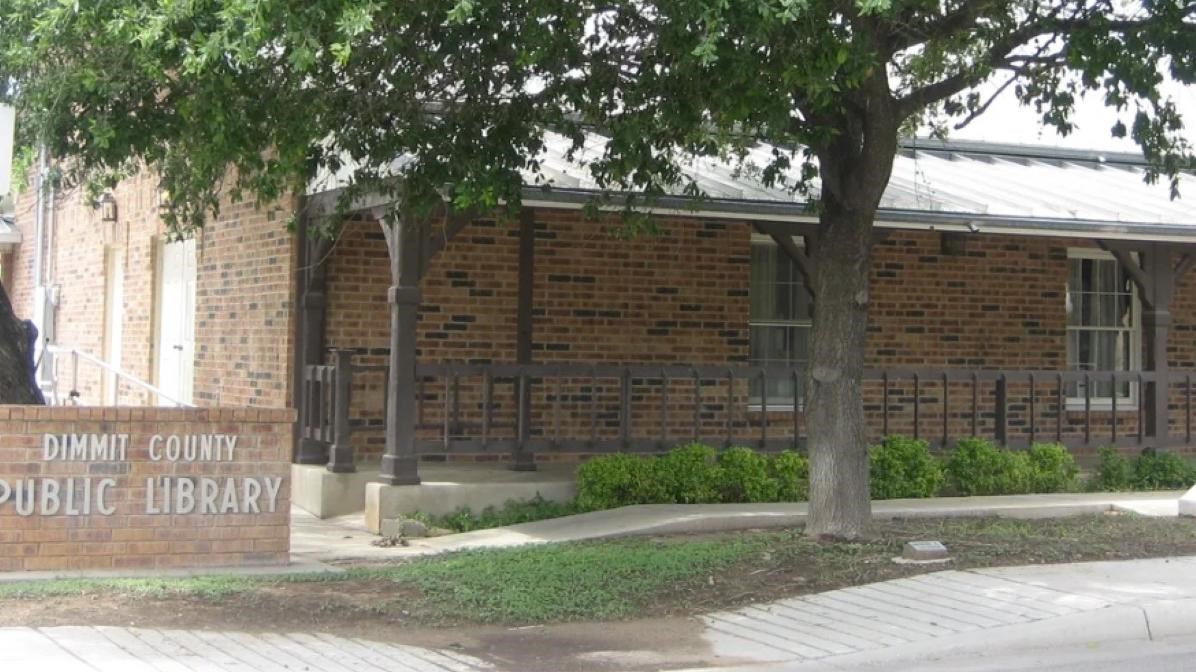
Photo/Dimmit County Library
Quick Facts
Location:
200 N. 9th St., Carrizo Springs, Texas.
Significance:
El Camino Real de los Tejas once passed through Dimmit County, Texas, connecting communities like Carrizo Springs to San Antonio, Laredo, and other settlements in Texas. The library interprets this history.
Designation:
Museum interpreting the significant El Camino Real de los Tejas NHT history in Dimmit County, Texas.
MANAGED BY:
Amenities
1 listed
Historical/Interpretive Information/Exhibits
El Camino Real de los Tejas once passed through Dimmit County, connecting communities like Carrizo Springs to San Antonio, Laredo, and other settlements in Texas. Before the arrival of European settlers, Indigenous people in the area created many of the trails that became the royal road. The Dimmit County Public Library and Wade House Museum highlights the area’s Indigenous history through a collection of artifacts that span the centuries.
Humans have lived in what is now Dimmit County since at least the last ice age. Artifacts in the Dimmit County Library collection include projectile points that early arrivals in the area may have used to hunt large game like mastodons and mammoths or to defend against creatures like the saber-toothed cat.[1] Over time, as these large ice age mammals went extinct, Indigenous people in the area transitioned to hunting smaller game, gathering food, and farming. Other tools in the Dimmit Library’s collection were likely used for grinding or breaking seeds and nuts, testimony to a shift in dietary practices in response to climate change.[2]
At the time of first contact with the Spanish Empire, Coahuiltecans made up the majority of the Indigenous population in the area.[3] Bands faced threats from the encroaching Spanish Empire as well as Lipan Apache and Comanche raids.[4] Faced with growing warfare and population loss from disease, many chose to leave the area entirely or live at nearby Spanish missions.
As the Spanish Empire expanded into Texas, merchants, soldiers, settlers, and missionaries moved along the trails blazed by Coahuiltecans, creating El Camino Real de los Tejas. Travelers passing through on the royal road stopped to rest or camp near Laguna Espantosa, a large lake that provided a valuable source of water.[5] While travel through what is now Dimmit County increased over the next few decades, little to no European settlement occurred.[6] While Dimmit County was officially incorporated in 1858, it wasn’t until 1865 that the first non-Indigenous settlement was established in the region.[7]
Almost 100 years later, after much of El Camino Real had fallen out of use, Wade House, a teacher at Carrizo Springs High School, became interested in his community’s history and archeology. Throughout the 1950s and 1960s, House worked with the students at the school’s archeology club to study regional history and gather artifacts.[8] During weekend trips, the boys gathered and dated various artifacts, amassing a large collection. [9] The reader should be advised that, today, excavating or removing historical artifacts without a permit is illegal on federal and state public lands.[10]
When House died, his family—dedicated to sharing his collection with the public— arranged a loan agreement with the Dimmit County Public Library. In 2002, the Wade House Memorial Museum, an expansion of the library building, opened to the public.[11] The museum displays House’s collection as well as the collection of former Texas Governor Dolph Briscoe, Jr. Dr. Thomas Hester, who had been a student of House’s and a member of the archeology club, set up the display.[12]
Visitors to the museum can view artifacts that encompass 11,000 years of Dimmit County history, ranging from projectile points from the last ice age to more recent artifacts created during the heyday of El Camino Real de los Tejas.[13] The visitor experience is self-guided. The library is open Monday through Friday from 8:00 am to 4:30 pm and is closed on most major holidays.
Site Information
Location (200 N. 9th St., Carrizo Springs, Texas.)
Rows of books and archeological artifacts offer an ideal learning experience for anyone curious about the prehistory of Texas.
Safety Considerations
More site information
El Camino Real de los Tejas National Historic Trail
[1] “Ice Age Animals,” Waco Mammoth National Monument, last updated May 5, 2021, https://www.nps.gov/waco/learn/nature/ice-age-animals.htm (accessed October 30, 2024) South Texas Treasures, Hispanic Flavor, (Texas Historical Commission, 2008), https://www.thc.texas.gov/public/upload/publications/tropical.pdf, pg. 7.
[2] South Texas Treasures, Hispanic Flavor, pg. 7.
[3] Leffler, “Dimmit County.” Texas State Historical Association, October 21, 2020, https://www.tshaonline.org/handbook/entries/dimmit-county (last accessed on October 30, 2024).
[4] Leffler, “Dimmit County.”
[5] “South Texas Region,” El Camino Real de los Tejas: National Historic Trail Association, https://www.elcaminorealdelostejas.org/south-texas-region/ (last accessed October 30, 2024).
[6] Leffler, “Dimmit County.”
[7] Leffler, “Dimmit County.”
[8] Mary Ellen Coleman, “Chief Bald Eagle and the Archeology Club,” Bullock Museum, July 22, 2014, https://www.thestoryoftexas.com/discover/texas-story-project/chief-bald-eagle-and-the-archeology-club; (accessed on October 30, 2024).
[9] Coleman, “Chief Bald Eagle and the Archeology Club;” South Texas Treasures, Hispanic Flavor, pg. 7.
[10] Dennis Gaffney, “Collecting Indian Artifacts, Safely and Legally,” May 30, 2003, https://www.pbs.org/wgbh/roadshow/articles/collecting-indian-artifacts-safely-and-legally/ (accessed on December 2, 2024); Mary Phelan, “A History and Analysis of Laws Protecting Native American Cultures,” Tulsa Law Review, 45, no. 1 (Fall 2009): 45-64.
[11] Coleman, “Chief Bald Eagle and the Archeology Club.”
[12] Coleman, “Chief Bald Eagle and the Archeology Club.”
[13] South Texas Treasures, Hispanic Flavor, pg. 7.