



Last updated: June 5, 2026
Place
Christiansted Grounds Scale House
Quick Facts
Amenities
8 listed
Gifts/Souvenirs/Books, Historical/Interpretive Information/Exhibits, Information, Information - Maps Available, Information - Ranger/Staff Member Present, Internet/WiFi Available, Junior Ranger Booklet Available, Public Transit
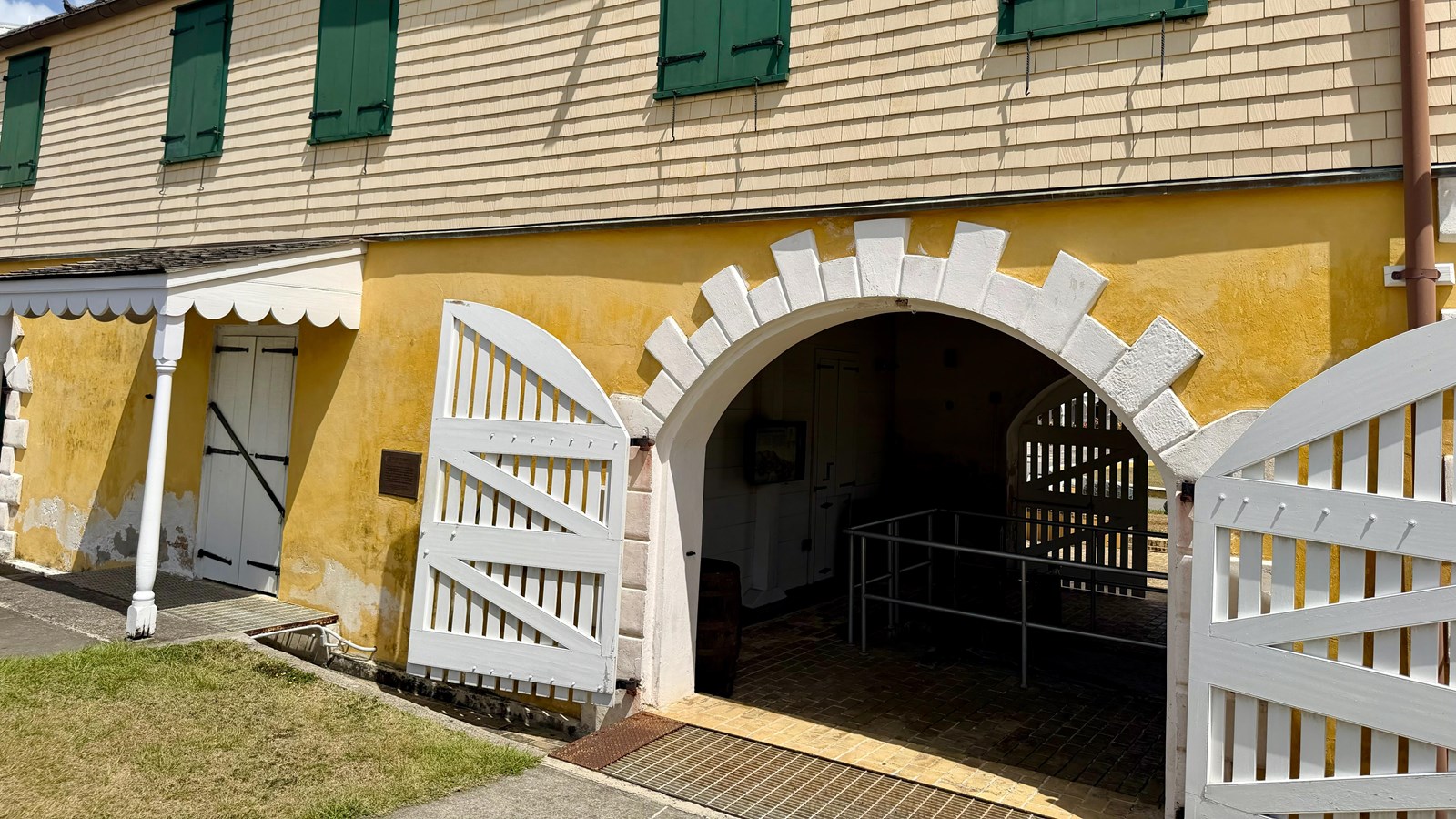
The Scale House
Gateway to the World
Standing before the Scale House, you've reached one of the final stops in the story of Danish Christiansted.
Before goods could be loaded aboard waiting ships, they needed to be weighed, recorded, and documented. Sugar, rum, cotton, molasses, and other exports passed through facilities like this one as merchants and government officials tracked the commerce that fueled the island's economy. Accurate measurements were essential. The value of a shipment, the taxes collected, and the profits earned often depended on the numbers recorded here.
Though modest in appearance, the Scale House played an important role in the operation of the port. It was one of many pieces in a system that connected St. Croix to markets throughout the Caribbean, Europe, Africa, and North America.
Among those who learned the realities of international commerce in Christiansted was a young Alexander Hamilton. As a teenager, Hamilton worked for the trading firm of Beekman and Cruger, where he handled correspondence, tracked shipments, and managed business transactions moving through this busy harbor. The experience he gained here helped shape the skills that would later make him one of the founding figures of the United States.
The harbor brought opportunity to merchants, ship captains, and traders, but its story is more complex than commerce alone. The economy that made Christiansted an important port was built in large part upon the labor of enslaved Africans and their descendants. Their work powered the plantations, produced the goods that filled warehouses and ships, and helped create the wealth that flowed through this waterfront. Their contributions, resilience, and cultural legacy remain an essential part of the story of St. Croix.
As you look back across the harbor and historic district, consider how the places you've visited worked together. The fort protected the harbor. The Customs House regulated trade. Warehouses stored goods awaiting shipment. Churches, schools, and public buildings served the community. Together, they helped shape Danish Christiansted into one of the Caribbean's most important port towns.
Today, the Scale House serves a different purpose. The building houses the Christiansted National Historic Site Welcome Center and park store, which are open on select days. Visitors can learn more about the history of St. Croix, explore exhibits, speak with park staff, and discover additional stories throughout the National Parks of St. Croix.
The harbor before you may seem peaceful today, but for centuries it connected this small island town to a much larger world. Through trade, travel, culture, and human experience, Christiansted became a gateway to the Caribbean and beyond.
If you would like to continue exploring, visit the Welcome Center and Park Store in the Scale House (open select days)