



Last updated: June 5, 2026
Place
Christiansted Grounds Customs House
Quick Facts
Amenities
2 listed
Historical/Interpretive Information/Exhibits, Picnic Table
Customs, Commerce, and Control
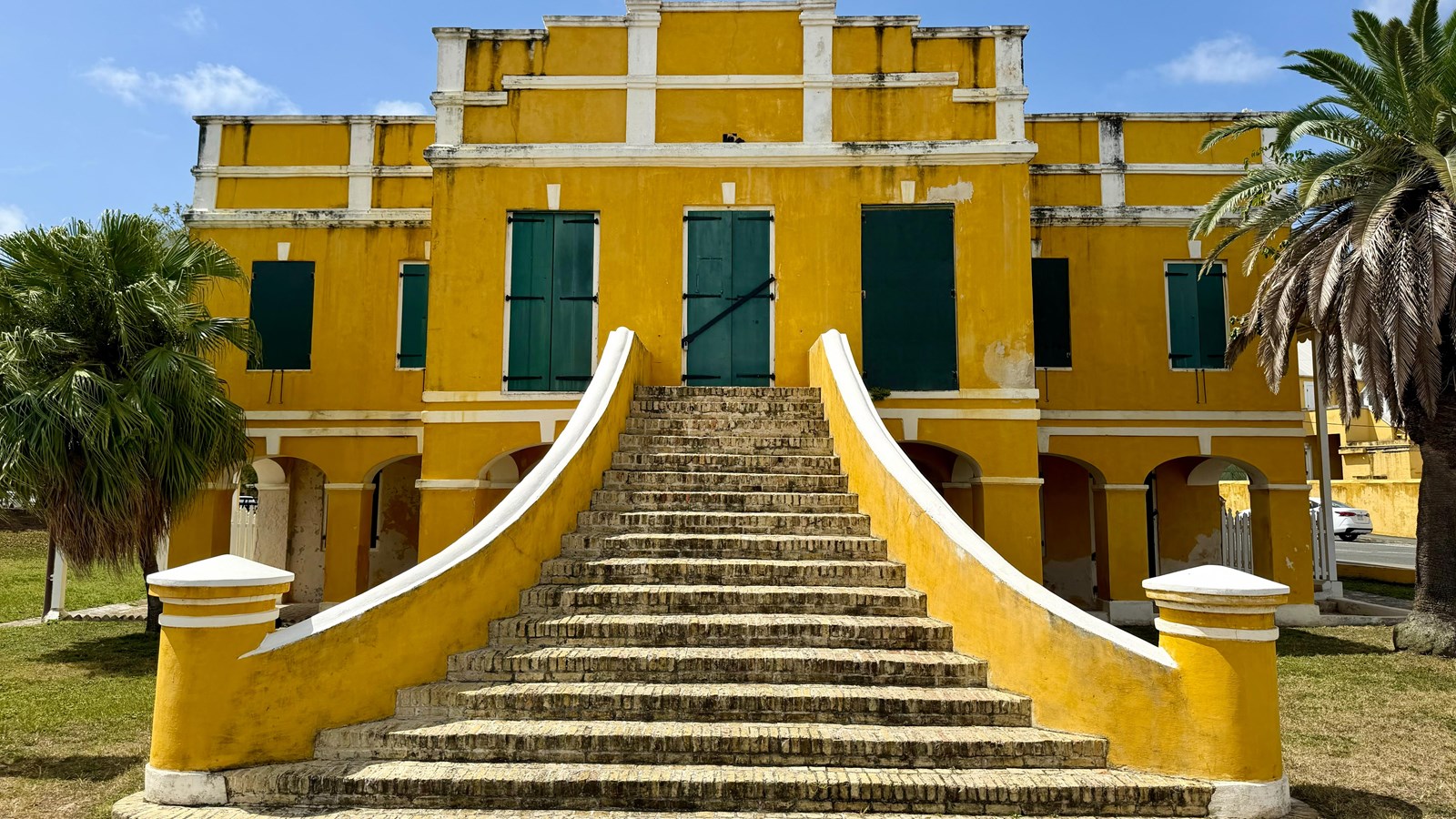
Standing before the Customs House, you're looking at one of the most important buildings in Danish Christiansted.
Every ship entering or leaving the harbor was subject to government oversight. Captains reported their cargo, merchants paid duties and taxes, and officials recorded the flow of goods moving through the port. From sugar and rum produced on St. Croix to manufactured goods arriving from Europe and North America, trade was carefully monitored and regulated.
The Danish government depended on this commerce. Taxes collected here helped support the colony, maintain public services, and fund the officials who governed the island. In many ways, the Customs House served as the financial gateway to Danish St. Croix.
Imagine the scene during the height of the island's sugar economy. Ships crowded the harbor. Sailors unloaded cargo onto the waterfront. Merchants negotiated prices. Government officials reviewed paperwork and collected fees. The harbor was filled with activity, and much of it passed through this building.
The Customs House reminds us that Christiansted was more than a town. It was a vital link in a vast Atlantic network connecting Europe, Africa, the Caribbean, and North America. Through these doors flowed not only goods and wealth, but also ideas, cultures, and people whose lives became intertwined in the story of St. Croix.
As you continue the tour, you'll discover how the buildings surrounding the harbor each played a role in supporting this busy Caribbean port town.