



Last updated: January 29, 2026
Place
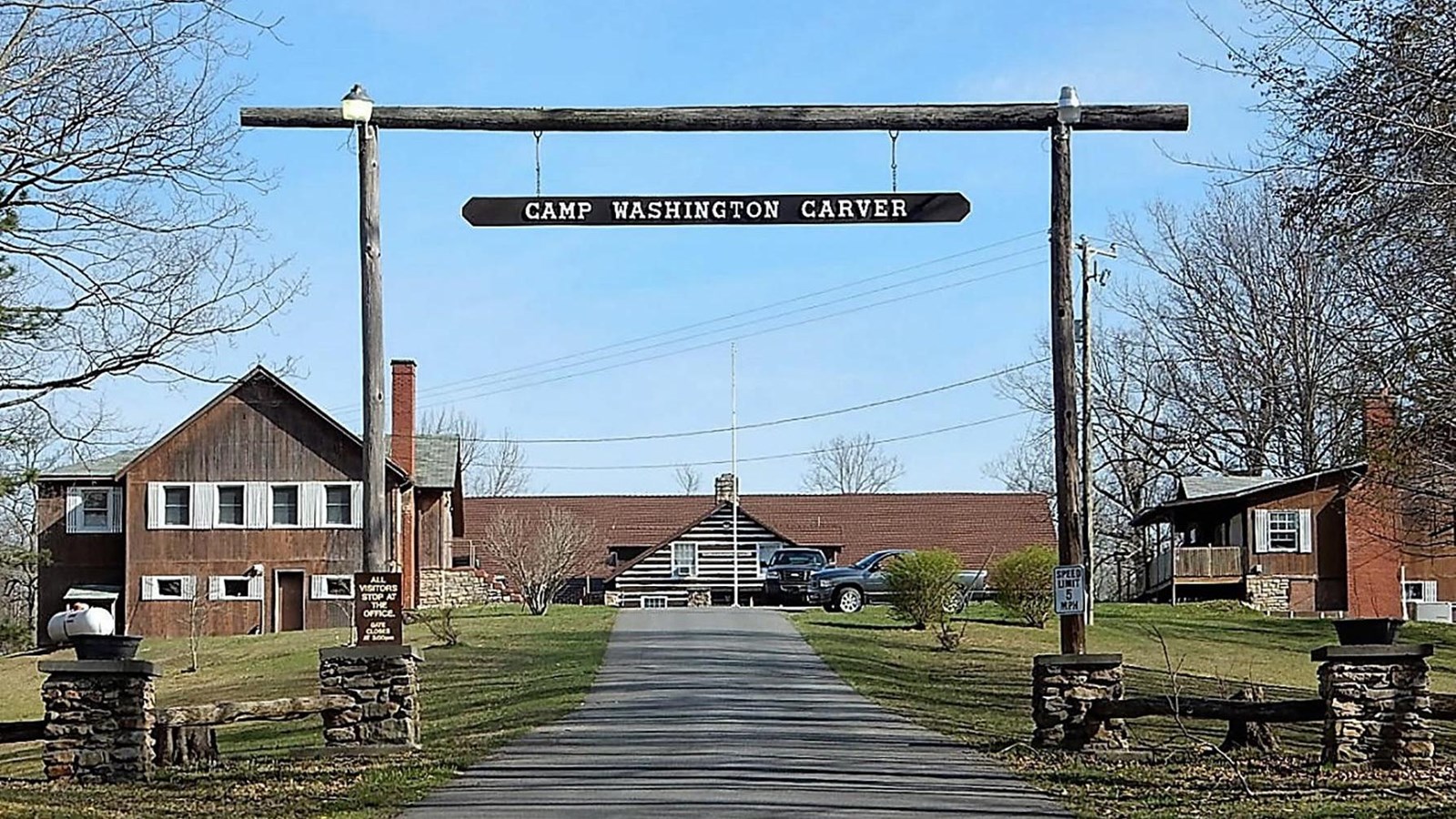
Camp Washington Carver
Mark Bollinger
Quick Facts
Location:
Clifftop, WV
Significance:
Camp Washington Carver opened its doors in 1942 as the first 4-H camp for African Americans in the United States.
Amenities
1 listed
Historical/Interpretive Information/Exhibits
African American Heritage Driving Tour Stop 2: Camp Washington Carver
If using the NPS app, to listen to the audio narrative, press the green button below or read the audio narrative text below.
Audio Narrative:
Written by: Dr. Brucella Jordan
Narrated by: Xavier Oglesby
Camp Washington Carver opened its doors in 1942 as the first 4-H camp for African Americans in the United States. Originally named “The West Virginia Negro 4-H Camp,” it became known locally simply as “Clifftop.” Each year, black children from all over the state came to enjoy the fun and experience of being a camper.
Although not a 4-H camper himself, Norman Jordan recalls his memories of the camp. “I had very vivid memories of going to the camp … to play baseball, swim, and have church picnics. Sometimes Dad would take me and my brothers and sisters along, and as soon as the car stopped at the camp we would jump out and run around on the grounds. [We would] bounce up and down on the see-saw, slide down the sliding board, and—most of all— ride on the merry-go-round. [ I remember] the smell of chlorine at the bathhouse and the swimming pool, as well as the happy sounds of swimmers splishing and splashing in the water and diving off the diving board.” 1
The seeds for an African American 4-H camp were planted in 1928 when West Virginia University hired James E. Banks and Lulu B. Moore. 2 As State Extension Agents, they were tasked with investigating 4-H Club activities for blacks within the state. Their reported showed that forty-four of West Virginia counties held 4-H camps for White campers, but no camps existed for black campers.
With this information in hand, Dr. John W. Davis, president of West Virginia State College, began the process of seeking funding for a black 4-H camp. Other African American leaders in the state joined his efforts. Nearly a decade later, the West Virginia legislature appropriated $25,000.00 for the creation of a 4-H camp for black campers. The efforts of Dr. Davis also led to the receipt of a large Works Progress Administration (WPA) grant to help construct the camp.
Dr. Davis, who had “fallen in love with the beautiful scenery and serenity of the land” in the Clifftop area, chose the current location for the camp. Construction of the first buildings occurred between 1939 and 1942. WPA and Civilian Conservation Corps workers, along with prison laborers from Moundsville were the earliest construction crews. The Great Lodge, the largest log structure on site, was built entirely of West Virginia chestnut. It housed the assembly hall, dining hall, and kitchen. Other buildings included a two-room Guest House, a small cabin used as a Health Center, and dormitories for campers. A water tank and pond were also constructed.3
Use of the camp began immediately and reached its peak during the 1950s, when approximately 1,600 campers attended annually. A camper’s day began with an early breakfast followed by cabin cleaning. The main part of the day was spent in activities including nature study, music, drama, and arts and crafts. Campers had instructional time in swimming, first aid, health care, and nutrition. Of course, recreational time included swimming and sporting activities. After supper, campers had free time, followed by a play, evening vespers, and a camp fire.
Besides the 4-H camps, the African American community utilized the facility for a wide variety of activities and events. Boy Scout and Girl Scout camps, mining encampments, home economics encampments, church camps, and reunions were held here. The buildings were used for meetings, gatherings, and training classes by groups and organizations from around the state. West Virginia State College conducted staff and faculty trainings and special classes at the camp. The site was used for pre-season band and football conditioning by black schools. The camp was also utilized for the military training of Black pilots and ROTC maneuvers.
Statewide integration in the 1950s eliminated the need for a separate 4-H camp for African Americans. However, the creation of the camp in the 1940s filled a void in the lives of many West Virginia Black residents. The Camp provided learning and recreational opportunities and instilled pride and built self-esteem in thousands of Black youth. It also provided a safe environment for Blacks to participate in and enjoy amenities normally unavailable to them.
In 1980, the camp was placed on the National Register of Historic Places and the name officially changed to Camp Washington Carver. Today, the camp serves as a cultural arts center for the West Virginia Department of Culture and History.
[1] Norman Jordan, “Camp Washington Carver: An African American Landmark in Fayette County,” Goldenseal Vol. 25, Number 4 Winter 1999, 57.
[2] Ibid, 57
[3] Ibid, 58
Additional Information:
Camp Washington-Carver was named after Booker T. Washington and George Washington Carver. It was built by the Civilian Conservation Corp in the early 1940s. Camp Washington Carver opened in 1942 as the first 4-H camp in the country that was for the African-American youth. Today, Heritage Arts Camp, the Appalachian String Band Festival, and the Great Chestnut Lodge, the largest log structure of its kind in the world, make this site a favorite place for festivities.
On July 26, 1942 the first African American 4-H camp in the United States was opened here in Fayette County. A 1929 report showed that 44 of the state’s 55 counties had 4-H camps for white children, but none for black children. Fleming Adolphus Jones, a black member of the WV House of Delegates presented to the legislature the importance of Camp Washington Carver:“For the purpose of teaching Negro boys and girls the 4-H standard of living, and to inspire them to lift themselves toward these standards, and to discover and train Negro boys and girls for leadership, and for the purpose of teaching standards of excellence in agriculture, soil conservation, vocational agriculture, and home economics.”
Use of the camp began immediately, even before construction was fully completed. The peak years of use occurred during the 1950s when the camp accommodated approximately 1,600 campers annually. A camper’s day included nature study, music, drama, crafts, swimming, play time, and evening vespers. Today the site is used for many different purposes, weddings, reunions, festivals, and other gatherings. Local historian Norman Jordan said it best, “Regardless of what it [the camp] becomes, its roots will always represent a landmark for African American unity and achievement.”
For the full story go to Camp Washington Carver: Clifftop, WV
Driving Directions:
Camp Washington CarverPhysical Address: Camp Washington Carver Road, Clifftop, WV 25831
GPS Coordinates: N38.009119 W80.970204
From Beckley, WV Take Highway 41 north (Stanaford Road) and travel approximately 28 miles to Clifftop Road (Route 11) and turn left. Travel 5 tenths of a mile and turn left onto Old Clifftop Road. Travel 1.5 miles and turn left at the Camp Washington Carver sign. Tour Stop and parking is at the end of the road.
From Fayetteville, WV Take Highway 19 north to Highway 60. Exit onto Highway 60. Turn left on Highway 60 east and travel approximately 9.5 miles to the junction of Highway 60 and 41 south. Turn right onto Highway 41 south and travel 1.6 miles to the Old Clifftop Road. Turn right onto Old Clifftop Road and travel 2 miles. Turn left at the Camp Washington Carver sign. Tour Stop #2 and parking is at the end of the road.
Directions to Next Tour Stop:
WinonaPhysical Address: 18 County Route 85/2, Winona, WV 25942
Add GPS Coordinates: N38-046680 W-80.992164
From Camp Washington Carver: Return to Old Clifftop Road and turn right. Travel 2 miles to Highway 41. Turn left onto Highway 41 north and travel 1.6 miles to Highway 60. Turn left onto Highway 60 west and travel 5.3 miles to Lansing Edmond Road (Route 82). Turn left onto Lansing Edmond Road and travel 2 miles to the three-way junction at Lansing Edmond Road and Keeney’s Creek Road. Turn right at the junction. The Tour Stop #3 and parking space is immediately on the left.
The requested video is no longer available.