



Last updated: August 22, 2026
Place
Balclutha
NPS/J.Woerner
Quick Facts
Location:
Mare Island, California
Designation:
National Historic Landmark
OPEN TO PUBLIC:
No
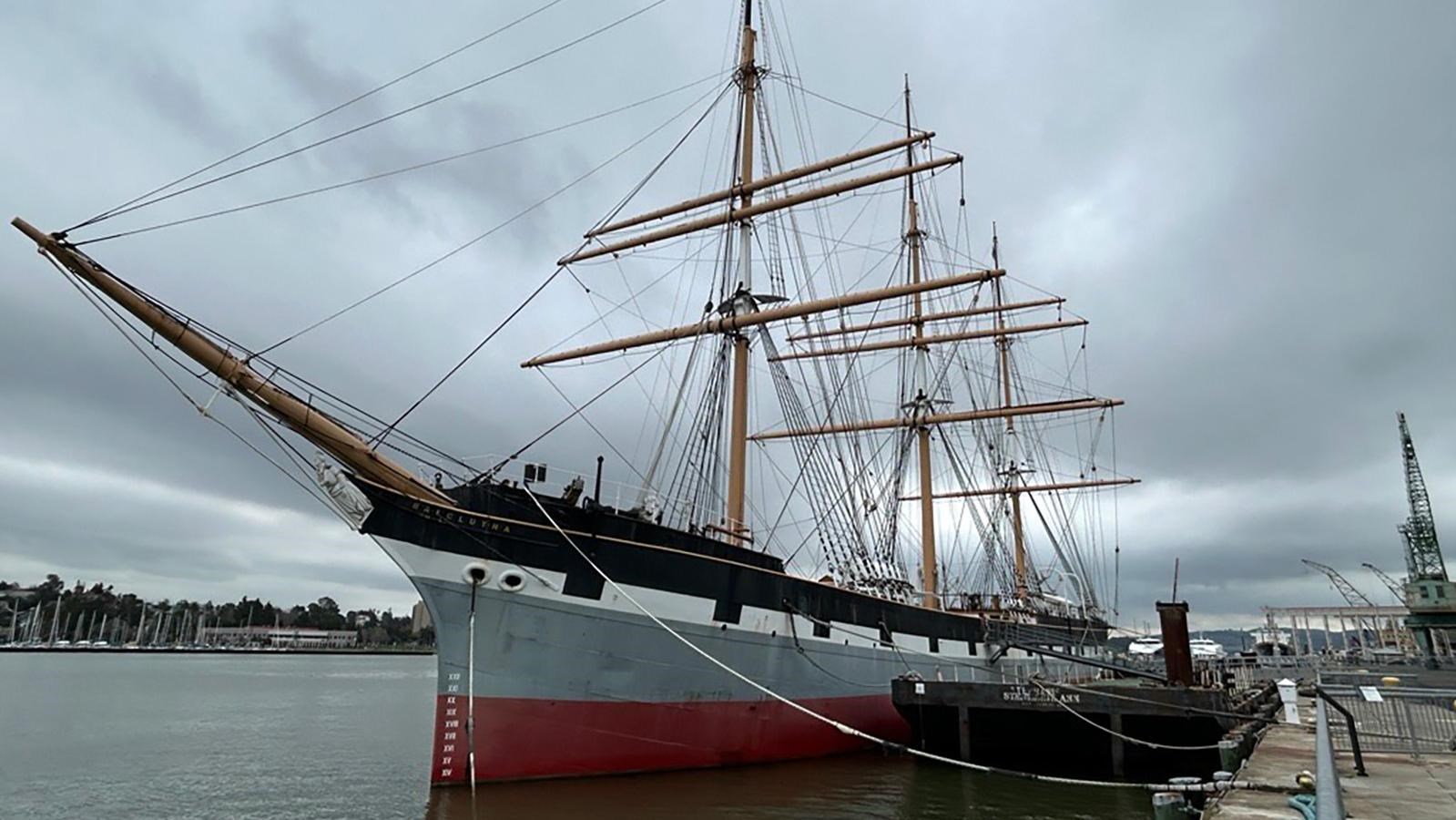
Balclutha is a three-masted square-rigged ship designed for long distance cargo trading. The ship was built in 1886 at the Charles Connell & Co. Ltd. shipyard near Glasgow, Scotland. Balclutha represents industrial maritime innovation of the late 19th century due to the iron and steel used in its hull, in addition to its traditional wind-powered sail propulsion. As a general cargo vessel, Balclutha averaged no more than 30 crew members, who managed the complex rigging and dozens of sails required to keep the vessel under control. The ship made stops in San Francisco, California on several occasions, including its first three voyages. Balclutha completed navigation through the treacherous waters around Cape Horn at the southern tip of South America 17 times, earning the informal title of a 'Cape Horner,' a nickname given to ships that rounded Cape Horn during that time period.
A Ship of Many Names
Balclutha had mutliple careers, transporting grain and cargo between Europe and San Francisco (1887-1899), and lumber and coal between the Puget Sound and Australia (1899-1902). The ship was sold to the Alaska Packers Association in 1904, where it was renamed Star of Alaksa and became part of the salmon packing industry, transporing supplies and worker up to the canneries in Alaska and cases packed with canned salmon back to California (1902-1930). In 1933, the ship was sold to Frank and Rose Kissinger, who gave it the name Pacific Queen and opened it as a "pirate ship" public attraction on Fisherman's Wharf.
Restoration and Museum
In 1954 the San Francisco Maritime Museum, headed by Karl Kortum and Alma Spreckels, purchased Pacific Queen for $25,000. Assisted by donations of cash, materials and labor from the local community, the Museum restored the vessel and returned it to its original name and glory. The ship was transferred to the National Park Service in 1978, and Balclutha was designated a National Historic Landmark in 1985.