



Last updated: August 23, 2026
Place
Balclutha's Soil Pipes
NPS/J.Woerner
Quick Facts
OPEN TO PUBLIC:
No
What’s the one thing you ask park rangers when you visit national historical landmarks? Is it... “Where’s the bathroom?”
Walk back alongside Balclutha and you’ll see a physical history of answers to that question.
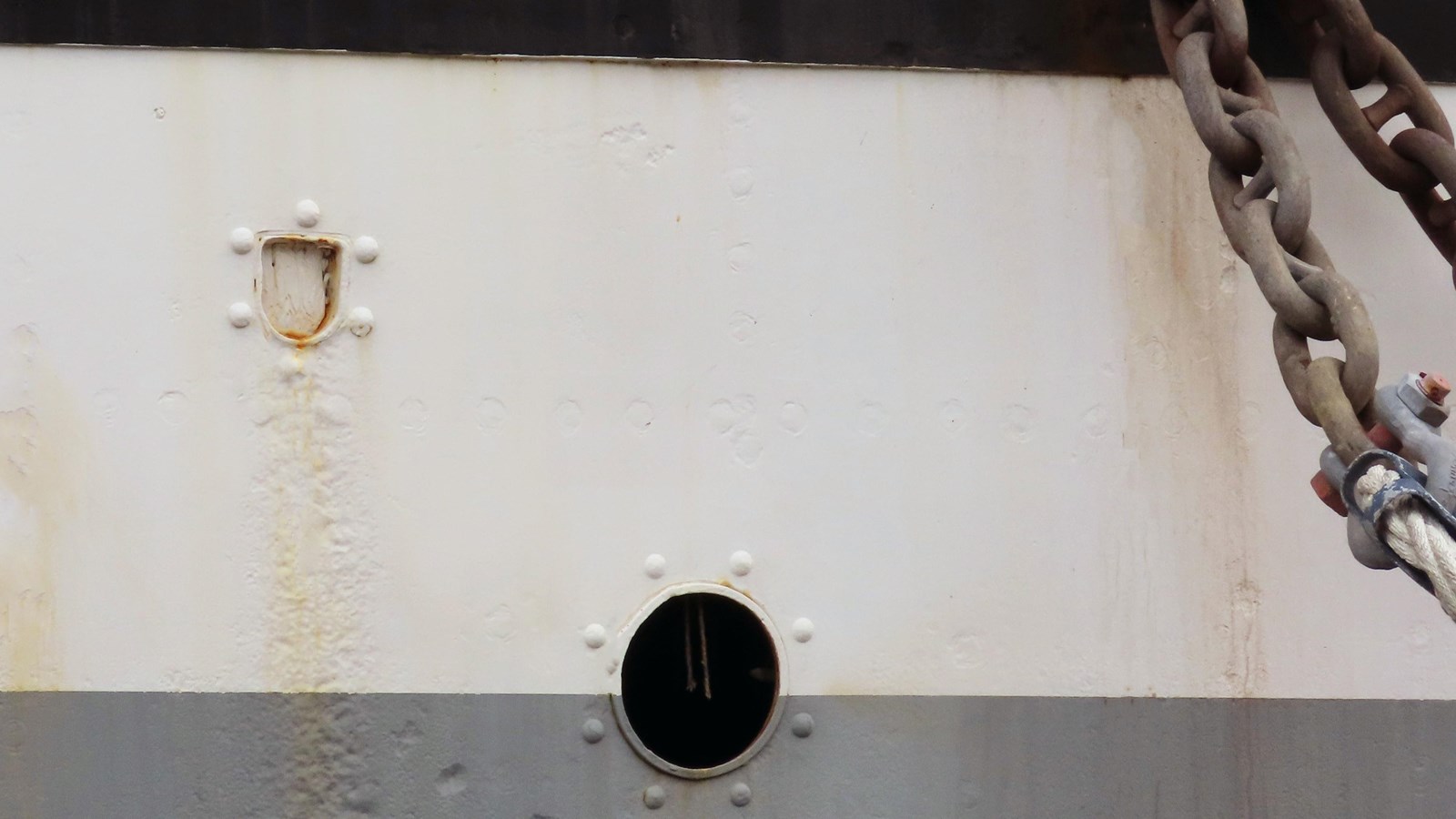
Look for small patches on the white part of hull that are shaped like circles or shields. (You may check the pictures on your screen for reference!) These patches indicate where soil pipes went through. Soil pipes convey wastewater and sewage – in other words: they tell you just where the toilets were.
Can you spot the ones between the mainmast and mizzenmast? Two are for toilets on this side of the shelterdeck. Another was for a washroom. Surviving ship drawings show there were also four toilets at the fo’c’s’le – you can find two soil pipes on this side of the vessel. One is almost at the very front – a typical toilet location that led to shipboard toilets being called “heads!”
As you walk back towards the bow, you’ll see other kinds of drains on the topmost, black part of the hull. Find the rectangular hatches – there's an open one near the gangway. That's an example of a freeing port. These open all along the main deck when large waves wash on board, so the ship doesn’t list or get weighed down.
There are also scuppers – they look like everyday gutter spouts – that jut out a bit from the ship. Scuppers drain water during deck washing and light rain – or when sailors dump a bucket of water over their heads for a “shower.” On ships such as this, while everyone had access to a toilet, only the captain – and his family – could enjoy a bathtub.