



Last updated: August 23, 2026
Place
Balclutha's Poopdeck
NPS/J.Woerner
Quick Facts
OPEN TO PUBLIC:
No
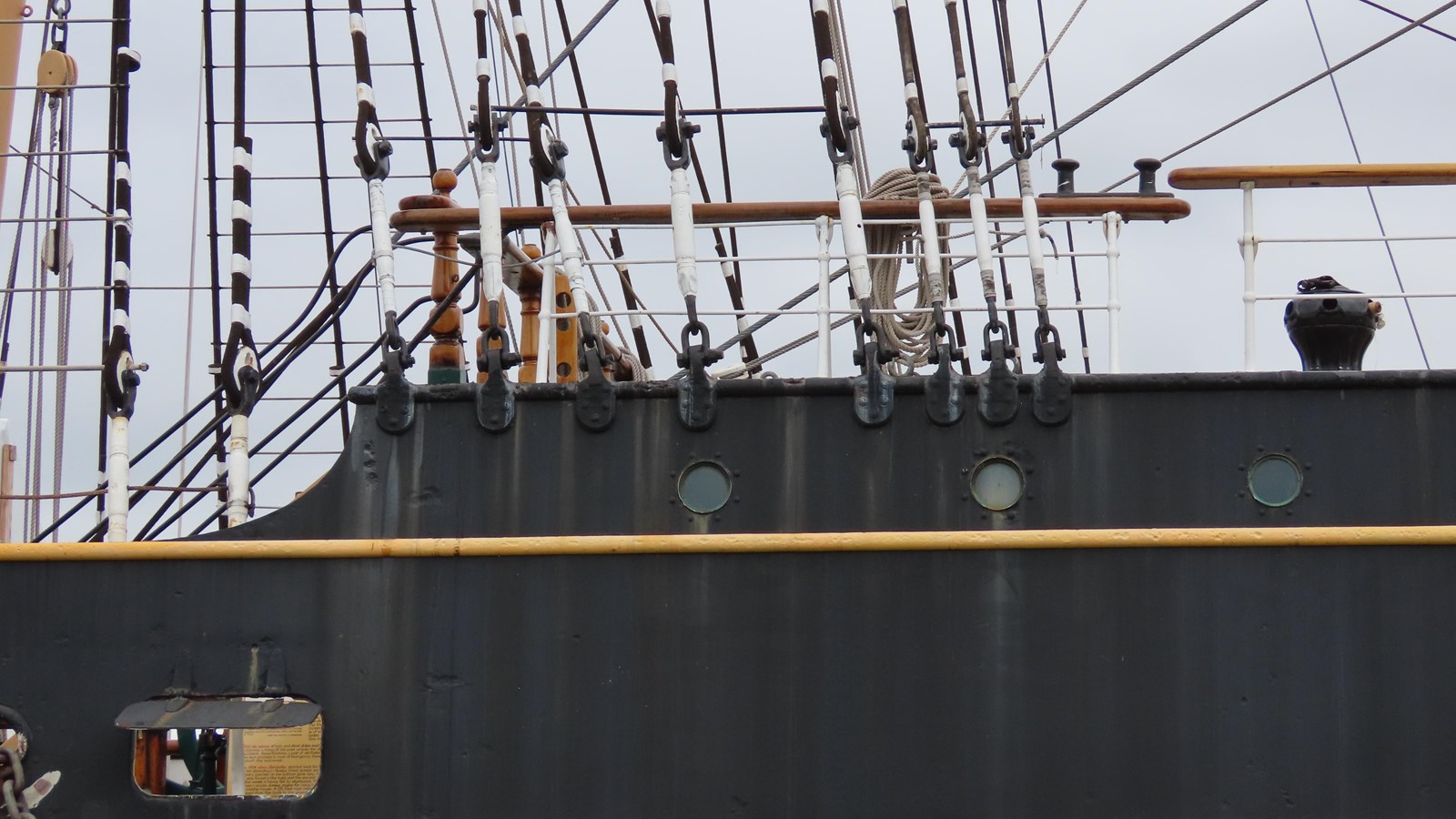
Standing in front of the main mast at the center of the ship, if you to its right, you’ll see an elevated deck stretching all the way to the back of the vessel. That's the poopdeck – “poop” being the French term for a ship’s rear end, otherwise known in English as the stern.
On ships like Balclutha, poopdecks serve as a command center, where the ship is steered and navigated. It’s the officers' point of observation, and the quote-unquote “roof” for their dining and sleeping quarters. Poopdecks were also typically shorter, beginning just past the mizzenmast, to your right, rather than the main mast.
The interior of Balclutha’s longer poopdeck is also known as the shelterdeck. It’s a legacy of the Alaska Packers Association, the ship’s owners from 1906 to 1929. The Packers extended the original poopdeck by 68 feet to provide shelter for fishermen and other employees, like a carpenter, engineer, baker, and radio operator. Drawings from the 1920s show there were 97 berths in this extension. Can you spot the portholes lined up towards the stern? They open to some of these quarters that fit two to four people. Three cabins also served as a toilet, washroom, and radio room.
In the 1950s, the founders of the Maritime Museum tried to dismantle the shelterdeck, since they prioritized restoring this ship to its original design from 1886. But the move was deemed too costly; the shelterdeck was inadvertently preserved. And so now we can still see it today: the last structural reminder of this ship’s time as the Star of Alaska, and physical evidence of how Balclutha evolved over time.