



Last updated: March 28, 2026
Place
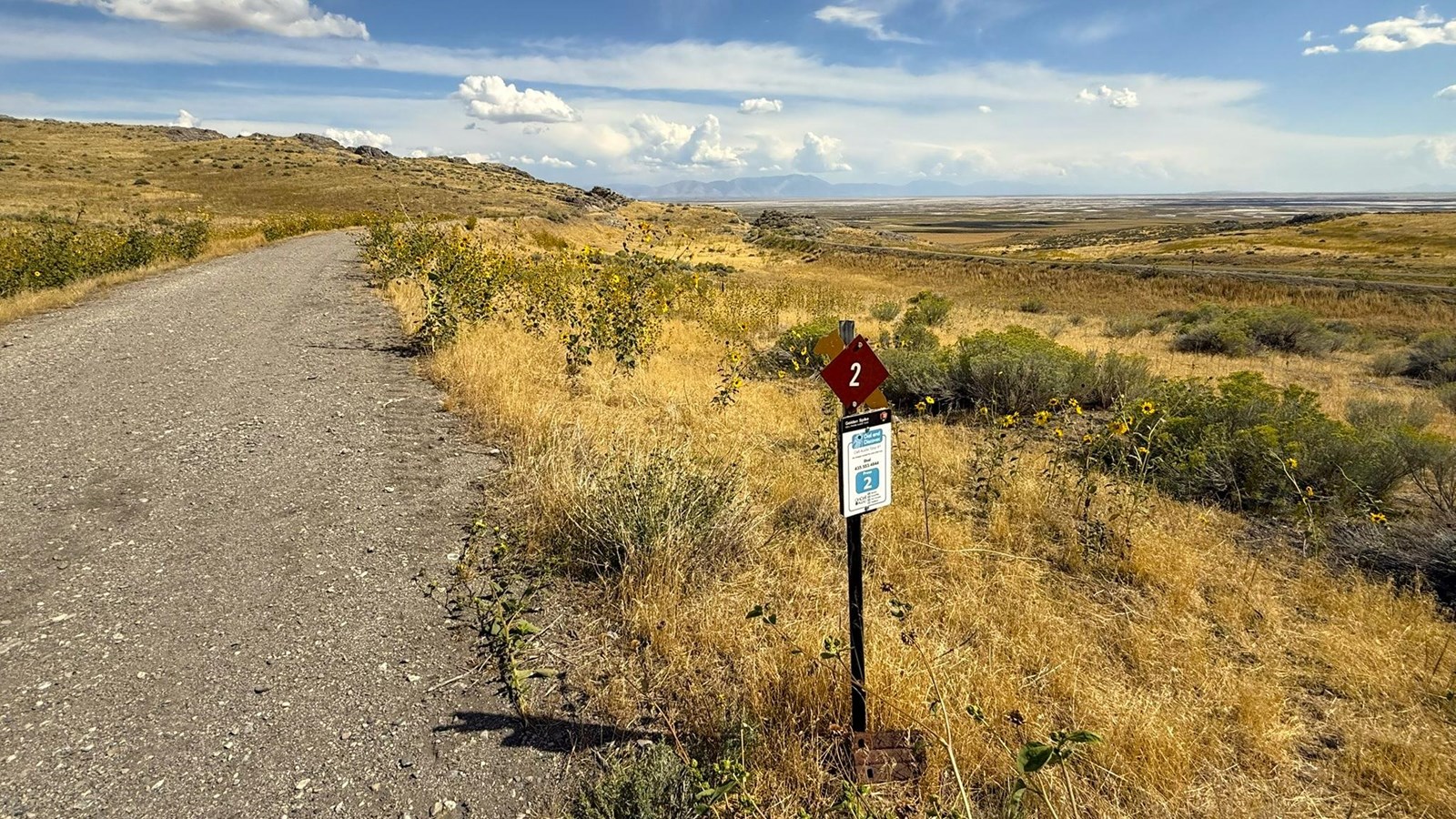
#2 Parallel Construction
NPS Photo
By 1864, changes to the Pacific Railroad Act allowed grading crews to work up to 300 miles ahead of track laying crews. These changes also allowed both railroad companies to receive a portion of their government subsidies once track was laid and inspected.
Because a meeting point had not been mandated to the companies, they had no incentive to cease construction as their work crews drew closer to one another. Consequently, they built grade past each other for 250 miles. When a meeting point was finally agreed upon, both companies discontinued grading beyond Promontory Summit. Because of this, you will see both complete grade and partially constructed grade throughout the park.
You are now walking on what was the Central Pacific's grade. Below you is the Union Pacific's grade. Much like laying the bed of an asphalt road, building the grade took the most time in construction the transcontinental railroad.
Because a meeting point had not been mandated to the companies, they had no incentive to cease construction as their work crews drew closer to one another. Consequently, they built grade past each other for 250 miles. When a meeting point was finally agreed upon, both companies discontinued grading beyond Promontory Summit. Because of this, you will see both complete grade and partially constructed grade throughout the park.
You are now walking on what was the Central Pacific's grade. Below you is the Union Pacific's grade. Much like laying the bed of an asphalt road, building the grade took the most time in construction the transcontinental railroad.