



Last updated: January 31, 2026
Place
1868 Treaty Grounds
NPS
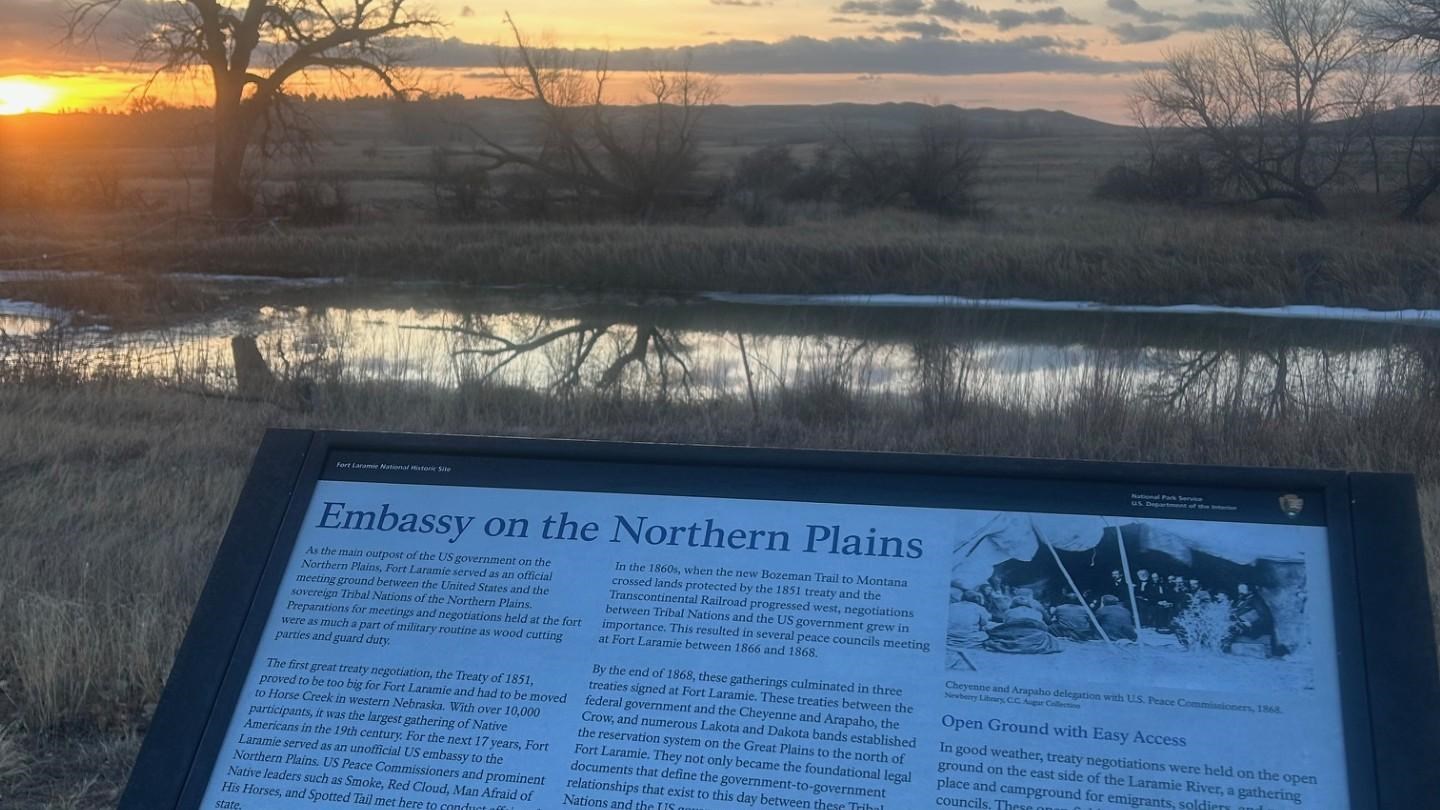
By the 1850’s emigrants crossing the plains threatened the buffalo population. Hostility between Indians and emigrants sometimes ended in bloodshed. The U.S. Army came to Fort Laramie to protect its citizens and negotiate their safe passage with local tribes. The first Treaty of Fort Laramie in 1851 controlled contact between Indians and whites and paid the tribes annually in food and manufactured goods.This peace collapsed when the army-built forts in American Indian Territory near the Powder River, along the Bozeman Trail to the north. Lakota war chief Red Cloud forced the army to negotiate peace terms – making him the only Indian leader recognized as winning a war against the United States. In 1868, the second Treaty of Fort Laramie closed the Bozeman Trail, and made other concessions. In return, the American Indians agreed to confine themselves to large reservations.Led by the Lakota chief Red Cloud, delegates from several tribes me there with United States representatives to negotiate a peace settlement: the second Treaty of Fort Laramie. The terms required American Indians to live on “agencies,” or reservations, ending their traditional, nomadic way of life. In return, the United States would keep settlers out of their lands, particularly the Dakota Territory’s Black Hills – sacred to the Lakota.