



Last updated: December 3, 2025
Place
Bas-Reliefs of Pacific Theater
Quick Facts
Amenities
1 listed
Historical/Interpretive Information/Exhibits
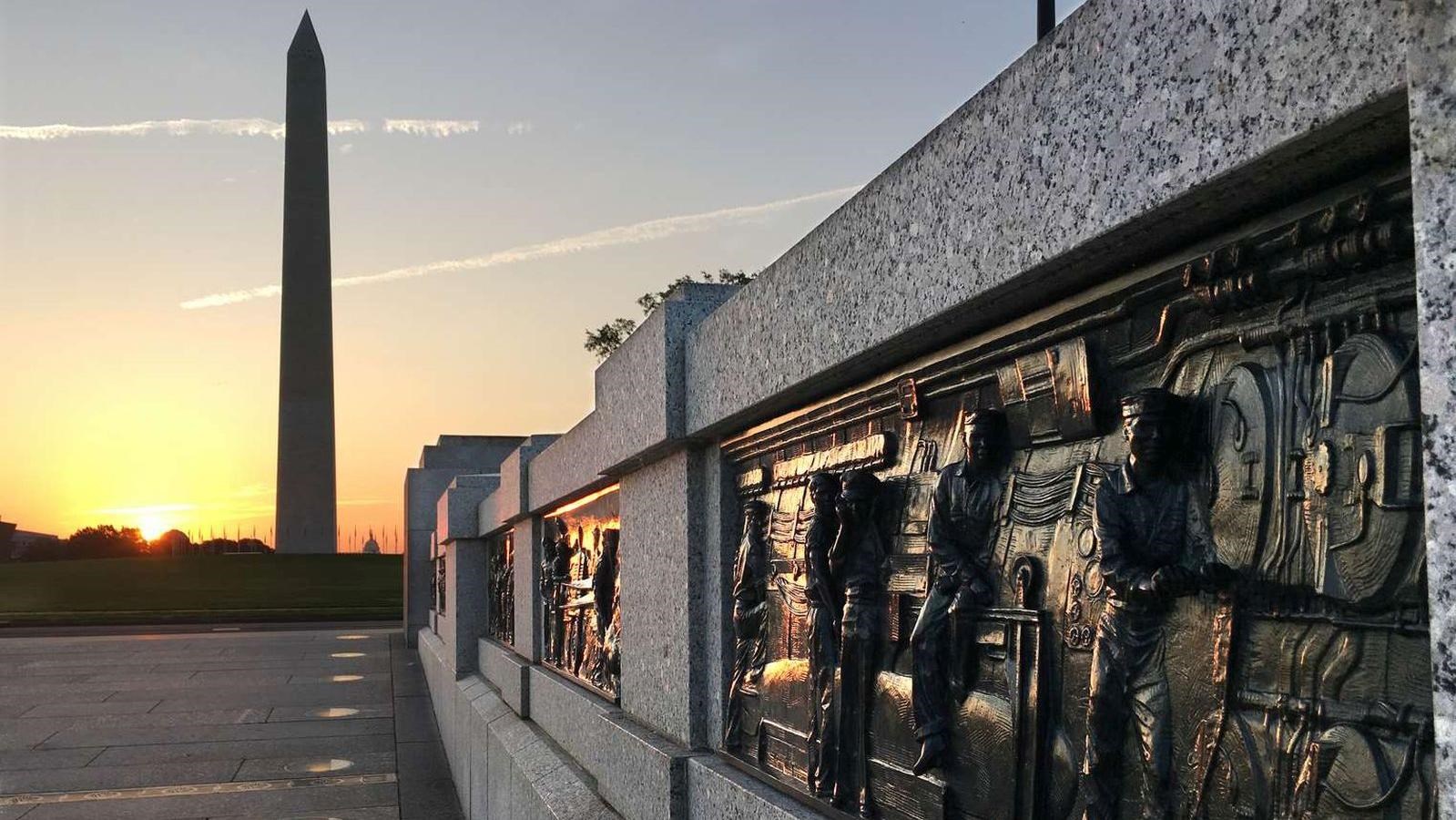
The Pacific Theater bas-reliefs at the World War II Memorial in Washington, D.C., form one of the most evocative narrative elements of the site. Designed by sculptor Ray Kaskey, the 12 bronze panels line the walkway leading from the entrance of the memorial toward the Rainbow Pool on the Pacific side. Installed in 2004, they depict key moments in the American experience of the war—from mobilization and training to major battles and the final victory over Japan. Like their counterparts on the Atlantic side, the Pacific bas-reliefs are intentionally low to the ground so visitors encounter them at eye level, almost as if stepping into a moving historical sequence.
Each panel blends realism with symbolic detail. Figures, equipment, and landscapes are rendered with strong, almost sculptural shadows that evoke the gravity of wartime service. The images illustrate not only combat operations but also the vast logistical and industrial effort required to wage war across thousands of miles of ocean. Training camps, aircraft factories, naval ships, island assaults, and scenes of camaraderie highlight the interconnected roles of airmen, sailors, Marines, soldiers, engineers, and support personnel. Collectively, the panels reveal the scale and diversity of the Pacific theater—its harsh terrain, tropical conditions, amphibious warfare, and the strategic island-hopping campaigns that gradually closed in on Japan.
The final panels bring the narrative to its culmination with the raising of the American flag on Iwo Jima and the surrender of Japan, linking individual sacrifice to the broader story of victory. Throughout the series, Kaskey’s bas-reliefs honor not only the bravery of those who fought but also the teamwork and endurance that defined the Pacific war.
Pacific Theater Bas-Relifs (right to left):
-
Pearl Harbor – The surprise attack of December 7, 1941, showing exploding ships and scrambling sailors as the war begins.
-
Mobilization – American workers and factories shift into wartime production, underscoring the industrial surge that powered the war effort.
-
Training – New recruits drill, prepare equipment, and ready themselves for deployment across the Pacific.
-
Submarine Warfare – U.S. submariners operate in cramped quarters, reflecting the undersea campaign that strangled Japanese supply lines.
-
Troop Ships – Soldiers crowd transport vessels as massive convoys cross the Pacific toward contested islands.
-
Jungle Warfare – Troops advance through dense tropical terrain, depicting the difficult ground fighting common in many campaigns.
-
Amphibious Landing – Marines and soldiers storm ashore from landing craft, capturing the defining tactic of island-hopping operations.
-
Air War – U.S. aircraft launch missions against Japanese positions, highlighting the growing importance of air superiority.
-
Naval Combat – Battleships, carriers, and destroyers engage in heavy action across vast ocean distances.
-
Liberation of the Philippines – American and Filipino forces work together in the campaign to free the islands from Japanese occupation.
-
Iwo Jima – Marines raise the American flag atop Mount Suribachi, symbolizing courage and sacrifice.
-
Surrender – Japanese officials sign the instrument of surrender aboard the USS Missouri, marking the end of the war in the Pacific.