



Last updated: January 27, 2026
Place
Vietnam Veterans Memorial
Quick Facts
Location:
Washington, DC
Significance:
Memorial to US service members who died in service in the Vietnam War
Amenities
3 listed
Historical/Interpretive Information/Exhibits, Public Transit, Wheelchair Accessible
The Vietnam Veterans Memorial, located on the west end of the National Mall, honors the service and sacrifice of the more than three million Americans who served in the Vietnam War and commemorates the 58,000-plus service members who lost their lives or remain missing.
Authorized by Congress in 1980 and dedicated in 1982, the memorial emerged from a national effort led by Vietnam veterans to create a place of recognition and healing at a time when the war and its aftermath remained deeply painful and divisive. Its design marked a turning point in how the nation commemorates military service—favoring reflection and personal connection over traditional heroic imagery.
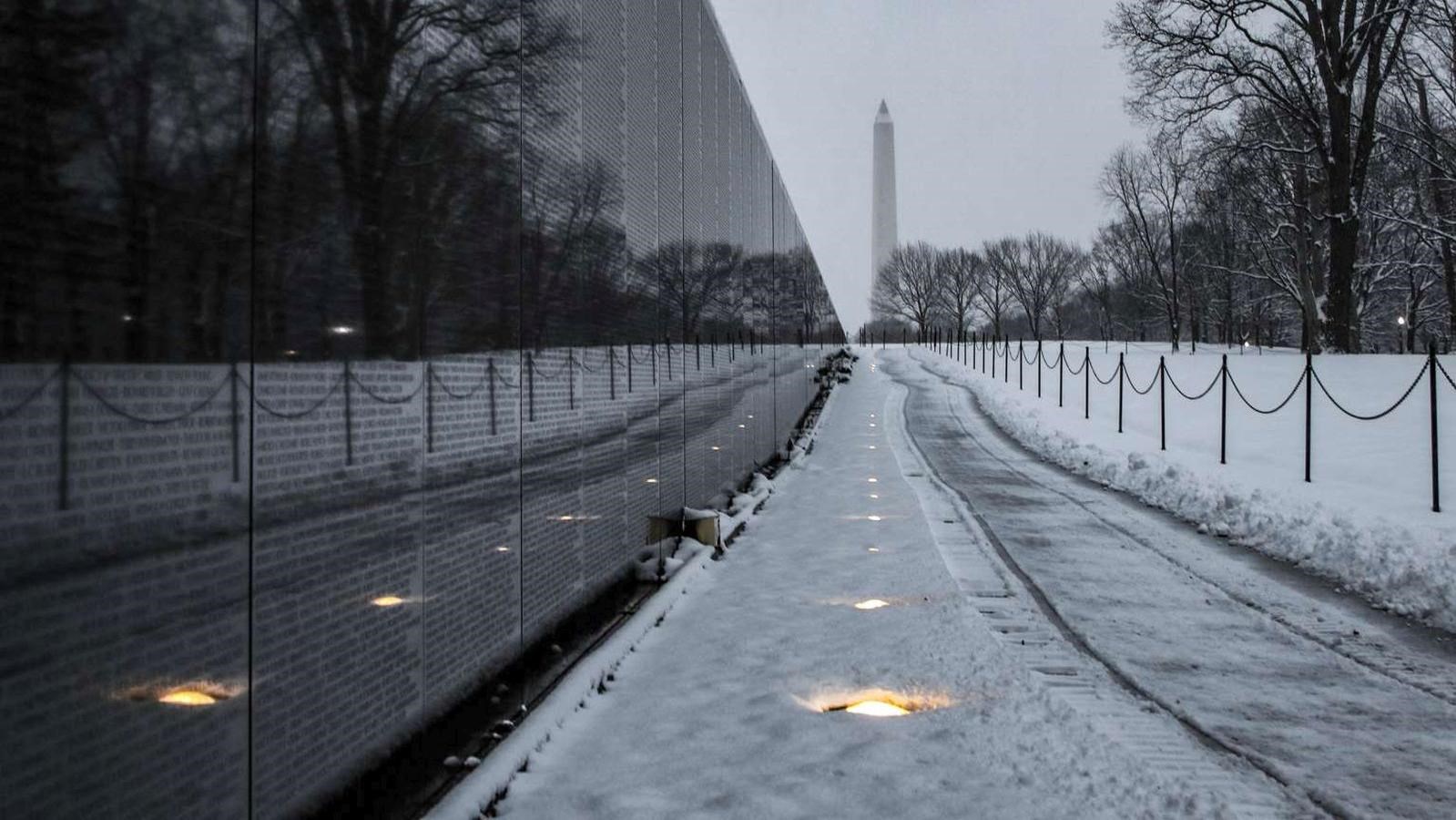
Designed by architect Maya Lin, then a Yale University student, the memorial consists of two long, polished black granite walls that meet at an angle, forming a shallow V shape set into the earth. The walls gradually rise and then recede, creating a sense of descent and return as visitors walk along the memorial. Inscribed on the walls are the names of those who died in the conflict or remain missing, listed in chronological order of loss, rather than alphabetically. This arrangement emphasizes the unfolding human cost of the war over time and allows visitors to locate names by date, connecting individual loss to shared history.
The reflective surface of the granite is central to the memorial’s symbolism. As visitors read the names, they see their own reflections alongside them, visually linking the living with the dead and reinforcing the idea that the war’s legacy continues to shape those who remember it. The black stone, initially controversial, conveys mourning and solemnity, while its mirror-like finish invites quiet contemplation and personal remembrance rather than prescribed interpretation.
Complementing the Wall are nearby figurative elements added after the memorial’s dedication, including the “Three Servicemen” statue and the Vietnam Women’s Memorial. These additions provide representational context, acknowledging the diverse experiences of those who served while preserving the Wall as the memorial’s emotional and symbolic core.
Together, the Vietnam Veterans Memorial’s history, design, and symbolism create a powerful and enduring place of reflection. It stands as a testament not only to those who were lost, but also to the nation’s capacity to confront difficult history with honesty, humility, and respect—allowing visitors to grieve, remember, and reconcile in their own way.