



Last updated: December 23, 2025
Place
Tidal Basin
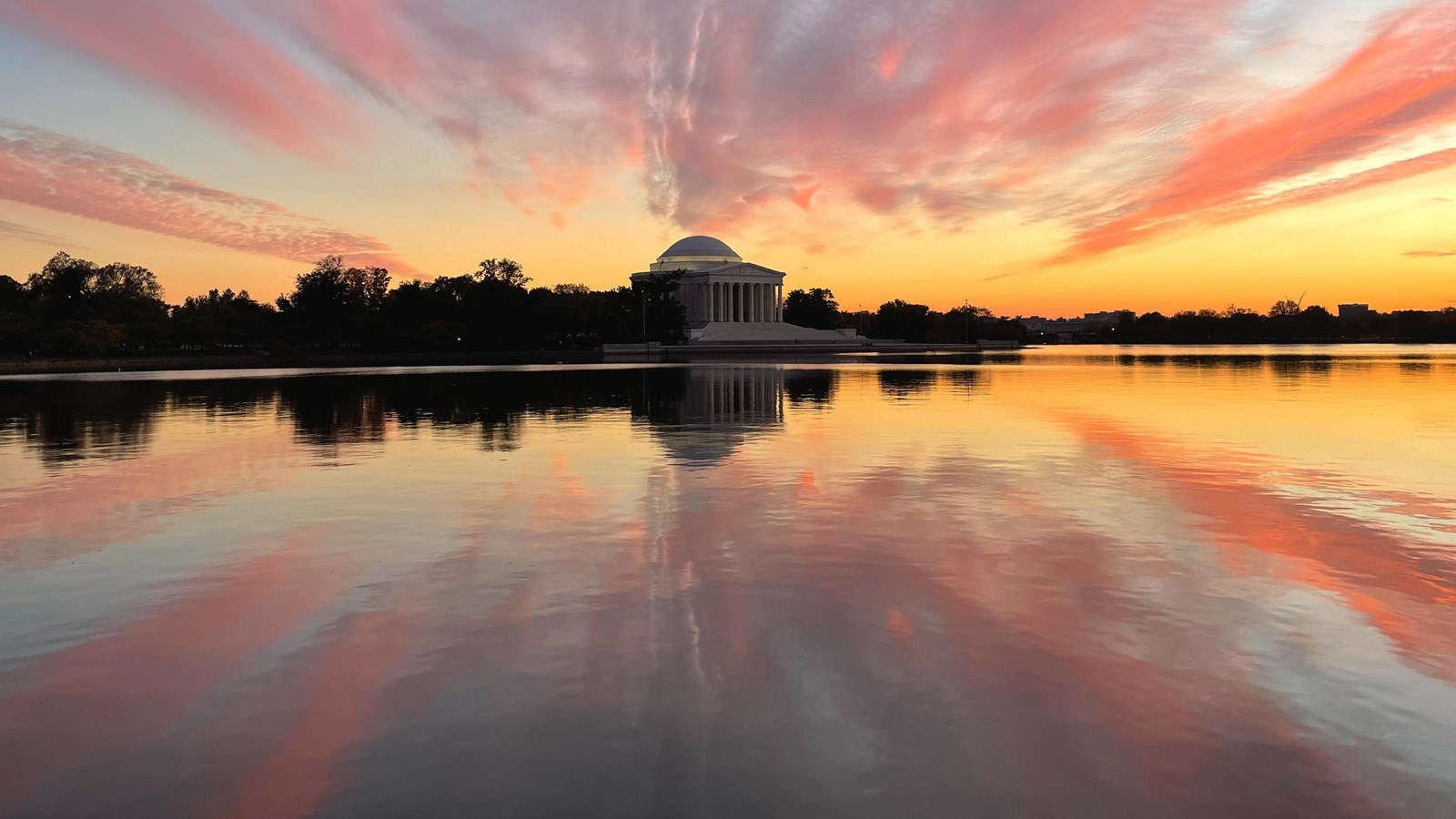
National Park Service photo by Nathan Adams
Quick Facts
Amenities
14 listed
Accessible Sites, Bicycle - Rack, Bicycle - Sharing Station, Bus/Shuttle Stop, Food/Drink - Snacks, Gifts/Souvenirs/Books, Historical/Interpretive Information/Exhibits, Public Transit, Restroom, Restroom - Accessible, Restroom - Family, Scenic View/Photo Spot, Water - Bottle-Filling Station, Wheelchair Accessible
The Tidal Basin is one of Washington, DC’s most iconic landscapes—a man-made body of water that blends engineering, symbolism, and scenery at the heart of the nation’s capital. Set between the Washington Monument and the Potomac River, the basin is best known today for its flowering cherry trees and for the memorials that ring its shoreline, but its origins lie in the practical challenges of shaping a city from marshland.
The Tidal Basin was conceived in the late 19th century as a solution to persistent flooding and sanitation problems along the Potomac Flats. The river’s slow-moving waters deposited sediment that created foul-smelling marshes south of the Washington Monument. In 1882, the U.S. Army Corps of Engineers began dredging the Potomac River, using the reclaimed material to fill the flats and create new parkland. Completed in the 1890s, the Tidal Basin was designed to use the river’s natural tides to flush the Washington Channel, improving water quality and controlling flooding. Gates allowed water to flow in and out with the tides, making the basin both a functional hydraulic system and an early example of large-scale environmental engineering in the capital.
Over time, the Tidal Basin evolved from a utilitarian project into a symbolic and commemorative landscape. Its transformation was guided by the McMillan Plan of 1901–1902, which sought to restore Pierre L’Enfant’s original vision for a monumental core defined by open vistas, classical architecture, and reflective water features. The basin’s broad curves and open water complemented the axial alignment of the National Mall while providing a tranquil counterpoint to the city’s formal geometry.
The Tidal Basin holds deep cultural significance as the setting for some of the nation’s most important memorials. On its southern shore stands the Thomas Jefferson Memorial, dedicated in 1943 on the 200th anniversary of Jefferson’s birth. Nearby, the Franklin Delano Roosevelt Memorial, dedicated in 1997, unfolds across a series of outdoor rooms tracing the four terms of the 32nd president and the challenges of the Great Depression and World War II. And along the northeastern edge of the basin the Martin Luther King, Jr. Memorial faces across the water toward Jefferson, reinforcing a dialogue across generations about freedom, equality, and justice.
The Tidal Basin is also inseparable from one of Washington’s most beloved traditions: the National Cherry Blossom Festival. In 1912, the people of Tokyo gifted 3,000 cherry trees to the city as a symbol of friendship between Japan and the United States. Planted primarily around the basin, the trees bloom each spring, drawing millions of visitors and transforming the shoreline into a living celebration of international friendship. The blossoms have become a seasonal marker of renewal and a reminder of the basin’s role as both a civic and cultural gathering place.
Today, the Tidal Basin serves as a place of reflection, recreation, and remembrance. From its walkways, visitors experience sweeping views of monuments mirrored in the water at sunrise and sunset. In recent years, a major restoration of a portion of the Tidal Basin’s historic seawall has addressed long-standing structural deterioration. Though additional work remains to be done, this project underscores the basin’s continued evolution as both an engineered system and a cherished civic landscape. The Tidal Basin remains a central feature of Washington’s identity, standing as a testament to the city’s ability to combine practical design with enduring symbolism, shaping a landscape where history, nature, and national ideals meet.