



Last updated: September 5, 2026
Place
School Lake
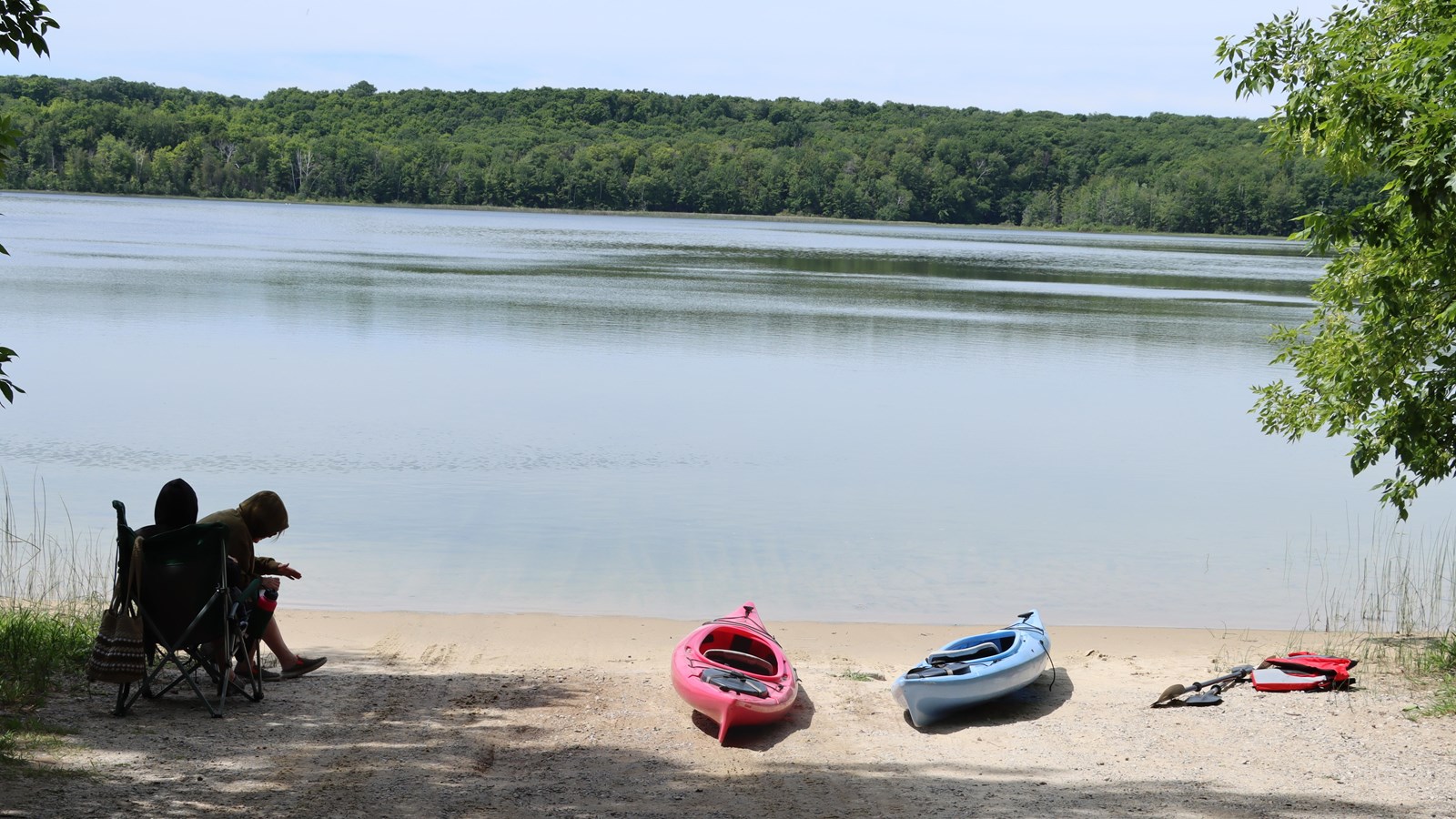
NPS Photo/D.Newman
Quick Facts
Location:
GPS Coordinates 44.91546,-85.88112
Amenities
4 listed
Beach/Water Access, Canoe/Kayak/Small Boat Launch, Parking - Auto, Toilet - Vault/Composting
This is the largest lake in the park but it still has a secluded feel with almost no houses in sight.
There is a nice boat ramp, and good restroom facilities available at this site. There is a limited beach area but the lake does have a sandy bottom for wading and swimming. The lake has a nearly flat bottom, with an average depth of about five feet. There is a somewhat deeper hole in a cove at the southwestern end of the lake.
Access is from Bohemian Road, a short distance south of M-22. School Lake and Bass Lake are connected by a shallow channel, which makes it possible for canoes and kayaks to get from one lake to the other. Four species of fish are commonly found in the lake including, northern pike, bluegill, largemouth bass, and pumpkinseed. Vessels may not create a wake or exceed 5 mph.
There is a nice boat ramp, and good restroom facilities available at this site. There is a limited beach area but the lake does have a sandy bottom for wading and swimming. The lake has a nearly flat bottom, with an average depth of about five feet. There is a somewhat deeper hole in a cove at the southwestern end of the lake.
Access is from Bohemian Road, a short distance south of M-22. School Lake and Bass Lake are connected by a shallow channel, which makes it possible for canoes and kayaks to get from one lake to the other. Four species of fish are commonly found in the lake including, northern pike, bluegill, largemouth bass, and pumpkinseed. Vessels may not create a wake or exceed 5 mph.
Fish species found in the lake include, longnose gar, bowfin, central mudminnow, northern pike, bluntnose minnow, common carp, common shiner, sand shiner, white sucker, brown bullhead, bluegill, largemouth bass, smallmouth bass, Johnny darter, walleye, channel catfish, and yellow perch. In the late summer months coho salmon can be seen in the lake as they make their way to the fish hatchery.
Paddle safe
Before going out for a paddle, check the weather. Have a boating plan and make sure others know it. Buddy up, don't go out alone. Check your boat and make sure it is safe for conditions. And always keep the shoreline in sight.Wear It!
The State of Michigan requires all vessels have a life jacket or personal flotation device for every person on board or being towed.Clean Your Boats
Please clean, drain, and dry your boat after you leave any body of water, especially Lake Michigan, to prevent the spread of aquatic invasive species. This is especially important for our inland lakes.