



Last updated: December 30, 2025
Place
Lincoln Memorial
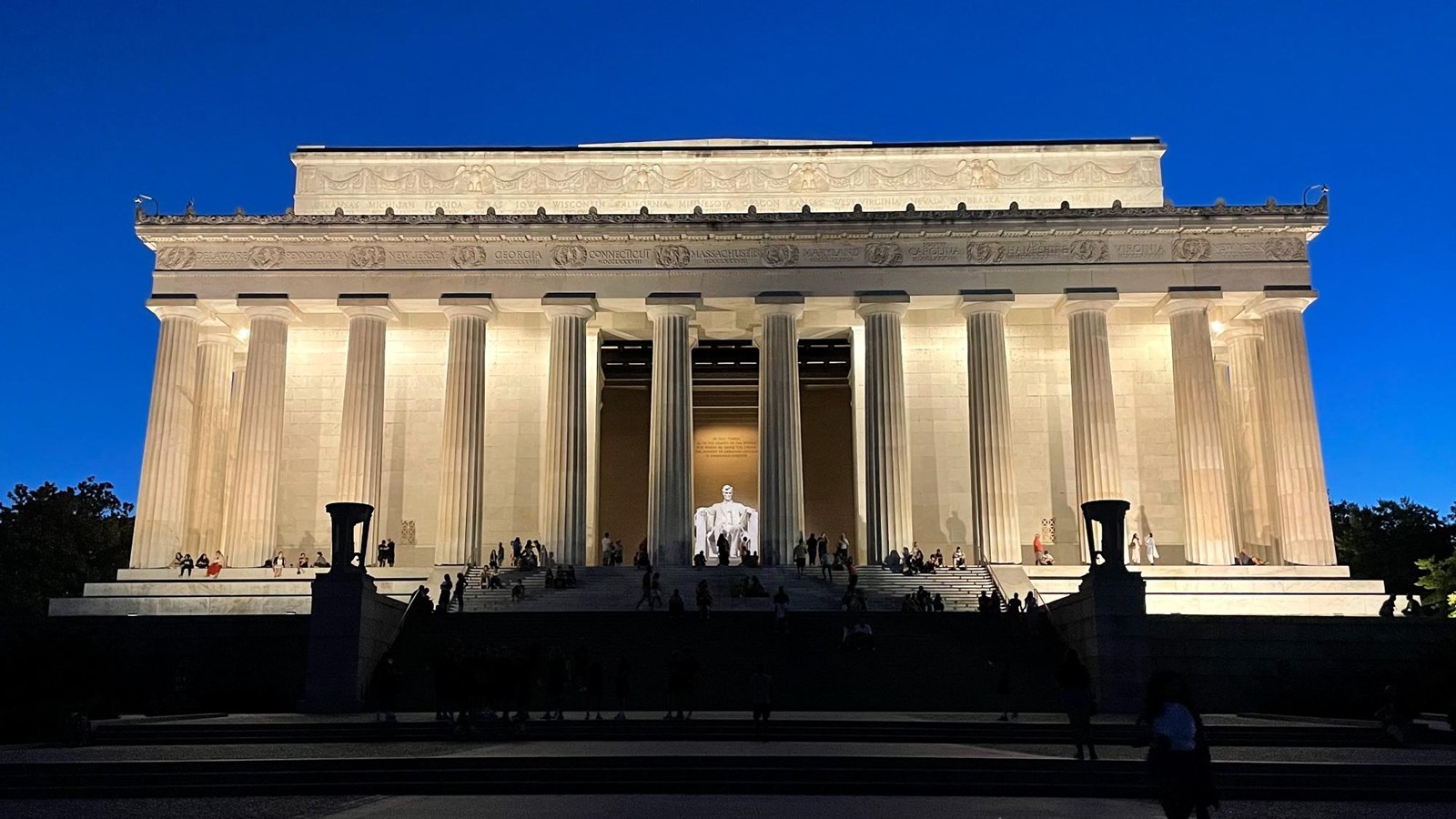
National Park Service photo by Nathan Adams
Quick Facts
Location:
Washington, DC
Significance:
Memorial to President Abraham Lincoln
Amenities
7 listed
Bicycle - Rental, Food/Drink - Cafeteria, Gifts/Souvenirs/Books, Historical/Interpretive Information/Exhibits, Restroom, Scenic View/Photo Spot, Wheelchair Accessible
The Lincoln Memorial on the western end of the National Mall in Washington, D.C., honors Abraham Lincoln (1809–1865), the 16th president of the United States, who led the nation through its most devastating conflict, the Civil War, and worked to end slavery. Born in a log cabin in Kentucky, Lincoln rose from humble beginnings to become a self-taught lawyer and a member of the U.S. House of Representatives before his election as president in 1860. He is remembered for his leadership during the Civil War, his dedication to preserving the Union, and his issuance of the Emancipation Proclamation, which paved the way for the abolition of slavery. Lincoln was assassinated in 1865, and his enduring legacy as a symbol of freedom, equality, and national unity has made him one of the most revered figures in American history.
The Lincoln Memorial was designed to commemorate Lincoln’s life and legacy and to provide a dignified space for reflection. Congress authorized the memorial in 1910, and construction began in 1914, with dedication on May 30, 1922. Architect Henry Bacon designed the memorial in the style of a Greek Doric temple, symbolizing the democratic ideals Lincoln championed. The exterior features 36 fluted columns, representing the states in the Union at the time of Lincoln’s death, and the structure is built of Colorado Yule marble and Indiana limestone, giving it a sense of permanence and grandeur.
Inside the memorial, visitors encounter a 30-foot seated statue of Lincoln, sculpted by Daniel Chester French and carved from 28 pieces of Georgia marble, capturing the president in a contemplative yet commanding pose. The statue is framed by inscriptions of two of Lincoln’s most famous speeches—the Gettysburg Address and his Second Inaugural Address—carved into the marble walls, reminding visitors of his vision for unity and equality. The memorial’s interior is designed to evoke a sense of solemnity and reverence, with a high ceiling and reflective space that encourages contemplation.
The surrounding grounds enhance the memorial’s symbolic impact. The memorial faces the Washington Monument to the east and the Reflecting Pool, creating a central axis along the National Mall that emphasizes Lincoln’s central place in American history. Over time, the Lincoln Memorial has become not only a tribute to the 16th president but also a site for historic events, including the 1963 March on Washington, where Dr. Martin Luther King, Jr., delivered his “I Have a Dream” speech. Today, it remains a powerful symbol of national unity, justice, and the ongoing struggle for equality, visited by millions from around the world each year.