



Last updated: December 22, 2025
Place
Japanese Stone Lantern
NPS / Kelsey Graczyk
Quick Facts
Location:
Washington, DC
Amenities
3 listed
Historical/Interpretive Information/Exhibits, Scenic View/Photo Spot, Wheelchair Accessible
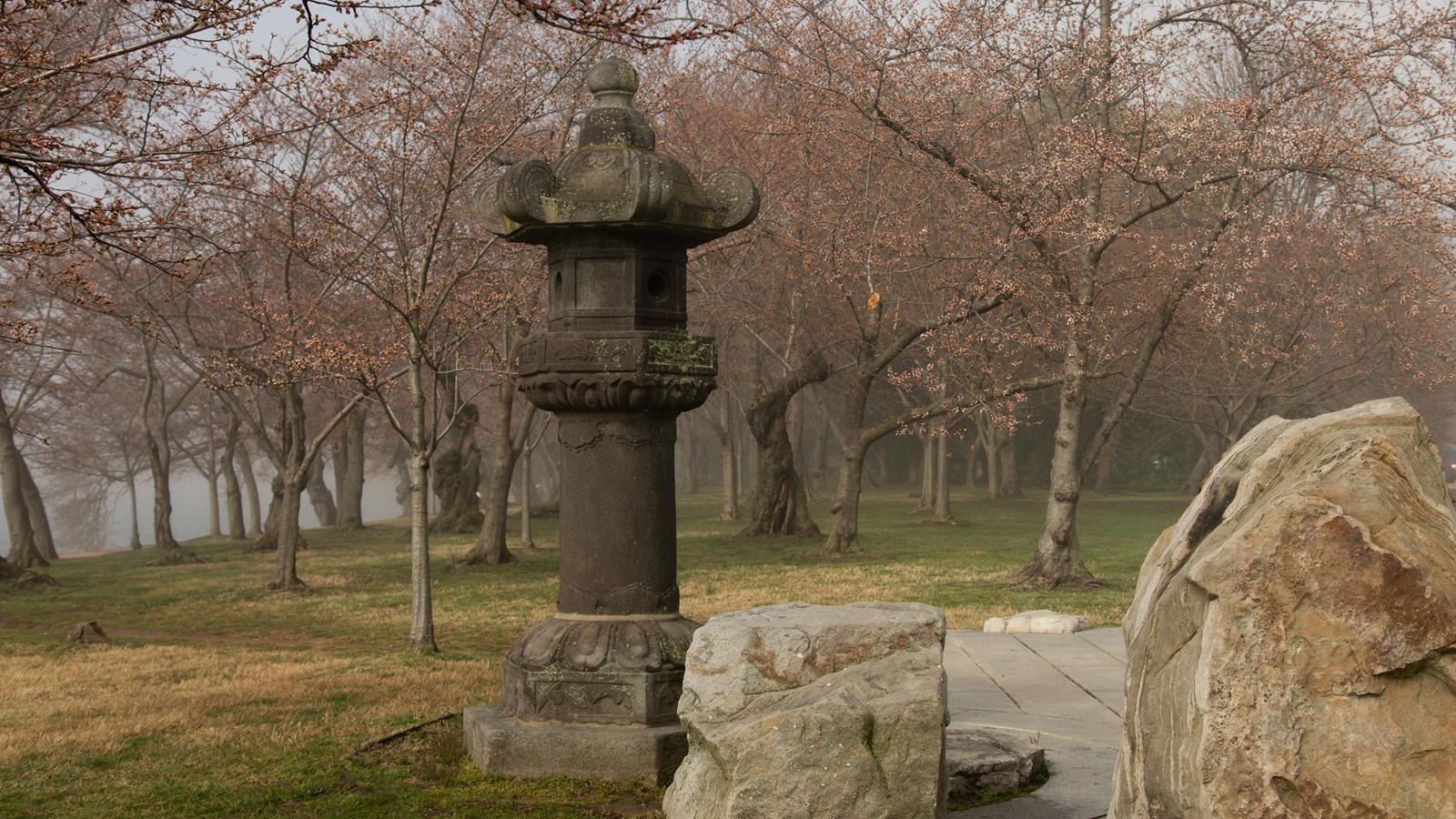
The Japanese Stone Lantern is a cultural landmark nestled amid the iconic cherry trees along the Tidal Basin, where it stands as a symbol of peace, renewal, and enduring friendship between Japan and the United States.
The lantern’s story begins long before it ever arrived on American soil. Carved in 1651, it originally stood for more than three centuries on the grounds of the Toeizan Kan’eiji Temple in what was then Edo, now Tokyo, Japan. It was one of a pair created to memorialize Tokugawa Iemitsu, the third shogun of the Tokugawa dynasty, and rested among sacred temple grounds near what is now Ueno Park, a place renowned for its cherry blossoms.
In the early 20th century, diplomatic and cultural ties between Japan and the United States were already entwined through the gift of cherry trees—over 3,000 trees first presented by the city of Tokyo and planted around the Tidal Basin in 1912, a gesture meant to strengthen goodwill between the two nations. A nearby plaque marks the approximate location that the first cherry trees were planted on the Tidal Basin.
Plans to send the stone lantern to Washington were originally proposed in 1921, but diplomatic tensions and the evolving geopolitical landscape delayed those intentions. It was not until after World War II, as Japan and the United States rebuilt relations, that the idea came to fruition. On March 30, 1954, the lantern was formally presented to the people of Washington by the Governor of Tokyo and dedicated along the Tidal Basin. The gift commemorated the centennial of Commodore Matthew Perry’s mission to Japan, which had opened the country to diplomatic and commercial relations nearly a century earlier—an event foundational to the modern U.S.–Japan relationship.
Measuring about eight and a half feet tall and carved from solid granite, the lantern weighs around two tons. Its form reflects the traditional Japanese ishi-dōrō (stone lantern) aesthetic, structures originally introduced from China along with Buddhism and commonly used to illuminate temple grounds and later beautify gardens. Traditionally, such lanterns feature a base supporting a firebox where light—historically from oil lamps or candles—would glow through carved openings, symbolizing light guiding the way.
Today, the lantern serves both as a cultural artifact and a ceremonial focus. Each year during the National Cherry Blossom Festival, it is ceremonially lit—a tradition that has become a beloved marker of the season and a public celebration of spring and connection. This lighting ritual links the ancient craftsmanship of the lantern with the modern spirit of friendship between Japan and the United States.