



Last updated: February 20, 2026
Person
Spottswood Poles
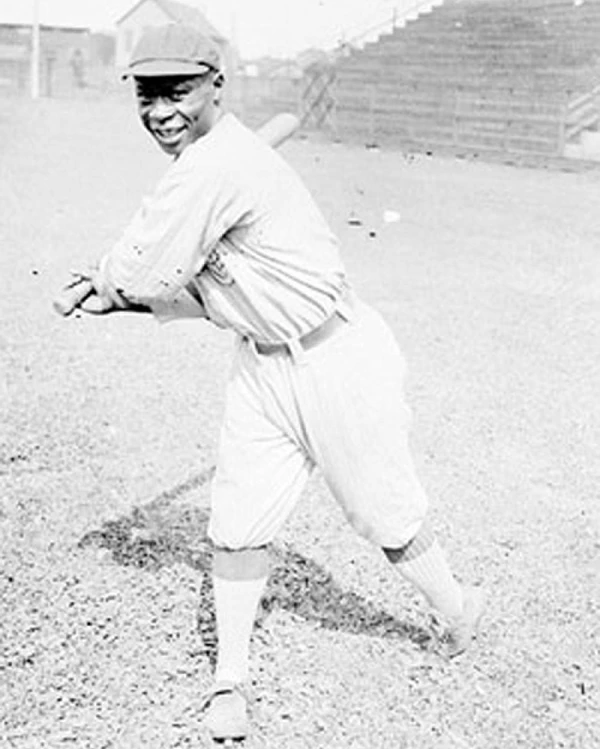
Public Domain
Quick Facts
Significance:
World War I Buffalo Soldier and Purple Heart Recipient
Place of Birth:
Winchester, Virginia
Date of Birth:
December 9, 1887
Place of Death:
Lebanon, Pennsylvania
Date of Death:
September 12, 1962
Place of Burial:
Arlington, Virginia
Cemetery Name:
Arlington National Cemetery
Spottswood Poles was born on December 9, 1887, in Winchester, Virginia. In the early 1890s, Poles’ family moved to Harrisburg, Pennsylvania. By the age of six, Poles started playing baseball, often using a broom stick as a bat.
In 1897, his father, French Poles, signed him up to play on one of the local sandlot teams. In 1902, Poles joined the Springdale Athletic Club, an all-Black amateur baseball team in Harrisburg. He continued to improve as a player and was recognized for his speed and hitting ability. This impressed Charles Strothers, owner of the Harrisburg Giants, a semi-professional baseball team. In 1906, Strothers recruited Poles to play outfield for the Harrisburg Giants. In 1908, the Harrisburg Giants won the “Colored Champions of Pennsylvania.”
In June 1909, Poles signed with Philadelphia Giants, an all-Black professional baseball team. Fans referred to him as the “Black Ty Cobb” as he was often compared to the Major League Baseball star, Ty Cobb. That year, the Philadelphia Giants won the “Colored Championship of the World.”
In 1911, Poles signed with the New York Lincoln Giants and moved to Harlem, New York. They won the championship in 1913, 1914, and 1915. After each season, they played exhibition games against Major League Baseball teams. By 1916, Poles played 21 games against Major League Baseball teams and held a batting average of .405. This included three hits against Hall of Fame pitcher Grover Cleveland Alexander.
On June 30, 1916, Poles enlisted in the all-Black 15th New York Army National Guard Regiment in Harlem, New York. He was assigned to Company D of the First Battalion. The newly organized 15th New York didn't have enough rifles for training, so many of the soldiers used broom sticks. The training schedule was flexible, which allowed him to continue playing baseball. However, on July 10, 1917, Poles was honorably discharged due to dependency as he was essential to support this family as the country prepared for war.
As his former unit was federalized, days after his discharge, Poles enlisted once again on October 24, 1917, to the 15th New York National Guard. By that time, they were training at Camp Wadsworth in Spartanburg, South Carolina, situated in the Jim Crow South. Trenches were constructed there to simulate the conditions in France for combat training. They also endured instances of racial discrimination, but the community at large welcomed them, particularly the weekly band concerts led by noted musical impresario, Lieutenant James Reese Europe. Despite several racial incidents, the soldiers refrained from violence and focused on their training. On October 27, 1917, they received orders to return to New York and prepare for deployment to France.
On December 27, 1917, they arrived at Brest, France aboard the USS Pocahontas. During the winter months, they were assigned construction roles, including port improvements, clearing land and preparing for the millions of American soldiers who would soon arrive in France. Poles was promoted to corporal and served as a wagoner in Company D, overseeing horses and wagons that transported supplies to the frontlines.
General John J. Pershing, who served as the American Expeditionary Force commander, received requests for soldiers to support French and British units on the frontlines. General Pershing’s policy was for U.S. combat units to only fight under the US chain of command. Since the 15th New York National Guard had suddenly appeared in France, with no divisional command structure, Pershing was pressured by the French for these men. In spite of War Department policy to use Black troops only in support roles, Pershing immediately pledged the regiment to the French.
On March 1, 1918, the 15th New York was redesignated as the 369th Infantry Regiment and assigned to the provisional 93rd Infantry Division. Then on March 12, the 369th Infantry were transferred to the 16th Division of the French Army. The French Army welcomed the 369th Infantry into their unit and assigned officers and non-commissioned officers to each company to train the men in the French style of warfare and assigned them to a Colonial Brigade, consisting of North African men, of various ethnic and racial backgrounds.
As the 369th Infantry arrived, they were greeted by General Le Gallais, commander of the 16th Division. The men were given French Berthier rifles, Chauchat light machine guns, Hotchkiss heavy machine guns, French accoutrements and helmets. They trained for three weeks on how to use the new equipment. General Gallais wrote that he was impressed by their discipline and "excellent spirit."Poles served at Main de Massiges, Ville-sur-Toube, Bois d’Hauzy and the Champagne-Marne region just west of Verdun. Their battle laurels centered on the Meuse-Argonne Offensive, during which he was wounded in action on September 28, 1918, while assaulting Bellevue Signal Ridge, overlooking the village of Sechault. In addition to his Battalion Commander being killed, the entire regiment suffered about 33% casualties.
In October 1918, they were relieved after approximately 150 days. The regiment earned the distinction of being one of the longest-serving combat units of the American Expeditionary Forces, along with its comrades and friends in the old 69th New York, then a part of the Rainbow Division. On November 11, 1918, the armistice was signed which ended the war. Poles received the Purple Heart due to his wound suffered during the war.
On February 17, 1919, the 369th returned from France to New York City and were honored with a victory parade. They marched seven miles from 23rd Steet up Fifth Avenue to 145th Steet and Lenox Avenue in Harlem. The streets were filled with both white and Black citizens celebrating their return. On February 24, 1919, Poles was honorably discharged with the rank of sergeant at Camp Upton.
Poles returned to baseball and signed as the player manager for the Hell Fighters. This semi-professional baseball team comprised of veterans from the 369th. They played several games including some against the Harrisburg Giants.
In 1920, Poles returned to the New York Lincoln Giants. On July 11, 1920, the New York Lincoln Giants played the Atlantic City Bacharach Giants at Ebbets Field in Brooklyn, New York. This marked the first time two all-Black teams played a game in a Major League Baseball stadium. In 1923, Poles retired from professional baseball and moved to Winchester, Virginia and started a taxi company. He also worked as an umpire for the Negro League and continued to play baseball with local amateur teams.
In 1935, Poles moved back to Harrisburg, Pennsylvania with his wife, Bertha. During World War II, they worked at the Middletown Air Depot in Middletown, Pennsylvania. They serviced airplanes for the Army Air Corps and constructed engines for cargo planes.
After the war, Poles continued to work at the Middletown Air Depot and returned to baseball. He managed his old team, the Harrisburg Giants, which now had white and Black players. He also mentored players, including Brooks Lawrence, who later played for the Cincinnati Reds.
On September 12, 1962, Spottswood Poles died from cancer in Lebanon, Pennsylvania. He was given a full military funeral at Arlington National Cemetery and was buried in Section 42, Grave 2324.