



Last updated: January 11, 2026
Person
George A. "Sandy" Forsyth
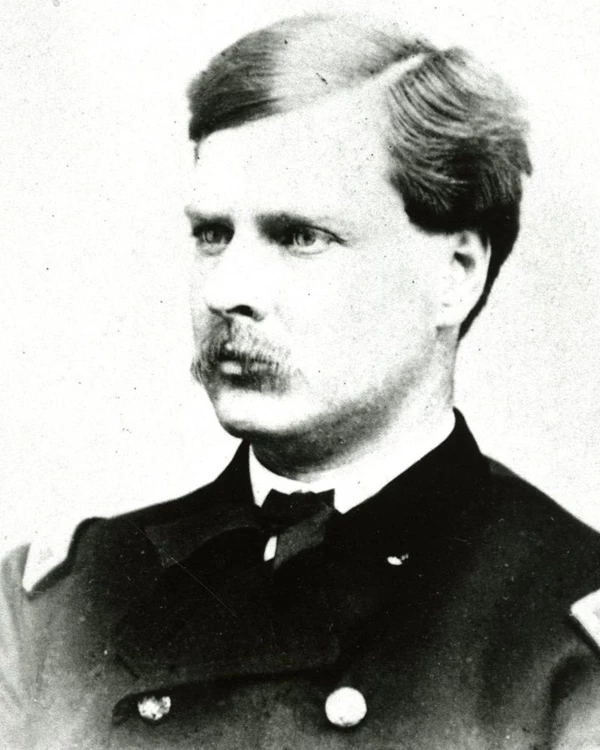
Courtesy of US Army Military History Institute
Quick Facts
Significance:
US Army officer
Place of Birth:
Muncy, Pennsylvania
Date of Birth:
November 7, 1837
Place of Death:
Rockport, Massachusettes
Date of Death:
September 12, 1912
Place of Burial:
Arlington, Virgnia
Cemetery Name:
Arlington National Cemetery
As General Sheridan’s staff officer, Major Forsyth also made the famous ride to the Cedar Creek battlefield. He later became a general and led US soldiers in wars that removed Native Americans from their homelands in the west. How should we balance Civil War heroism against other acts of violence?
Civil War Service
At the beginning of the Civil War, Forsyth volunteered to join the US Army. As a private with the Chicago Dragoons, he was among the first group of soldiers from Illinois to serve. He received several officer promotions while a member of the 8th Illinois cavalry. During the 1864 Shenandoah Valley campaign, Forsyth was an aide-de-camp to General Philip Sheridan.
Sheridan's Ride
On October 19, 1864, Forsyth rode with Sheridan from Winchester to Cedar Creek. This was a key moment that reversed the outcome of the battle. He described the scenes along the Valley Turnpike along the way, writing, "Part of the wagons faced one way, part the other. Others were turned round in the position to swing either way, but were huddled together, completely blocking the road." In March 1865 Forsyth was breveted a Brigadier General for his role in Shenandoah Valley.
Regular Army Officer
After the Civil War Forsyth continued military service, receiving a commission as major in the 9th US Cavalry. His working relationship with Sheridan continued as well. At various times in the 1870s and 1880s he served as Sheridan's military secretary and aide-de-camp. By then Sheridan was leading Indian Wars on the western frontier.
Indian Wars
Like many other Civil War heroes, Forsyth's later military service brought him in violent conflict with Native Americans. He battled Cheyenne, Sioux, and Arapo warriors in Kansas, Nebraska, and Colorado. During the Battle of Beecher's Island his soldiers were besieged for nine days before being relieved. The press portrayed the battle as a classic frontier story. No one questioned Forsyth's aggressive leadership that led his men into a trap with no food or extra supplies.