



News Release
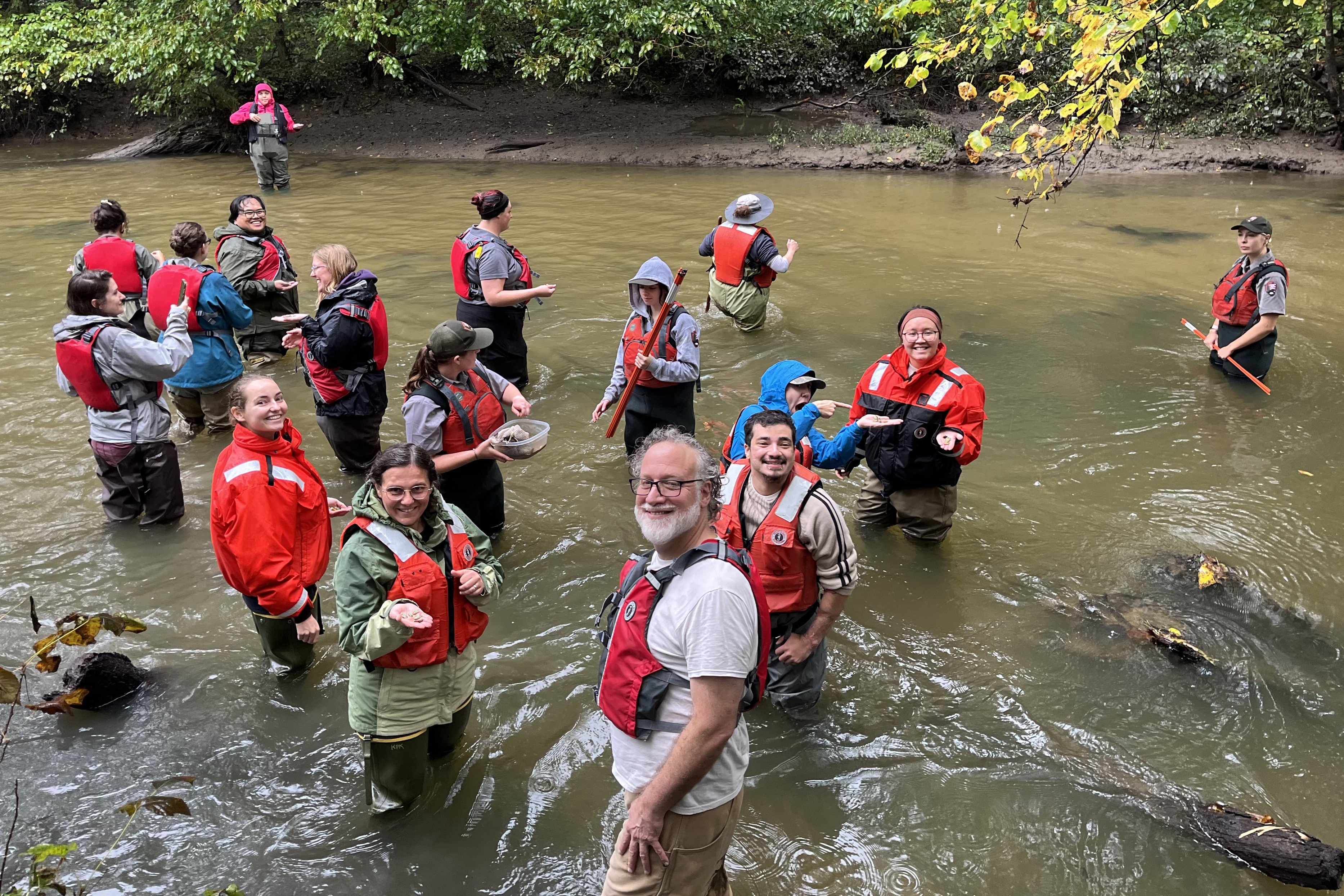
NPS Photo / Wesley Butler
News Release Date: October 1, 2026
Contact:
Indiana Dunes National Park
Contact:
NPS Midwest Region Communications
“This release marks an extraordinary step forward in restoring native mussels that once thrived in this watershed,” said Leo Lestino, acting superintendent of Indiana Dunes National Park. “Native mussels are critical to river health, and their return signals a new chapter of ecological recovery in the Little Calumet River.”
The mussels began as larvae and developed into juveniles in controlled laboratory conditions. They then grew under natural river conditions until they reached 20 to 30 millimeters, a size considered suitable for reintroduction.
As filter feeders, native mussels help improve water quality. They also reduce pathogen levels (e.g. E. coli), stabilize sediments, cycle nutrients and support other aquatic life. By restoring species historically found in the river, the park aims to rebuild self-sustaining mussel populations and improve conditions throughout the watershed.
Each mussel’s identification tag will help resource managers track its growth, survival and movement. Surveys over the coming years will also look for evidence of reproduction. The long-term goal is to establish mussel beds that support healthy river ecosystems for generations.
“Healthy rivers need mussels,” said Dr. Charlie Morris, the Indiana Dunes National Park ecologist leading its native mussel restoration effort. “Today’s milestone moves us closer to restoring the biological integrity of one of Northwest Indiana’s most important waterways.”
Visitors can help by leaving native mussels and their shells undisturbed. Do not pick up, handle or move mussels. They are fragile and can die if handled or placed incorrectly in the riverbed.
Indiana Dunes National Park protects more than 15,000 acres of dunes, forests, wetlands and rivers along Lake Michigan’s southern shore. For more information about native mussel restoration or park programs, visit nps.gov/indu.
About the National Park Service. The National Park Service preserves America’s most treasured natural and cultural places for the enjoyment, education and inspiration of this and future generations. Learn more at nps.gov.

NPS / Leo Lestino

Katie Hobgood

NPS / Wesley Butler

NPS / Wesley Butler

NPS / Wesley Butler

Katie Hobgood
Last updated: October 1, 2026