



Founded by Dutch settlers in 1651 and once Delaware’s colonial capital, New Castle reflects national history on a local scale. Shaped by immigration, industry, and transportation, the town’s past mirror's broader American themes. This Historic Benchmarks article series, supported in part by Delaware250, explores New Castle’s layered history and Delaware’s role in shaping the nation.
-
First State National Historical Park
Article 1: Deemer's Beach Amusement Park
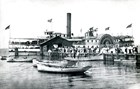
At the turn of the 20th century, leisure time expanded, fueling the rise of public recreation. In the 1920s, industrialist Sheldon S. Deemer created Deemer’s Beach along New Castle’s riverfront, a popular amusement park reached by trolley, car, or steamboat. Featuring rides, entertainment, and waterfront attractions, it thrived until pollution, the Great Depression, and a 1933 hurricane forced its closure, leaving a lasting local legacy. Read more
-
First State National Historical Park
Article 2: Ferries Across the River
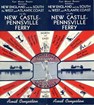
Ferries once commonly transported people and vehicles across waterways, before the construction of major bridges allowed travelers to drive directly over them. Learn about the once-booming ferry service that made New Castle an important connection for travelers. Read more
-
First State National Historical Park
Article 3: Fishing in New Castle
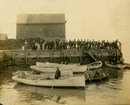
Learn about the once abundant fishing industry in New Castle, Delaware. Photo Courtesy of the New Castle Historical Society. Read more
-
First State National Historical Park
Article 4: New Castle Common: For the People

Public Land set aside for public use in New Castle dates to the 1700s. Today, 600 acres remain under the stewardship of the Trustees of the New Castle Common, preserving this historic commitment to shared land for the community. Read more
-
First State National Historical Park
Article 5: Entrusted with the Land: Trustees of the New Castle Common
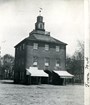
The New Castle Common was land set aside for public use and protected in 1764 by a board of trustees. Over time, the Trustees managed and leased the land to fund public projects like streets, schools, and fire services. They still oversee the Common today for the benefit of New Castle’s residents. Read more
-
First State National Historical Park
Article 6: Were there Pirates in New Castle?

In the 1600s and 1700s, the Delaware Bay and River were not immune to piracy. Drawn by busy trade routes, pirates and privateers raided ships, captured pilot boats, and disrupted commerce. Even Blackbeard was rumored to have visited nearby waterfront towns. In response, communities like New Castle built fortifications to defend themselves. Discover how piracy shaped life along the Delaware River. Read more
-
First State National Historical Park
Article 7: How the Battery Became Battery Park

Learn about the evolution of an area once used as a battery to protect the town of New Castle that today serves a public park for visitors to recreate in and enjoy. Read more
-
First State National Historical Park
Article 8: Fort Casimir: The Beginnings of New Castle

This article explores the founding of New Castle through the construction of Fort Casimir in 1651 and the colonial struggle among Dutch, Swedish, and English powers for control of the Delaware River. It traces the fort’s rise, capture, and eventual decline, highlighting how European competition and trade shaped the early history of the region. Read more
-
First State National Historical Park
Article 9: Education in New Castle: Before Modern Schools

This article traces the evolution of education in New Castle from informal colonial-era instruction to the development of modern public and private schools. It explores early religious and tuition-based schools, the impact of segregation, the establishment of schools for Black students during Reconstruction, and the transformative school-building efforts of Pierre S. DuPont in the twentieth century Read more
-
First State National Historical Park
Article 10: Delaware’s 12-Mile Arc

This article explores the history and significance of Delaware’s unique northern boundary, the Twelve-Mile Arc. Established in the colonial era and later refined by surveyors including Mason and Dixon, the arc shaped the division between Pennsylvania, Maryland, and what would become Delaware. Today, it remains one of the most distinctive state borders in the United States and a lasting symbol of early colonial negotiations and independence. Read more
-
First State National Historical Park
Article 11: Booker T. Washington School and Buttonwood School

Trace the history of education for Black students in New Castle, from early church-based and Quaker schools to DuPont-funded schools and eventual integration after Brown v. Board of Education. Read more
-
First State National Historical Park
Article 12: Before the Park: A Very Brief History of the Battery

Named for the colonial battery that once defended New Castle from river borne threats, Battery Park has witnessed centuries of change. From cannons and powder taxes to railroads, coal wharves, and seaside recreation, the site evolved with the needs of the community. Officially opened as a city park in 1939, it remains a place where history and river views meet. Read more
-
First State National Historical Park
Article 13: New Castle’s Harbor

For centuries, the story of New Castle has been inseparable from the waters of the Delaware River. This installment in the Historic Benchmarks: New Castle and the Making of a Nation series explores how geography, commerce, and innovation shaped the town’s identity, and, in turn, influenced regional and national development. Read more
-
First State National Historical Park
Article 14: The New Castle and Frenchtown Railroad

This article traces how New Castle became a vital transportation link between Philadelphia and Baltimore, from steamboats and stagecoaches to one of the nation’s earliest steam-powered passenger railroads. It explores how the New Castle and Frenchtown Railroad reshaped the town’s waterfront, spurred local industry, and left lasting landmarks still visible today. Read more
-
First State National Historical Park
Article 15: Ice, Commerce, and the Making of New Castle’s Harbor

Learn how New Castle, Delaware, built innovative ice piers to protect ships and keep winter commerce flowing on the Delaware River. This article highlights the town’s ingenuity, community effort, and the evolving role of these historic structures in maritime trade and federal infrastructure development. Read more