



Last updated: August 20, 2026
Article
National Park Service: Today's Preservation Methods at Mission Espada

San Antonio Missions National Historical Park [1]
The National Park Service and its partners, seek to preserve, interpret, and share the missions by maintaining its structures, landscapes, and community connections.
The San Antonio Missions National Historical Park was established by Congress in 1978 due to the historical and cultural significance of its landscape and architecture.2 An early goal was to make the missions more accessible to local and visiting tourists.3 Mission Espada improved its signage, interpretive material, and trails to support this goal.4 These renovations helped guests navigate the missions while ensuring the long-term stability of its structures. In addition to preserving the architectural landscape, the park's guidelines protect its natural landscape by removing invasive plant species and promoting native varieties.5
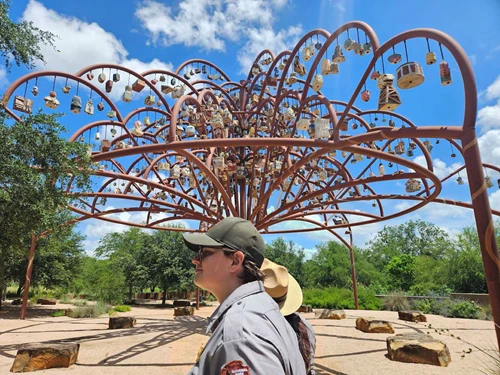
San Antonio Missions National Historical Park protects, preserves, restores, and interprets four Spanish Colonial missions and their associated cultural landscape features established along the upper San Antonio River.
Image credit: NPS Photo / Anna Surovic
San Antonio Missions National Historical Park employs a range of strategies, from park rangers patrolling the grounds to conducting archeological digs and surveys. These promote public engagement, community partnerships, and the preservation of cultural heritage at Mission Espada.7

San Antonio Missions National Historical Park [8]
The National Park Service considers community connections a vital resource that requires protection and preservation.9 San Antonio Missions stand out as the only national park that collaborates with a local archdiocese.10 The Archdiocese of San Antonio has been integral to the missions' Catholic traditions. To honor this heritage, the park works with the Archdiocese of San Antonio to ensure the missions continue as Catholic parishes with regular services.11
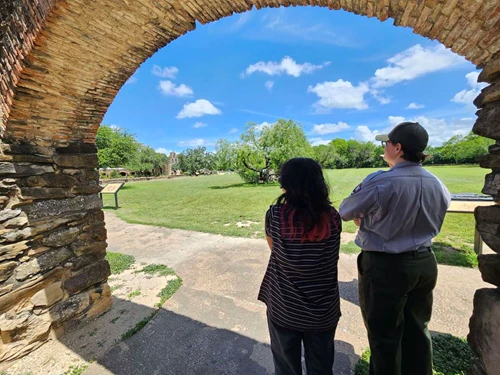
In addition to the agreement with the Archdiocese, the National Park Service works cooperatively with other landowners to preserve and provide public access and interpretation to the missions... The park is supported through dozens of other partnerships that support preservation, public access, interpretation, and education.
Image credit: NPS Photo / Anna Surovic
The ongoing dialogue between the National Park Service and mission descendant groups enables descendants to further advocate for the respectful treatment of ancestral homes and cultural practices at the missions.13 The recognition of the San Antonio Missions National Historical Park by UNESCO in 2015 reflects the sustained efforts to preserve the historical and cultural legacy of San Antonio mission communities.14
Each generation of stewards at Mission Espada has applied distinct preservation standards and cultural perspectives, shaping the site as it appears today.

Read the 2025 World Heritage Management Report to see a variety of partner projects that keep the site active and running.
[1] Rodriguez, Roland. 1983. Addendum to Mision San Francisco De La Espada. Partial Axonometric View. Addendum to Mision San Francisco De La Espada, edited by Historic American Buildings Survey. Historic American Buildings Survey. San Antonio Missions National Historical Park (SAAN) Archives.
[2] AmaTerra Environmental, Inc., and Commonwealth Heritage Group. Mission San Francisco De La Espada Cultural Landscape Report. AmaTerra Environmental,Inc., 2017.
[3] Ibid.
[4] Ibid.
[5] San Antonio Missions National Historical Park. 2016. Foundation Document San Antonio Missions National Historical Park. San Antonio Missions National Historical Park. https://npshistory.com/publications/foundation-documents/saan-fd-2016.pdf.
[6] San Antonio Missions National Historical Park. 2016. Foundation Document San Antonio Missions National Historical Park. San Antonio Missions National Historical Park. https://npshistory.com/publications/foundation-documents/saan-fd-2016.pdf, p. 5.
[7] AmaTerra Environmental, Inc., and Commonwealth Heritage Group. Mission San Francisco De La Espada Cultural Landscape Report. AmaTerra Environmental,Inc., 2017.
[8] United States Department of the Interior - Division of Conservation. 1983. Detail of Door. San Antonio Missions National Historical Park (SAAN) Archives.
[9] San Antonio Missions National Historical Park. 2016. Foundation Document. San Antonio Missions National Historical Park. San Antonio Missions National Historical Park. https://npshistory.com/publications/foundation-documents/saan-fd-2016.pdf.
[10] Ibid.
[11] Ibid.
[12] San Antonio Missions National Historical Park. 2016. Foundation Document San Antonio Missions National Historical Park. San Antonio Missions National Historical Park. https://npshistory.com/publications/foundation-documents/saan-fd-2016.pdf, p. 9.
[13] National Park Service. 2025. “We’re Still Here: San Antonio Mission Descendant Stories - San Antonio Missions National Historical Park (U.S. National Park Service).” National Park Service, National Park Service, US Department of the Interior. https://www.nps.gov/saan/learn/historyculture/we-re-still-here-san-antonio-mission-descendant-stories.htm.
[14] National Park Service. “A Quick Guide to the World Heritage Program in the United States.” www.nps.gov, March 12, 2024. https://www.nps.gov/subjects/internationalcooperation/a-quick-guide-to-the-world-heritage-program-in-the-united-states.htm.
[2] AmaTerra Environmental, Inc., and Commonwealth Heritage Group. Mission San Francisco De La Espada Cultural Landscape Report. AmaTerra Environmental,Inc., 2017.
[3] Ibid.
[4] Ibid.
[5] San Antonio Missions National Historical Park. 2016. Foundation Document San Antonio Missions National Historical Park. San Antonio Missions National Historical Park. https://npshistory.com/publications/foundation-documents/saan-fd-2016.pdf.
[6] San Antonio Missions National Historical Park. 2016. Foundation Document San Antonio Missions National Historical Park. San Antonio Missions National Historical Park. https://npshistory.com/publications/foundation-documents/saan-fd-2016.pdf, p. 5.
[7] AmaTerra Environmental, Inc., and Commonwealth Heritage Group. Mission San Francisco De La Espada Cultural Landscape Report. AmaTerra Environmental,Inc., 2017.
[8] United States Department of the Interior - Division of Conservation. 1983. Detail of Door. San Antonio Missions National Historical Park (SAAN) Archives.
[9] San Antonio Missions National Historical Park. 2016. Foundation Document. San Antonio Missions National Historical Park. San Antonio Missions National Historical Park. https://npshistory.com/publications/foundation-documents/saan-fd-2016.pdf.
[10] Ibid.
[11] Ibid.
[12] San Antonio Missions National Historical Park. 2016. Foundation Document San Antonio Missions National Historical Park. San Antonio Missions National Historical Park. https://npshistory.com/publications/foundation-documents/saan-fd-2016.pdf, p. 9.
[13] National Park Service. 2025. “We’re Still Here: San Antonio Mission Descendant Stories - San Antonio Missions National Historical Park (U.S. National Park Service).” National Park Service, National Park Service, US Department of the Interior. https://www.nps.gov/saan/learn/historyculture/we-re-still-here-san-antonio-mission-descendant-stories.htm.
[14] National Park Service. “A Quick Guide to the World Heritage Program in the United States.” www.nps.gov, March 12, 2024. https://www.nps.gov/subjects/internationalcooperation/a-quick-guide-to-the-world-heritage-program-in-the-united-states.htm.