



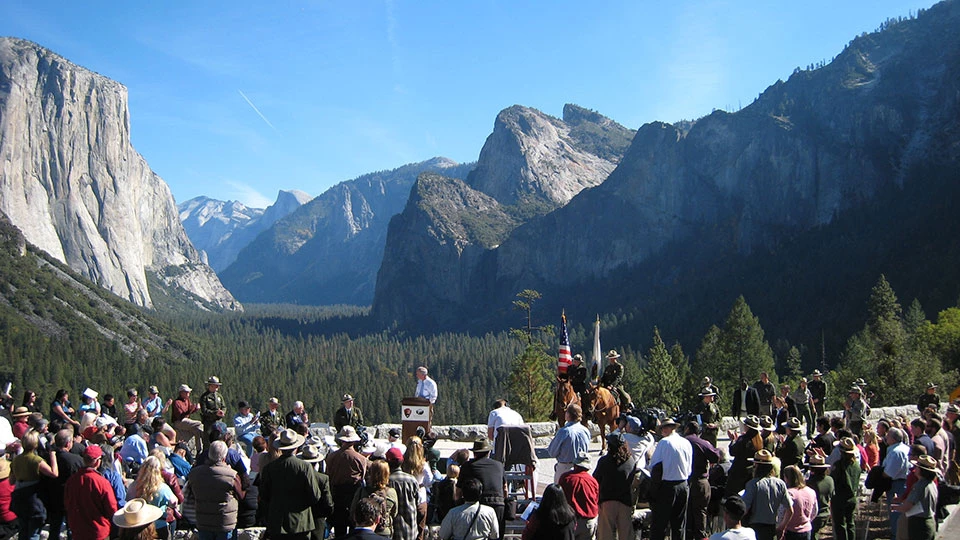

What is Tunnel View?Best known as the namesake for Tunnel View, the Wawona Tunnel was completed in April of 1933 and was dedicated on June 10 of that year. The tunnel leads park visitors from the South Entrance to an unforgettable view of Yosemite Valley. Reaching a length of 4,233 feet, the structure is the longest highway tunnel in the state of California. Taking nearly two years to complete, the Wawona Tunnel was created by boring a road through a mountain of granite. The formal tunnel dedication ceremony served as a way for the park to celebrate this successful feat of engineering. Proclaimed as a “Pageant of Progress,” the event featured a parade, historical reenactments, speeches from park staff, and hundreds of spectators. The Tunnel View scenic overlook is a historic site, located adjacent to Wawona Road, affording expansive views of Yosemite Valley, El Capitan, Bridalveil Fall, and Half Dome. The overlook was constructed during an era that heralded a boom in design and development throughout the National Park Service (NPS), and helped initiate the National Park Service “rustic design style.” Wawona Tunnel and Tunnel View were determined eligible for listing on the National Register of Historic Places in 1986 because of their exemplary design. Since then, the Wawona Tunnel has served tens of millions of park visitors, providing a breathtaking introduction to the iconic granite walls that surround Yosemite Valley. The Tunnel View overlook was renovated—the first changes to this area since constructed in 1933—and re-dedicated in an Oct. 24, 2008, ceremony. Improvements from the 2008 renovatation include an expanded handicap accessible viewing area, improved traffic flow, educational exhibits, and historic rockwork. This $3 million project was funded by The Yosemite Fund (now known as the Yosemite Conservancy) and the National Park Service as part of the President’s Centennial Initiative. Very little physical change occurred to Tunnel View’s physical features (including rockwork, circulation patterns, and configuration) since it was built. The site remains one of the most popular scenic overlooks in Yosemite National Park, with an estimated 5,000 to 7,000 people visiting per day during the height of the tourist season. 
Why Did We Undertake This Project?The purpose of the Tunnel View Overlook Rehabilitation Project was to remedy long-standing vehicle-to-vehicle and vehicle-to-pedestrian safety issues, to correct drainage deficiencies and problems, to provide clear circulation patterns for pedestrians and vehicles, to enhance and maintain viewing opportunities for visitors, to provide accessibility to viewing areas, to correct safety problems associated with the Inspiration Point trailhead, and to address sanitation issues, while maintaining the naturalistic, rustic character and integrity of this historic site. Several factors demonstrated the need for this project:
What Did The Project Entail?This completed project provides a safer, rehabilitated scenic overlook from which to experience one of Yosemite’s most spectacular views.
Learn More
|
Last updated: April 19, 2022