National Park Service LogoU.S. Department of the InteriorNational Park ServiceNational Park Service
National Park Service:  U.S. Department of the InteriorNational Park Service Arrowhead
Yosemite National Park Merced River
view map
text size: largest larger normal
printer friendly
Yosemite National Park
Mammals
 

Father coyotes move pups from one den to another when danger approaches. Mother bears spank their cubs when they misbehave. Female mule deer, when looking for a mate, breed with males that win a fight with her as the prize. Yosemite National Park’s approximately 90 mammal species, and their behaviors, are truly fascinating for park visitors to observe safely and responsibly.

 
Coyote on a grassy hill

U.S. Fish and Wildlife

Coyotes can be seen in Yosemite Valley and in the foothills region.

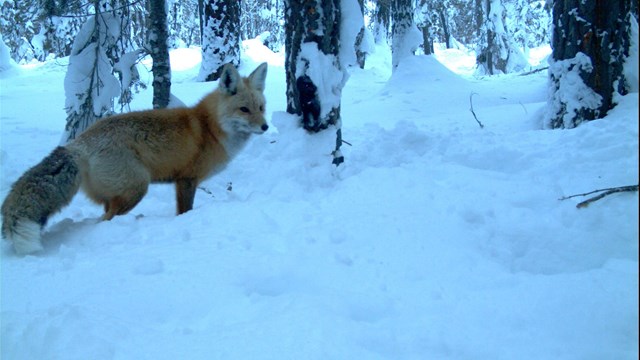
Deer and coyote are frequently seen while the Sierra Nevada red fox and the Western white-tailed jackrabbit are spotted, perhaps, only once a year or a decade. Seventeen mammals have a special status by either the federal or California state governments due to declining population numbers or to a lack of information about their distribution. Sierra Nevada bighorn sheep is the only park mammal listed as federally endangered under the Endangered Species Act, and the Pacific fisher is a federal candidate on the list. The Mount Lyell shrew, which is a California species of concern, and the Sierra Nevada bighorn sheep are the only endemic mammals to the Yosemite region.
 
Golden-mantled groud squirrel on rock

Nadine Hergenrider / U.S. Forest Service

Golden-mantled ground squirrels are a common rodent in the park.

Rodents comprise the highest percent of Yosemite’s mammals species. The oft-sighted squirrels species are part of the rodent order, with other known members: mice, gophers, and chipmunks. It’s worth taking a moment to learn the four common squirrels visitors are most likely to see. The Western gray squirrel is gray with a long bushy tail and spends much of its time in trees. The Douglas squirrel (or chickaree) is a reddish tree squirrel that chews on pine cones and commonly squeaks. The golden-mantled ground squirrel looks similar to a chipmunk because it has a stripe on its back, and the California ground squirrel—the most commonly seen squirrel in Yosemite—is brown, with white specks, and lives in burrows in the ground. The largest rodent of the Sierra Nevada to watch for is the yellow-bellied marmot, found at higher elevations, like Olmsted Point on the Tioga Road, often sunning itself on rocks. This 5-pound mammal looks similar to a woodchuck.

In Yosemite Valley, mule deer are especially common, seen browsing on leaves and tender twigs from trees, grass, and herbs. Male mule deer grow antlers each year to use in the mating season. Although they seem disinterested in humans, deer should be treated as any other wild animal. Human injuries can occur from people offering food to deer or any other wild animal. More injuries in Yosemite are inflicted by deer, with one documented death, than those caused by black bear or any other park animal. Additionally, human food is not healthy for wild animals, and it is illegal to feed any animal in the park.

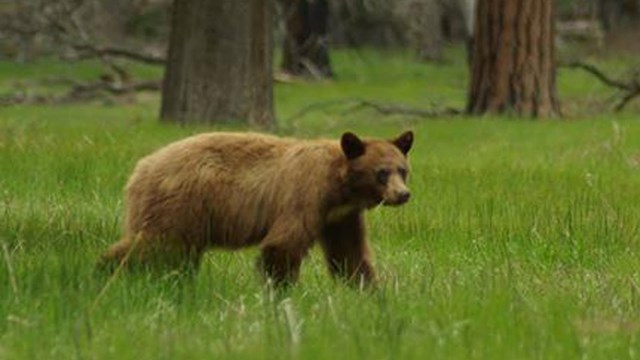
Yosemite’s black bear is an omnivore commonly spotted eating berries in the summer or acorns in the fall. Yosemite’s largest mammal, the male black bear weighs an average 300 to 350 pounds, and smaller females weigh 150 to 200 pounds. The biggest black bear ever captured in Yosemite weighed 690 pounds. If visitors spot a bear while in the park, it is a black bear–not a brown or grizzly bear. The last known grizzly bear was shot outside the Yosemite region in the early 1920s; the species no longer exists in California despite the fact it’s on the California state flag.

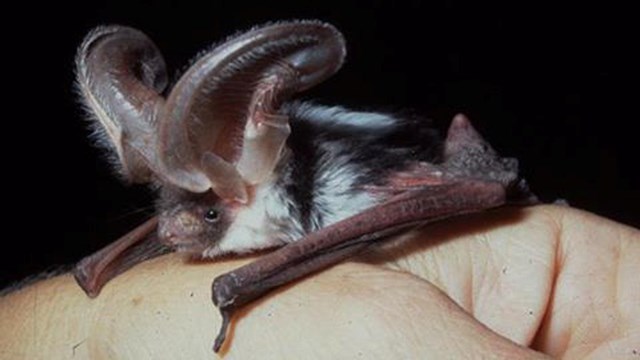
Some mammals are difficult to see due to their nocturnal habits. On the top of that list are the 17 bat species dining each evening on insects in Yosemite. They find food by emitting a high-frequency call and using their sensitive hearing to detect echoes from flying insects. The mobility of these remarkable flying mammals enables them to occupy a wide range of habitats. They are found from the lowest elevations in the park to higher than 10,000 feet. They roost in rock crevices and caves, under loose bark and bridges, in attics and tree cavities. North America’s largest bat species, the Western mastiff, is a Yosemite resident, as is the spotted bat, with its huge ears and vivid white spots. These are the only bat two species in Yosemite whose echolocation calls are audible to the human ear.

Overall, ongoing research has put a magnifying lens on several mammal species within the park. These studies include Belding’s ground squirrel social behavior, Sierra Nevada mountain beaver habitat requirements, and Sierra Nevada bighorn sheep movement patterns. Today’s studies build on work in the 1920s by famous mammal researcher Joseph Grinnell.
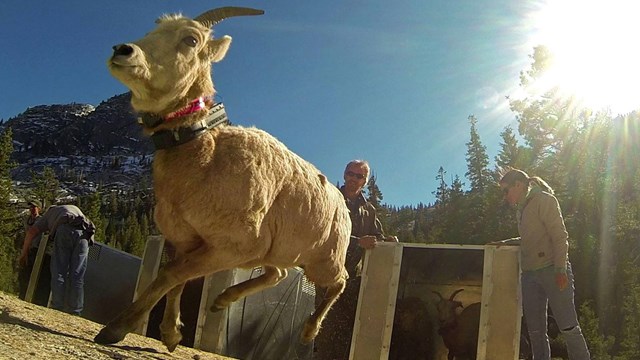
Head of a bighon sheep
Counting Sheep
Follow the story behind this endangered animal
more...
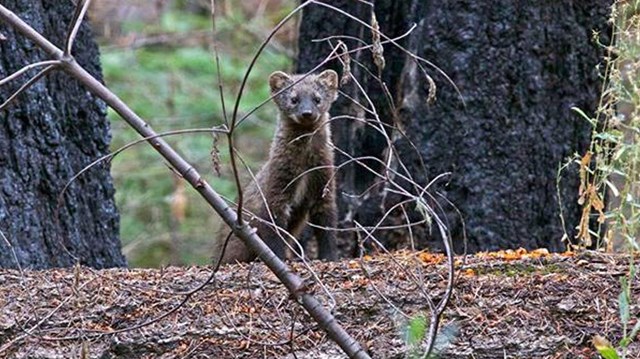
Mammal with brown fur and black legs pulls on bait on a tree
How Fishers Move
View time-lapse video of Sierra Nevada mammal in the wild
more...
Bear exiting a car
Bears on Tape
Watch this short bear video to learn how to protect Yosemite's bears
more...
Close-up of speckled toad
Nowhere Else
Several of Yosemite's amphibians live only in the Sierra Nevada
more...
Binoculars
Join the Christmas Bird Count
Find out results from the latest event
more...

You are exiting the National Park Service website

Thank you for visiting our site.

You will now be redirected to:

We hope your visit was informative and enjoyable.

The Merced River flowing serenely through Yosemite Valley

Did You Know?
Congress designated the Merced River as Wild and Scenic in 1987. The National Park Service manages 81 miles of the Merced River, encompassing both the main stem and the South Fork in Yosemite National Park and the El Portal Administrative Site.
more...

Last Updated: June 05, 2011 at 16:29 MST