




NPS / Jacob Frank Records of bird sightings have been kept in Yellowstone since its establishment in 1872. These records document nearly 300 species of birds to date, including raptors, songbirds, shorebirds, and waterfowl. Approximately 150 species nest in the park. The variation in elevation, terrains, and vegetative communities support habitats for a relatively high diversity of birds. Many of the birds are migratory species with approximately 50 species residing in the park year-round. There are currently no federally listed bird species known to breed in Yellowstone National Park. The Yellowstone National Park bird program monitors a small portion of its breeding bird species to gather information on reproduction, abundance, and habitat use. Data are collected on multiple species from a wide variety of taxonomic groups and have been maintained for 40 or more years for several species. Long-term monitoring efforts help inform park staff of potential shifts in ecosystem function, e.g., climate change effects, for Yellowstone’s bird community and may guide future conservation of the park’s birds and their habitats. Bird ChecklistA list of birds found in Yellowstone and the seasons they can be experienced. Climate ChangeThe timing of availble food sources for birds may change with rising temperatures and changing weather patterns. Birds are sensitive to shifts in seasonal weather patterns and show a relatively rapid response to these fluctuations. For example, climate change has been shown to influence migration patterns, population size and distribution, the timing of reproduction, and nesting success for birds. Through monitoring, birds can be used as environmental health indicators to help managers detect changes in ecosystem function and, if necessary, take appropriate management action. The Yellowstone bird program monitors the spring arrival of species to the park, as well as the timing of nest initiation and fledging for several raptor species, which may be useful in observing the effects of climate change in Yellowstone. 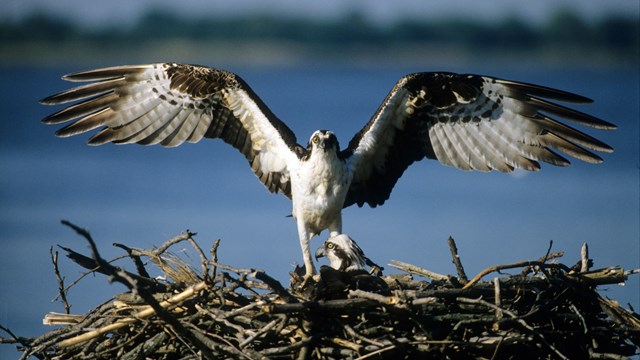
Healing Wings
A program where you can learn more about birds and lend a hand to help protect them. 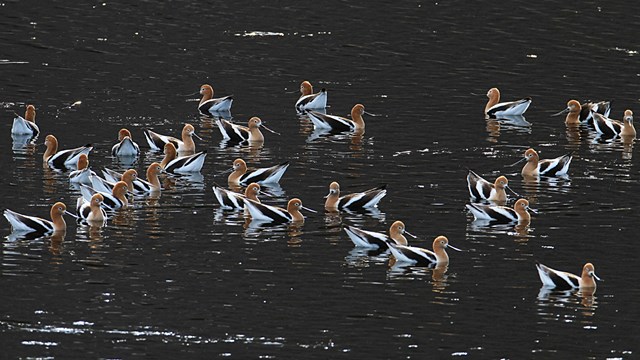
Birds and Observing Them
Learn about birds and how you can observe them wherever you are. Breeding Bird SurveysBreeding bird surveys are a continent-wide monitoring effort coordinated by the US Geological Survey, the Canadian Wildlife Service’s Research Center, and Mexico’s National Commission for the Knowledge and Use of Biodiversity (CONABIO). Since the 1980s, Yellowstone National Park has participated in these long-term surveys conducted throughout North America. The surveys are road-based with the registered observer recording all birds seen and heard within a quarter mile radius; survey points occur every half mile. Surveys conducted in June, during the height of the songbird breeding season, occur on three routes: Mammoth (Indian Creek to Tower Junction), Northeast Entrance (Tower Junction to Round Prairie), and the Yellowstone Route (Dunraven Pass to Mary Bay). In 2018, surveyors detected more than 3,100 individuals of 82 species. The greatest species diversity (55) and individual bird abundance (2,254) were observed along the Yellowstone route through the interior. Large flocks of Canada geese along the Yellowstone River accounted for 75% of all observations along the interior route. Canada goose numbers were relatively stable from 1987 to 2010, after which they increased substantially. Current ManagementThe Yellowstone National Park bird program monitors the park’s bird species, including species of concern. The program’s core activities are monitoring raptors (bald eagles, ospreys, peregrine falcons, golden eagles), wetland birds, and passerine/near passerine birds (songbirds and woodpeckers). To read technical reports regarding bird management in Yellowstone, visit www.nps.gov/yell/learn/nature/birdreports.htm. RaptorsThe park supports 19 breeding raptor species, with additional species during migrations and seasonal movements. The park monitors bald eagles, golden eagles, ospreys, and peregrine falcons. Bald eagles and peregrine falcons were previously listed as endangered and threatened species, and the park has continued monitoring since their delisting. The osprey is monitored because of the decline of one of their primary food sources, the cutthroat trout in Yellowstone Lake. The park monitors golden eagles because they are affected by expanding energy development and increasing human activity across the United States. Other species that occur in the park, such as American kestrels and Swainson’s hawks, are of growing conservation concern throughout their ranges in the United States. OwlsOwl surveys continued after the completion of the Raptor Initiative in 2015, enabled by dedicated volunteers. Surveys provide an index of sites that attract advertising males of several northern forest owl species. Surveys in 2024 observed the highest abundance of northern saw-whet owls since surveys were initiated in 2013. Additionally, annual monitoring has revealed high year-to-year variation in abundance and diversity of species across the study area. 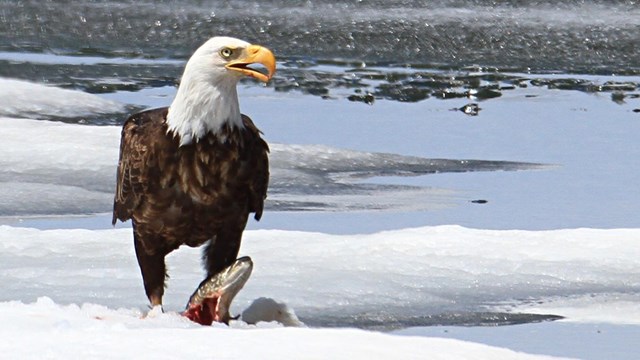
Bald Eagle
Bald eagles can be seen along Yellowstone's many rivers and lakes. 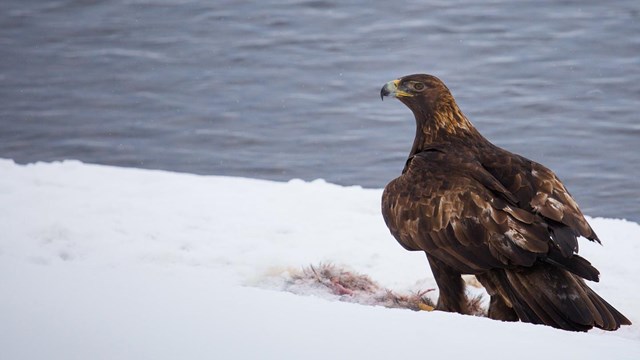
Golden Eagle
Golden eagles are named for the yellow feathers at the base of the neck. 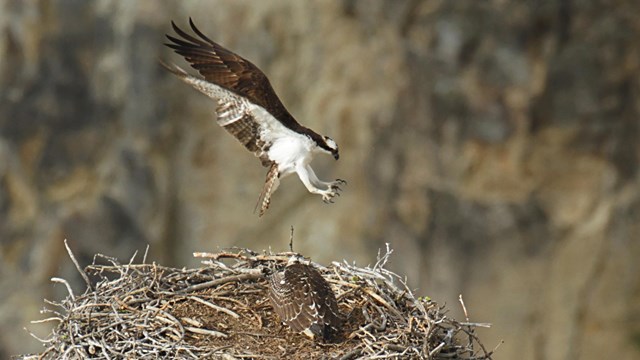
Osprey
Osprey summer in Yellowstone, fishing and raising young. 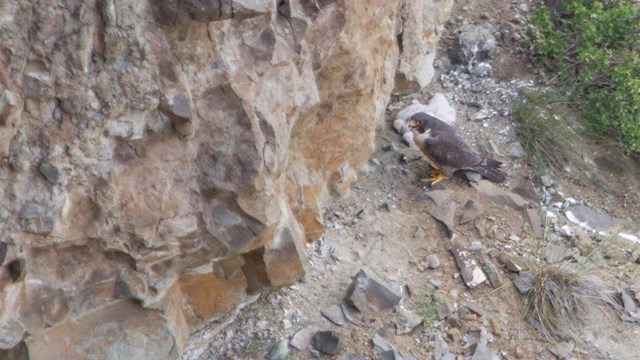
Peregrine Falcon
Peregrine falcons are some of the fastest birds. Wetland BirdsApproximately 30% of the bird species that breed in Yellowstone depend on wetlands. Scientists are concerned about these species because wetlands are expected to diminish as global and local temperatures increase. They are monitoring the trumpeter swan, common loon, and colonial nesting species, like the double-crested cormorant and American white pelican. Yellowstone has years of data about the rate and success of nesting for some wetland species, but little information about changes in the timing of nesting activity— an indicator of climate change. 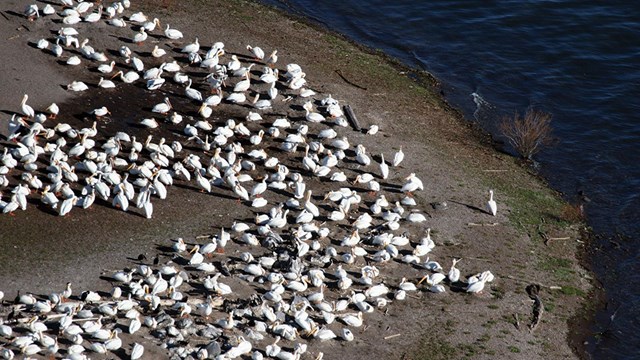
Colony Nesting Birds
American white pelicans and other colonial nesting birds nest primarily on the Molly Islands in the southeast arm of Yellowstone Lake. 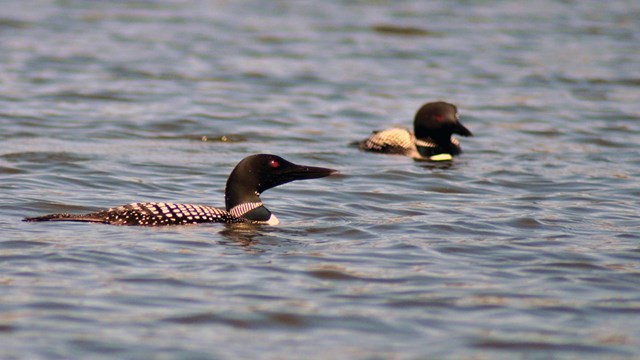
Common Loon
Loons in Yellowstone are some of the southern most breeding populations. 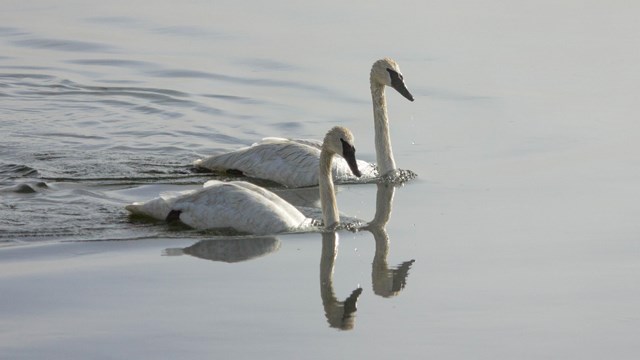
Trumpeter Swan
Trumpeter swans are the largest wild waterfowl in North America. Songbirds and WoodpeckersSongbirds and woodpeckers, or passerine and near passerine species, comprise the majority of bird species in Yellowstone National Park. They are monitored through the willow–bird study, the breeding bird survey, and the forest burn survey. 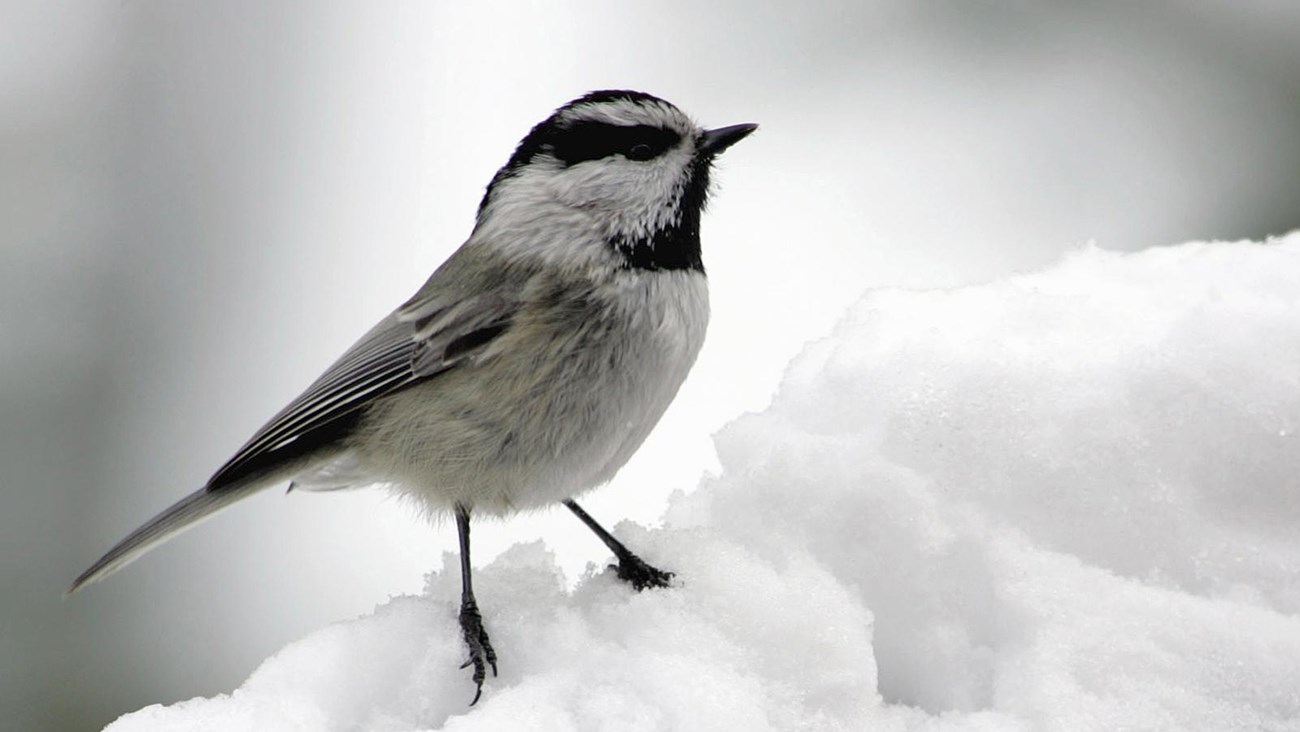
Songbirds and Woodpeckers
Passerine and near passerine species comprise the majority of bird species in Yellowstone. Other Notable BirdsHere are some other birds of interest in Yellowstone National Park. 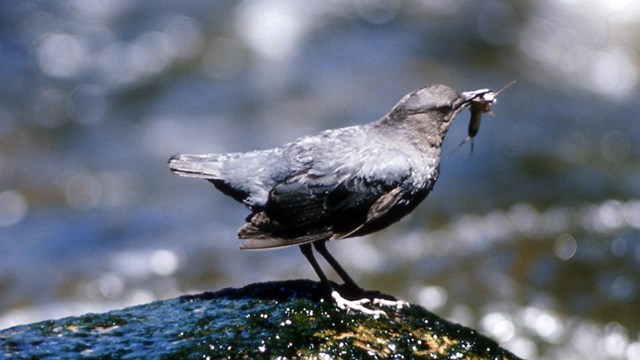
American Dipper
Also known as the water ouzel, these birds dive into water for aquatic insects. 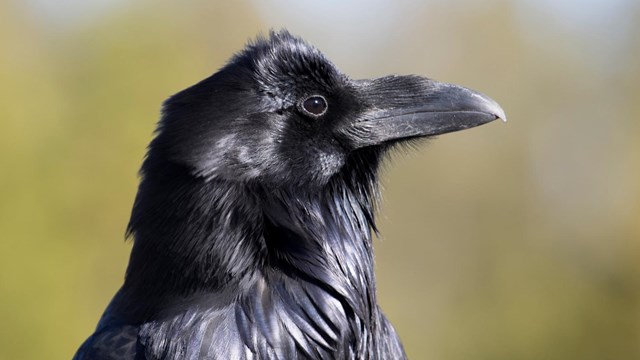
Raven
Ravens are smart birds, able to put together cause and effect. 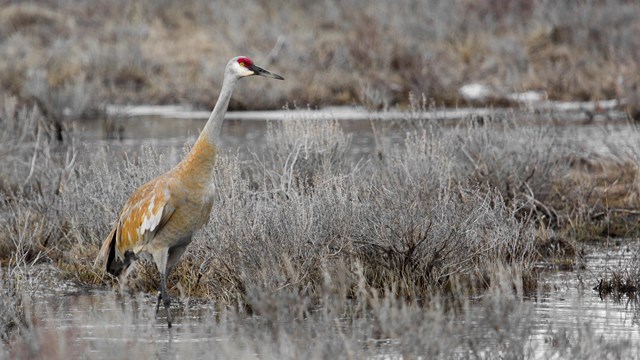
Sandhill Crane
Sandhill cranes nest in Yellowstone during the summer. Where are Good Birding LocationsThat depends on what kind of birds you want to see, the time of day you are looking, and your location in the park. In general, riparian areas and wetlands, especially those with shrubby willows, aspen, and cottonwoods attract the greatest diversity and abundance of songbirds. Hayden Valley is one of the best places to view water birds and birds of prey. Shorebirds feed in the mud flats at Alum Creek. Sandhill cranes often nest in the valley. Ducks, geese, and American white pelicans cruise the river. Bald eagles and osprey hunt for fish along the river; northern harriers fly low looking for rodents in the grasses. Great gray owls are sometimes seen searching the meadows for food (these birds are sensitive to human disturbance). Blacktail Ponds and Floating Island Lake, between Mammoth and Tower Junction, and the Madison River west of Madison Junction are also good places to look for birds. Many birds, such as American robins and common ravens, are found throughout the park. Other species live in specific encironments. For example, belted kingfishers are found near rivers and streams while Steller’s jays are found in moist coniferous forests. Spring is a good time to look for birds. Migration brings many birds back to the park from their winter journeys south; other birds are passing through to more northern nesting areas. Songbirds are singing to establish and defend their territories; and many ducks are in their colorful breeding plumages, which makes identification easier. Watch for birds on early morning walks from mid-May through early July. At all times, but especially during the nesting season, birds should be viewed from a distance. Getting too close can stress a bird (as it can any animal) and sometimes cause the bird to abandon its nest. As with all park wildlife, visitors should keep at least 25 yards away from birds and their nests. Most birds migrate to lower elevations and more southern latitudes beginning in August. At the same time, other birds pass through Yellowstone. Hawk-watching can be especially rewarding in Hayden Valley late August through early October. In early November, look for tundra swans on the water. Birds that can be viewed in Yellowstone year-round include the common raven, Canada goose, trumpeter swan, dusky grouse (formerly blue grouse), Canada jay, black-billed magpie, red-breasted nuthatch, American dipper, and mountain chickadee. A few species, such as common goldeneyes, bohemian waxwings, and rough-legged hawks migrate here for the winter. Visitors may report sightings with a wildlife sighting form and at visitor centers. Please note: The use of audio bird calls is illegal in the park. ResourcesAnnual Bird Program Reports. National Park Service, Yellowstone National Park. https://www.nps.gov/yell/nature/birdreports.htm. Baril, L.M., D.W. Smith, D.B. Haines, L.E. Walker, and K. Duffy. 2017. Yellowstone Raptor Initiative 2011-2015 Final Report, YCR-2017-04. National Park Service, Yellowstone Center for Resources, Yellowstone National Park, WY, USA.Crick, H.Q.P. 2004. The impact of climate change on birds. Ibis 146:48–56. Follett, D. 1986. Birds of Yellowstone and Grand Teton national parks. Boulder, CO: Roberts Rinehart. Walker, L.E., L.M. Baril, D.B. Haines, and D.W. Smith. 2018. Reproductive characteristics of red-tailed hawks in Yellowstone National Park, an intact temperate landscape. Journal of Raptor Research 53(3): 309–318. Yellowstone National Park. 2020. Field Checklist of the Birds of Yellowstone National Park. General
Bird Identification
State Field Guides
Local Field Guides
Sound Library
Immerse yourself in the aural splendor of Yellowstone. 
Wildlife
Learn about the park's abundant and diverse species—67 mammals, 330 birds, 16 fish, 5 amphibians, and 6 reptiles. 
Help Birds Where You Live
Explore this list of simple actions that have far-reaching effects to help protect birds. |
Last updated: February 4, 2026