Saltbush is used in many ways by Native peoples - as a dye, a seasoning and a baking soda substitute.
NPS
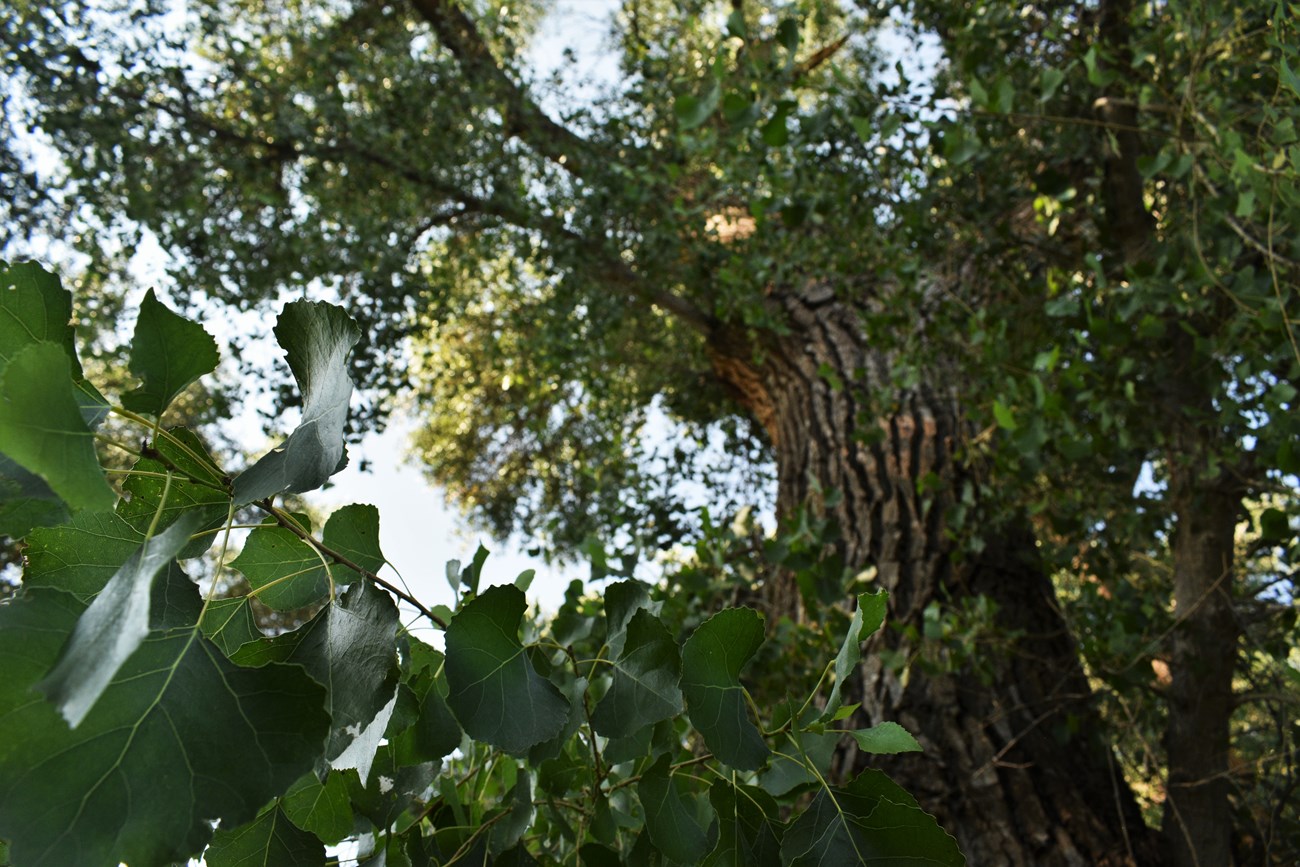
In the arid landscapes of the Arizona mountains, woody shrubs and trees need some luck to germinate in a place with enough water for them to grow. Once they're established, though, these desert plants are tenacious. Their roots will split rocks in search of water, and many can live for a century or more. The Verde Valley has a relatively high diversity of trees, though most are limited to riparian areas where water is more plentiful. These include sycamore, velvet ash, black walnut, and Fremont cottonwood. In drier parts of the valley, mesquite, juniper, and Arizona white oaks are common.
Shrubs and trees are typically distinguished by their height (which is a less reliable indicator in the desert than it is in more temperate woodlands) and the number of trunks or stems they have (shrubs have several, most trees have one or two). Common shrubs in the valley include Mormon tea, crucifixion thorn, creosote bush, four-wing saltbush, and cliffrose.
Tamarisk trees, also called salt cedar, which are native to the arid parts of southern Eurasia and northern Africa, can also be found in the region. These trees were introduced to Arizona as an ornamental landscaping species, and in many places have replaced native vegetation, influenced fire regimes, and thrived in the significantly altered stream environments of the American southwest. Tamarisk removal and mitigation efforts are ongoing within Tuzigoot and other National Park Service sites in the region.