Adaptation
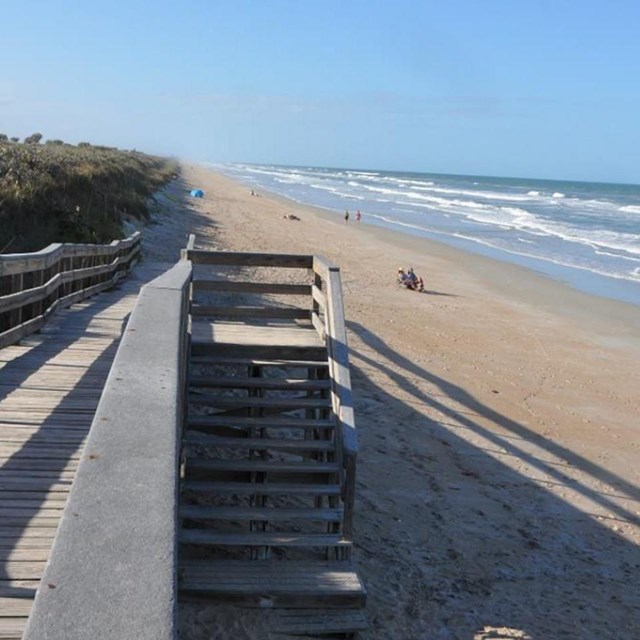
Ofu Beach, American Samoa
NPS photo
Adaptation Subpages
Adaptation Resources
Coastal Adaptation
Cultural Resources Adaptation
Adaptation to climate change is often necessary to continue living in one place. For plants, animals, and other organisms in nature, evolutionary adaptation occurs when natural selection favors individuals or populations that survive longer and reproduce more under the new conditions compared to other individuals or populations. Not all populations can adapt in response to climate change, though—for example, if there is not enough genetic variation among individuals or populations, or if the environment changes too quickly. If those populations cannot adapt, then they either have to move or go extinct.
People can intentionally adapt their way of life in response to climate change. Adaptation in this sense does not involve evolution, natural selection, or genes, but rather planning and decision making. National park staff are increasingly adapting to climate change impacts. Replacing fixed-in-place interpretive display boards by a glacier with ones that can be moved as the glacier retreats, restoring natural beaches and removing barriers to sand movement, and installing water-free toilets in anticipation of increased drought are all examples of adapting to climate change.
The aim of adaptation is to build resiliency in the parks—finding ways to help ecosystems and resources withstand and recover from climate change. Different kinds of resources and systems require different approaches to adaptation.
- availability of climate refugia (habitats that persist as climate changes)
- landscape corridors that allow plants and animals to move to more suitable locations
- healthy populations with sufficient genetic diversity to adapt
- blocks of natural landscape large enough to be resilient to large-scale disturbances and long-term changes
- lack of additional threats and stressors
The wild ponies at Assateague Island National Seashore are loved by people around the world. Scenario planning has allowed park managers to explore how sea level rise and changes in precipitation impact the ponies and other wildlife.
NPS photo
- Incorporate climate change consideration and responses in all levels of the NPS planning framework. The NPS's new approach to planning emphasizes elements that cross-traditional boundaries and integrate different disciplines and organizations. Our planning can no longer assume that the future climate and the ecosystems it supports will be the same as today's. Therefore, an increased focus on adaptive management and scenario planning will guide all levels of agency planning. Modification of existing policy and guidance to better protect parks may be warranted.
- Implement adaptation strategies that promote ecosystem resilience and enhance restoration, conservation, and preservation of park natural resources. The human and natural values that visitors discover in parks are not static; instead they are dynamic and evolving. By focusing on resilience, NPS management goals and practices will better align with our current understanding of the ever-changing nature of parks. New conservation plans will be better integrated across park boundaries and focus on ecosystem processes, reduction in "stressors," restoration of damaged systems, and preservation of genetic integrity.
- Develop, prioritize, and implement management strategies to preserve climate-sensitive cultural resources. Cultural resources are often sensitive to climate change and existing preservation practices may not adequately protect them under future scenarios. They may require additional protection in place (such as protecting prehistoric buildings from flooding), or we will need the capacity to quickly move cultural resources into museum collections. The best course of action will require a mix of scientific prediction of vulnerability, the development of cost-effective preservation technologies, consultation with partners and indigenous peoples, and enhanced curation and museum collection capacity.
- Include climate-related vulnerability assessments in project approval and funding decisions. As an increased number of park facilities and infrastructure become susceptible to climate change impacts, the NPS will modify its decision process (funding, construction, and operation) to better account for vulnerability and risk. High-risk assets should be inventoried and appropriate protection actions and alternatives chosen.
- Enhance the sustainable maintenance, design, and construction of park infrastructure. Park facility planning, funding, design, and construction should have greater emphasis on sustainability and the resilience to climate change. Options may include using changing park operational periods to reduce energy use, designing movable structures, integrating park buildings into regional transportation networks and gateway communities, and locating assets in less vulnerable locations.