



Last updated: June 17, 2019
Place
Schuylkill River Greenways National Heritage Area
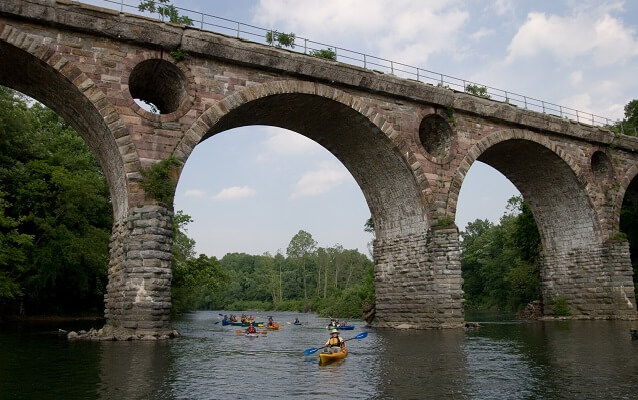
Image courtesy of Schuylkill River Greenways NHA
Quick Facts
Location:
Southeastern PA
Significance:
The Schuylkill River Greenways National Heritage Area celebrates the Schuylkill River region for its cultural, historical and industrial significance. It was along the banks of this river and its tributaries that the American, Industrial, and Environmental Revolutions were born. From the Continental Congress to Washington's encampment at Valley Forge, the region played a key role in the American Revolution. Its communities became leaders in the Industrial Revolution thanks to abundant natural resources, innovative technologies, and unparalleled transportation networks. And it was here that scientific exploration of our nation began, and where governments took bold new steps to protect and reclaim the river.
Designation:
National Heritage Area
The mission of the Schuylkill River Valley National Heritage Area, better known as the Schuylkill River Greenways National Heritage Area, is to connect residents, visitors and communities to the Schuylkill River and the Schuylkill River Trail by serving as a catalyst for civic engagement and economic development in order to foster stewardship of the watershed and its heritage. By encouraging stewardship and appreciation of the environmental, historical and recreational opportunities provided to residents and visitors alike, Schuylkill River Greenways NHA seeks to leverage economic and community development benefits to the region. To this end, the NHA's signature project is working with partners to build, improve, and promote the Schuylkill River Trail. The NHA's signature event is the annual Schuylkill River Sojourn, a 112-mile guided paddling trip down the river.
The NHA is managed by the Schuylkill River Greenway Association, who see the Schuylkill River and the Schuylkill River Trail as platforms for the revitalization of the communities; for engaging residents and visitors with nationally significant history; for improving public health by encouraging close to home outdoor recreation; and for connecting people to the incredible natural and historic areas in their own backyards and encouraging them to become stewards of those resources.
The Schuylkill River Greeenways National Heritage Area is home to the following NPS Units:
- Hopewell Furnace National Historic Site
- Independence National Historical Park
- Valley Forge National Historical Park
Learn more by visiting the Schuylkill River Greenways NHA website.