




NPS Photo / Jim Ecklund 
NPS A maze of evergreen trees covers the mountainsides in subalpine areas. Hidden among the trees are crystal clear lakes and fields of wildflowers that may surprise you. The subalpine ecosystem occupies elevations just below tree-line between 9,000 and 11,000 feet. A typical subalpine forest may consist mostly of subalpine fir and Engelmann spruce. However, previously-burned areas may contain varying amounts, or even almost pure stands, of lodgepole pine. Lodgepole seedlings do well in sunlight, often abundant after fire, but once the forest is established, plant succession may result in increasing amounts of spruce and subalpine fir. Ground cover in a previously-burned forest area often includes two species of huckleberry. Limber pine, with flexible twigs and needles in groups of five, may also be part of subalpine forests. In high, windblown areas, limber pines often grow into grotesque shapes. Engelmann spruce and subalpine fir, which grow straight and tall in the lower subalpine forests, become shorter and deformed nearer treeline. Even as the trunk grows upward, strong, cold, dry winds may destroy new growth on the windward side, leaving permanent growth only on the lee side of the trunk. Trees with branches on only one side are often called banner trees or flag trees. 
NPS At treeline, tree seedlings may germinate on the lee side of rocks and grow only as high as the rock provides wind protection. Further growth is more horizontal than vertical, and additional rooting may occur where branches contact the soil. The resulting low growth of dense trees is called krummholz. Snow cover may protect krummholz trees during the winter, but branches higher than wind-shelters or snow cover are usually destroyed. Well-established krummholz trees may be several hundred to a thousand years old. Follow the links below to learn about life in the Subalpine. 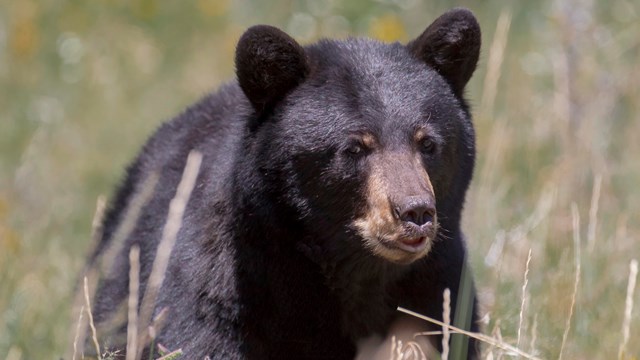
Black Bear
Black bear in a field. 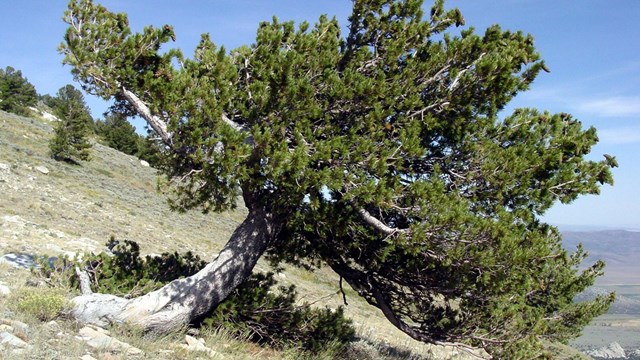
Limber Pine
Limber pine bark and needles are well adapted to harsh climates. 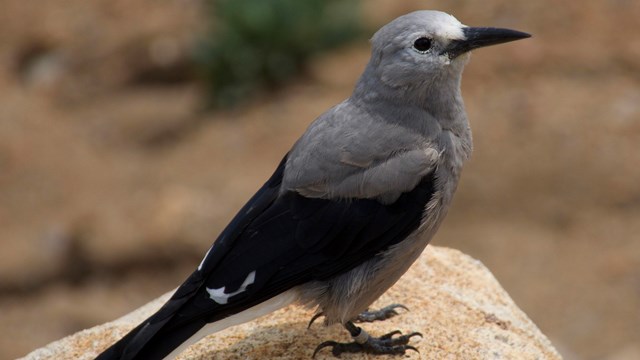
Clark's Nutcrackers
Clark's Nutcrackers are thrifty birds in more ways than one. 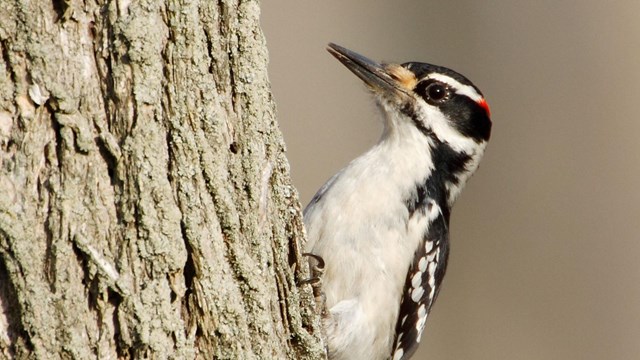
Woodpeckers
Woodpeckers have no shortage of wood to do what they do best. 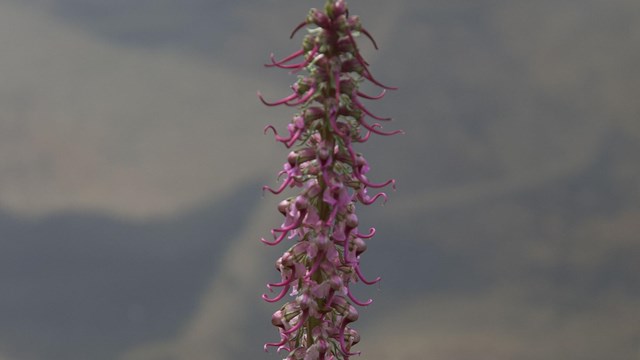
Elephantella
Elephantella aren't out of place in wet mountain meadows. 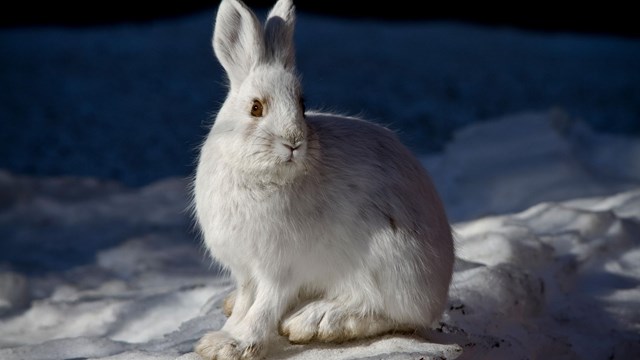
Snowshoe Hares
Snowshoe Hares use large hind feet to escape predators.
| ||||||||||||||||||||||||||||||||||||||||||||||||||||||||||||||||||||||||||||||||||||
Last updated: July 5, 2022