
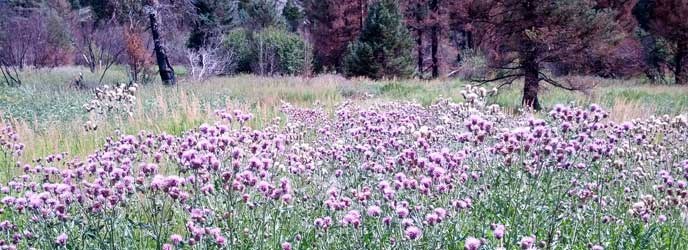
NPS The National Park Service defines a non-native specis as one that occurs as a result of direct or indirect, deliberate, or accidental actions by humans. This definition recognizes that parks are places intended to preserve natural, ecologically balanced communities. Often non-natives disrupt this balance. 
NPS Non-Native Plants Non-native plant species may dramatically change a visual landscape by completely dominating an area that once held a mix of native species. Leafy spurge, a plant that has been found in the park, is an example of a species that has had this type of impact where it has been left uncontrolled. Another non-native plant of concern, common burdock, has been documented to fatally trap hummingbirds with its sticky sap. A list of other species can bee seen on the Exotic Plant List page. At the present time, treatment for non-native species includes the full range of IPM techniques, including the use of synthetic herbicides. See Rocky's Invasive Exotic Plant Management Plan page for more information. 
NPS Mountain Goats Mountain goats were introduced to the Mt. Evans, Colorado area by Colorado's Parks and Wildlife (previously Colorado Division of Wildlife), and individuals occasionally make their way north to the park. Mountain goats are not native to Colorado and carry diseases that can infect native bighorn sheep. They also compete with the native sheep for food and habitat. Because mountain goats are a significant threat to the survival of native bighorn sheep, the park has taken active measures to remove mountain goats that enter the park. Park policy is to euthanize goats when feasible and safe to do so. There is no longer an option to relocate them to other areas of Colorado. |
Last updated: August 26, 2021